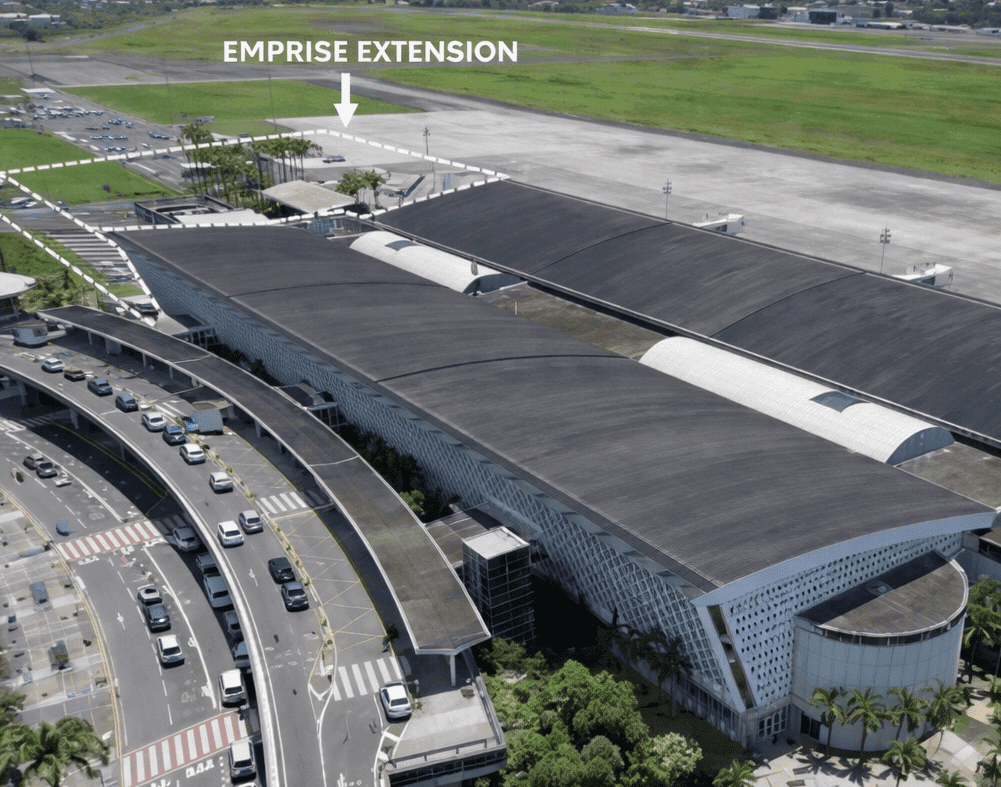
Guadeloupe Maryse Condé International Airport is entering a new phase of infrastructure development as it prepares a major expansion of its main passenger terminal. The project, known as MADAPTE T1, represents a €150 million investment designed to increase capacity, modernize operations, and reinforce the airport’s long-term role in Caribbean and transatlantic air connectivity.
This expansion comes at a critical moment. Passenger traffic has returned to growth, reaching nearly 2.2 million passengers in 2025, confirming the strategic importance of ensuring sufficient infrastructure capacity to accommodate future demand.
Infrastructure reaching structural limits
Terminal T1, commissioned in 1996, was originally designed to serve significantly lower traffic volumes than those anticipated today. The combined capacity of Terminals T1 and T2 currently stands at approximately 2.5 million passengers annually, a threshold that already represents an operational ceiling for the platform.
According to Guadeloupe Maryse Condé International Airport’s 2026 press kit, this limitation has begun to create operational constraints, particularly during peak travel periods. These include congestion at security checkpoints, limited baggage handling capacity, and pressure on passenger circulation areas. Without infrastructure expansion, such constraints could limit the airport’s ability to support future traffic growth and airline network development.
A 60% terminal expansion to support future traffic
The MADAPTE T1 project will increase the terminal’s operational surface by approximately 17,000 square meters, representing a 60% expansion of the existing infrastructure. Once completed, the airport’s annual passenger handling capacity will rise from 2.5 million to 3 million passengers.
This increase is essential to accommodate anticipated traffic growth and ensure operational flexibility for airlines. Airport authorities indicate that the expansion will significantly improve passenger processing efficiency, enhance service quality, and strengthen overall operational performance.
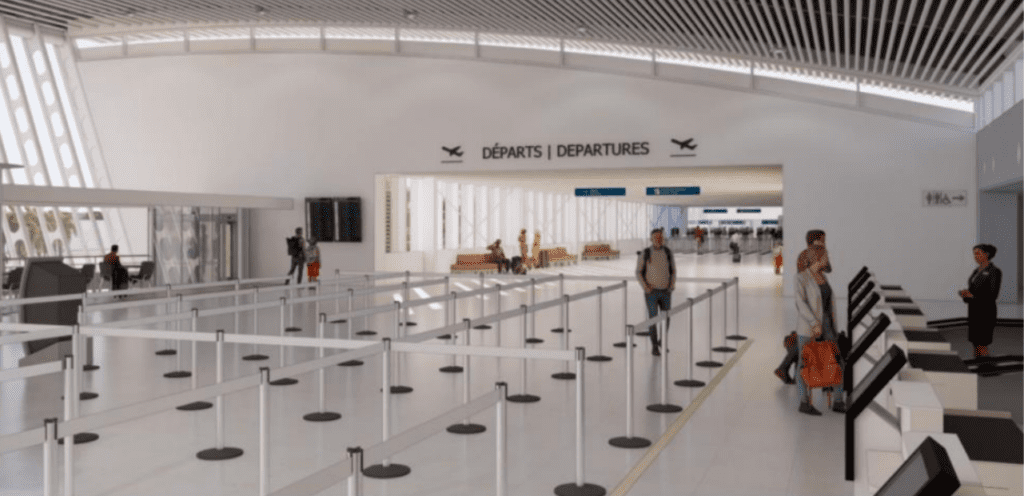
The project includes a complete modernization of passenger processing areas, with upgraded security checkpoints, expanded baggage handling facilities, and new automated technologies. These improvements are expected to reduce congestion, improve operational reliability, and align the airport with evolving international aviation standards.
Strengthening the airport’s strategic role in Caribbean connectivity
Beyond operational improvements, the expansion reflects a broader strategic objective: reinforcing Guadeloupe’s position as a key aviation gateway in the Caribbean. The airport plays a central role in connecting the French Caribbean with mainland France, North America, and neighboring Caribbean territories.
Modern, high-capacity infrastructure is a critical factor in attracting airline investment and supporting route development. By expanding and modernizing its main terminal, the airport is positioning itself to accommodate future airline growth, strengthen international connectivity, and maintain its competitiveness within the regional aviation network.
The infrastructure upgrade will also enhance operational resilience, allowing the airport to manage peak traffic more efficiently and provide airlines with the capacity required for network expansion.
Significant economic impact for the territory
The project is expected to deliver substantial economic benefits for Guadeloupe. Airport projections indicate that increasing passenger capacity to 3 million annually could support the creation of approximately 6,300 additional jobs and contribute an estimated €1.2 billion to the local economy.
These impacts extend across multiple sectors, including tourism, logistics, transport services, and hospitality. Improved airport infrastructure plays a critical role in supporting regional economic development by facilitating mobility, trade, and tourism flows.
A long-term development strategy through 2031
According to airport authorities, the project is currently in its advanced planning phase, with engineering studies and regulatory procedures underway. Construction is expected to begin toward the end of 2027, with the first phase entering service by the end of 2029. Full completion is planned between 2030 and 2031.
This phased approach reflects a long-term infrastructure strategy designed to align airport capacity with projected traffic growth while ensuring operational continuity during construction.
Preparing Guadeloupe’s aviation gateway for future demand
The MADAPTE T1 project represents a major milestone in the development of Guadeloupe Maryse Condé International Airport. By expanding capacity, modernizing infrastructure, and improving operational efficiency, the airport is preparing to meet the evolving requirements of airlines and passengers.
As regional and international air traffic continues to recover and expand, infrastructure readiness will be essential to maintaining competitiveness. Through this investment, Guadeloupe is reinforcing its aviation gateway and positioning itself to support future connectivity, economic growth, and regional integration.and international aviation operations for decades to come.