As the Caribbean Investment Forum 2026 prepares to return to Barbados, a central question is emerging for the region: not whether investment opportunities exist, but whether the Caribbean can build the scale, infrastructure and investment-ready projects needed to compete for increasingly selective global capital.
BRIDGETOWN, BARBADOS — The Caribbean investment landscape has no shortage of infrastructure needs, entrepreneurial ideas or sectors with growth potential. What the region has struggled to do consistently is convert that potential into projects structured to attract capital — and then move that capital into execution.
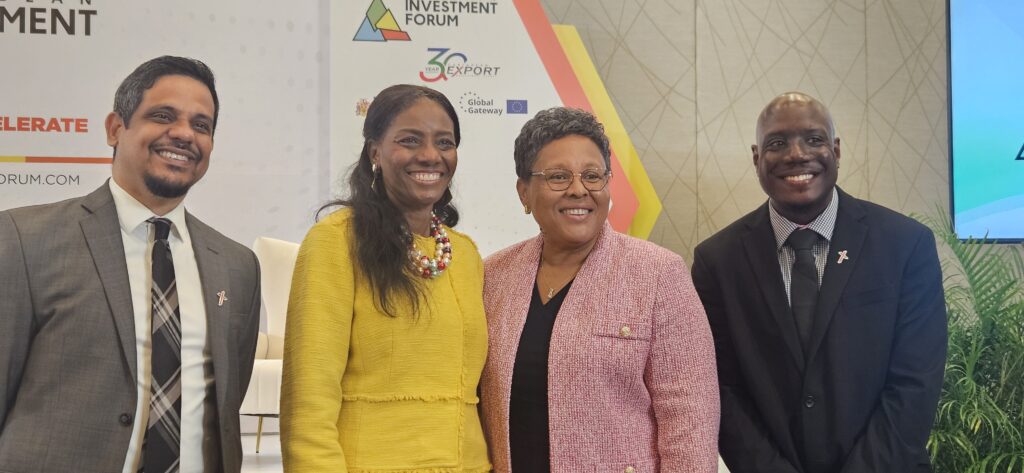
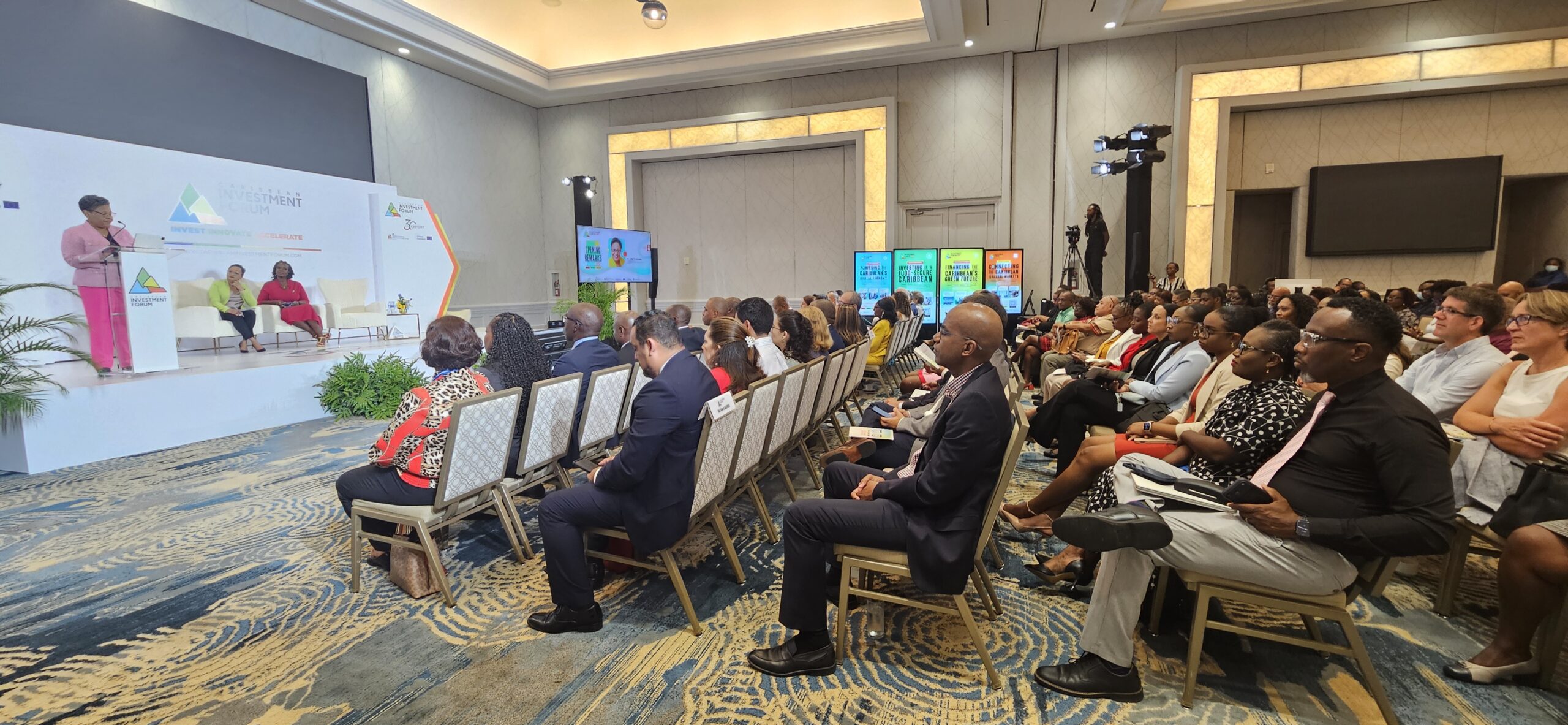
That distinction emerged as one of the strongest messages from the launch of the Caribbean Investment Forum (CIF) 2026 in Barbados.
“The Caribbean does not have an opportunity deficit. It has an ecosystem challenge,” Dr. Isaac Solomon, Vice-President of Operations at the Caribbean Development Bank, told participants during the Capital Forum.
For aviation, maritime and logistics stakeholders, the distinction matters.
Logistics & Transportation is one of four priority investment sectors identified for CIF 2026, alongside Sustainable Agriculture, Green Economy Transition and Digital Transformation. Its scope includes regional trade logistics, transport infrastructure and inter-island connectivity, from air and maritime cargo services to warehousing, fleet management and sustainable mobility.
Transportation therefore occupies a particular position within the investment agenda: it is both a sector requiring capital and an enabler of growth across the wider economy.
Connectivity is part of the investment proposition
For Caribbean businesses attempting to scale beyond their domestic markets, connectivity affects the movement of goods, costs, delivery times and access to customers. For international investors assessing the region, the efficiency of transport and trade infrastructure can therefore influence the viability of an investment.
Senator the Honourable Christopher Sinclair, Senior Minister of Foreign Affairs and Foreign Trade of Barbados, made the connection explicitly during the CIF launch.
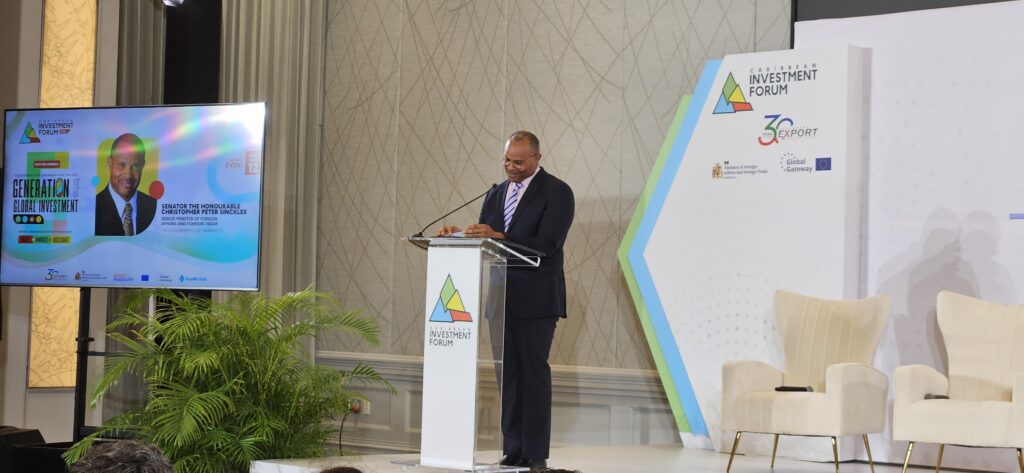
Senator the Honourable Christopher Sinclair, Senior Minister of Foreign Affairs and Foreign Trade of Barbados, addresses the launch of the Caribbean Investment Forum 2026.
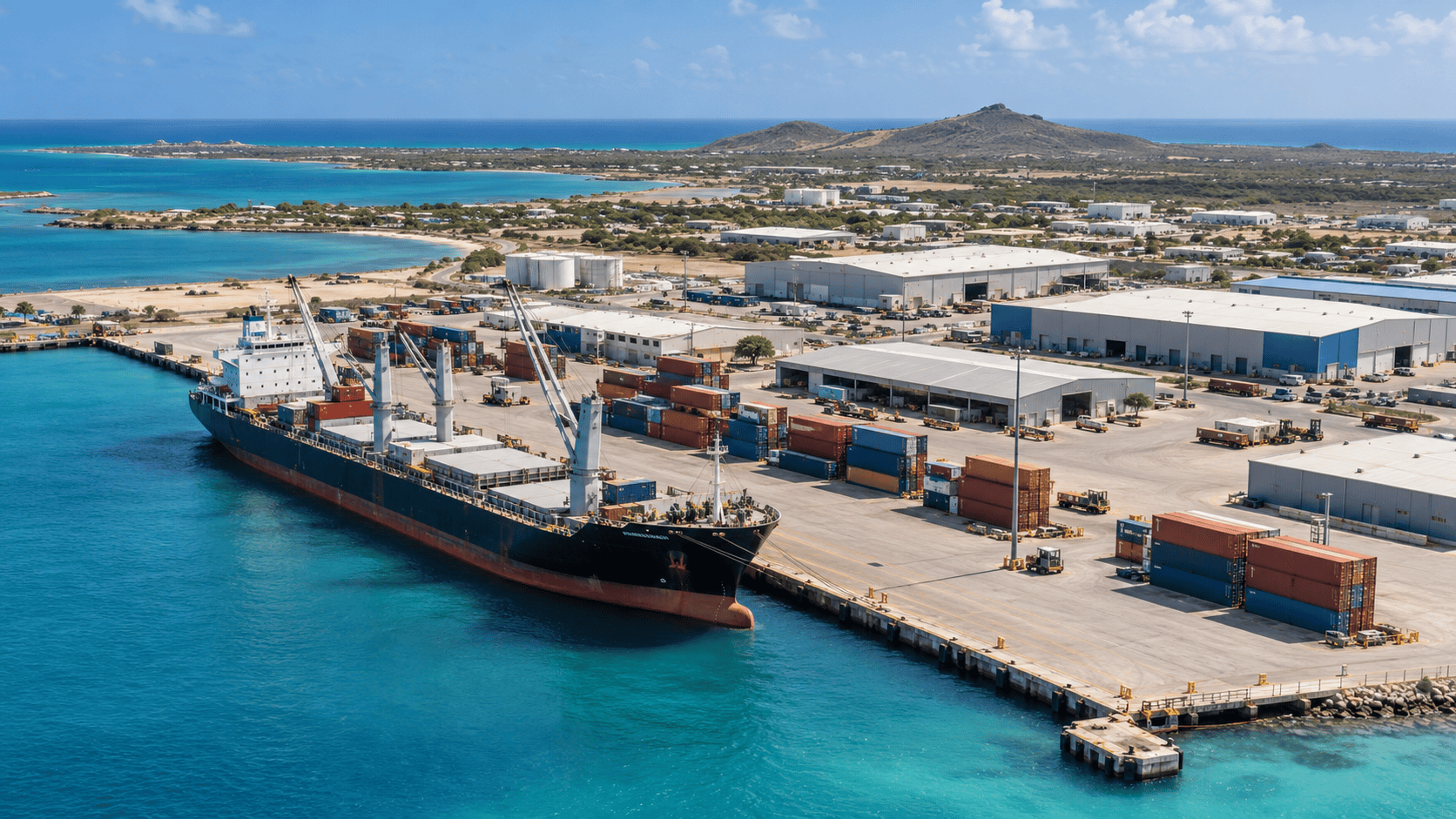
In presenting Barbados’ investment-readiness strategy, he pointed to a BDS$213.5 million investment at Bridgetown Port, arguing that regional trade ambitions cannot be achieved without efficient ports and trade systems capable of moving goods within the Caribbean and into international markets.
The broader issue extends beyond Barbados.
If Caribbean businesses are to serve regional and international markets, the ability to move goods, services and people efficiently between territories becomes part of the region’s competitiveness. Investment in connectivity is therefore more than a transport-sector issue: it supports the Caribbean’s wider investment proposition.
Capital is available. Investable projects remain the challenge
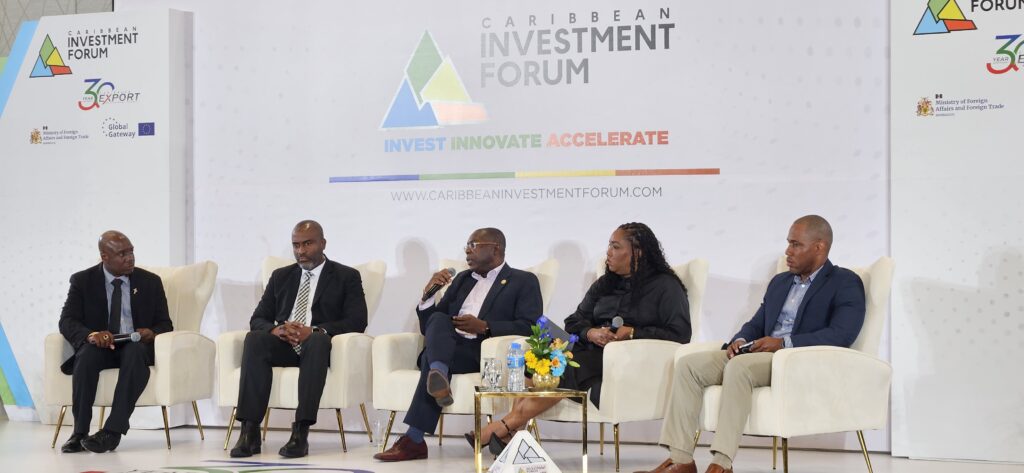
The CIF discussions also challenged the idea that the Caribbean’s principal investment problem is simply a shortage of finance.
Caribbean Export reported a current portfolio of 30 investment-ready projects valued at approximately US$172 million. CIF 2026 is intended to push that approach further through project presentations, targeted business-to-business meetings and practical clinics designed to help businesses and project proponents understand what is required to attract investment.
The 2026 programme is targeting advanced projects requiring more than US$3 million in capital, with commercial viability, measurable national or regional impact and potential to scale.
But an attractive sector or a clear need does not automatically create an investable project.
During the Capital Forum, participants repeatedly pointed to governance, management capability, financial fundamentals, technical preparation, market potential and a clear understanding of the type of capital being sought.
Cheryl Senhouse, Finance Innovation Director at the Caribbean Climate Smart Accelerator, illustrated the problem through the organisation’s own experience.
After organising a series of investor forums, the Accelerator found that projects were reaching investors without necessarily being investment-ready. Even international investors positioned to provide patient, early-stage capital were not prepared to deploy capital into some of the projects presented.
The organisation subsequently used philanthropic capital to support project preparation, working with an incubator in Jamaica to put 12 projects through the programme.
The lesson is particularly relevant for transport and infrastructure: identifying a regional need is only the beginning. Projects must also demonstrate the structures, governance, capacity and financial fundamentals required for credible investor engagement.
Scale requires regional thinking
Another issue runs deeper: scale.
Individual Caribbean markets are small, and the ability of businesses and projects to expand beyond national boundaries featured prominently in the discussions.
Senator Christopher Sinclair argued that the region should not be viewed simply as a series of disconnected jurisdictions, but as an investment space in which capital, skills, goods and services can move more effectively.
Dr. Isaac Solomon pushed that argument further, challenging participants to develop genuinely regional projects rather than implementing similar projects separately across individual countries and calling them regional.
“There are too many opportunities for us to have regional projects at the scale that will attract the private investors,” he argued.
For transport, that logic is particularly relevant.
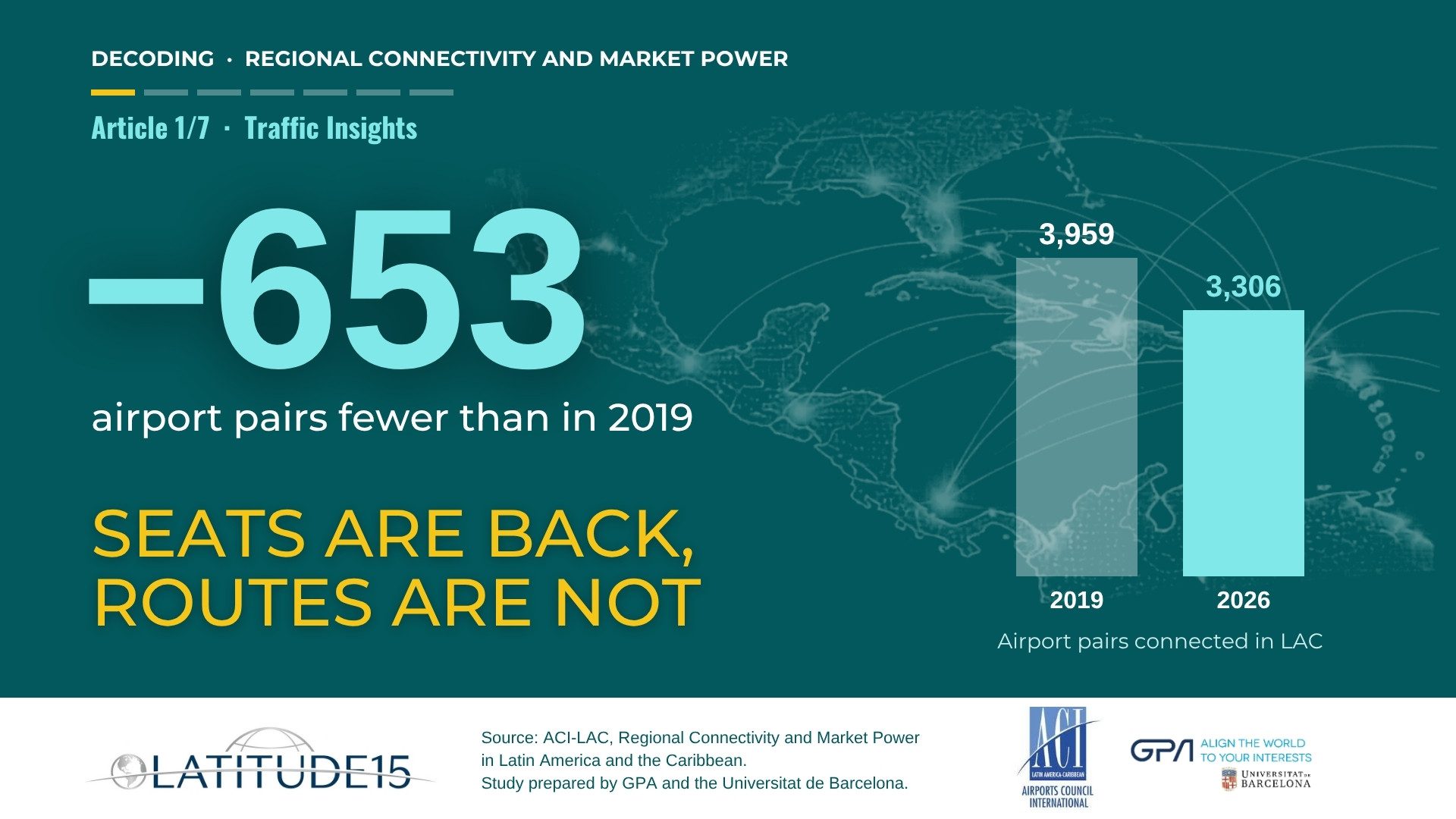
Air and maritime networks are inherently cross-border, as are many of the supply chains they support. Thinking about investment at regional scale could therefore create opportunities that are difficult to structure within the limits of individual national markets.
But achieving that scale exposes another longstanding Caribbean constraint: fragmentation.
Regional projects require greater harmonisation
Russell Franklin, Operations and Financial Coordinator at Compete Caribbean, representing the Inter-American Development Bank, identified harmonisation as one of the conditions for developing regional projects.
He cited legislation, procurement, quality and standards, arguing that regional approaches could reduce transaction costs compared with executing similar transactions separately at national level.
Senator Christopher Sinclair also identified institutional rigidity as a constraint on the Caribbean investment environment, pointing to customs procedures, import facilitation, tax policy, transportation, banking, access to finance and labour-market flexibility.
For aviation, maritime and logistics stakeholders, the distinction is important.
Physical connectivity between territories is only one part of regional integration. The rules and administrative systems governing the movement of goods, services, skills and capital also influence the ability of companies and projects to operate across multiple Caribbean markets.
The challenge is therefore not solely about building infrastructure. It also concerns the institutional environment surrounding it.
Development finance can help mobilise private capital
Development finance institutions increasingly see their role not simply as providing capital, but as strengthening the conditions under which other sources of finance can participate.
Dr. Isaac Solomon described development capital as a means of improving the enabling environment, expanding access to finance, building investment-ready firms and projects, and mobilising larger pools of private and institutional capital.
Commercial finance is an important part of that equation.
Garvin Joefield, Economist at Republic Financial Holdings, provided several examples of financing demand within the region.
Republic Financial Holdings committed US$200 million in new sustainability loans across the group in 2021, with the intention of deploying the amount over five years. According to Garvin Joefield, approximately US$235 million had been deployed by the fifth year.
An SME financing programme that began with US$20 million was exhausted within three weeks and subsequently expanded to US$150 million, with just under US$120 million deployed at the time of the CIF launch.
Those figures do not mean financing is readily available to every Caribbean business. They do, however, support a central message from the discussions: the challenge is not simply finding capital, but creating projects and businesses capable of absorbing it.
Beyond the investment forum
This may ultimately be one of the most important tests for CIF 2026.
Caribbean Export wants to move beyond an event focused primarily on presenting opportunities and develop CIF into a broader regional investment-promotion platform that identifies projects earlier, strengthens their readiness and sustains engagement beyond the three days of the forum.
The importance of what happens after an investor meeting was also emphasised by Cheryl Senhouse. Once a project has been prepared, the next challenge is connecting it with potential investors and sustaining those conversations.
The launch provided one concrete example.
A business leader described how a connection made during CIF 2025 in Jamaica subsequently developed into a joint venture supporting technology services and expansion into Guyana and Suriname.
That distinction — between creating a meeting and converting it into a business relationship — may ultimately be a more meaningful measure of success than attendance figures alone.
Transport as an investment multiplier
CIF 2026 will take place in Barbados from 5–7 October, bringing together governments, financial institutions, development partners, investors and businesses.
For aviation, maritime and logistics stakeholders, its significance extends beyond the transport projects that may be presented.
Efficient ports facilitate trade. Aviation connects Caribbean economies with one another and with external markets. Logistics systems support the movement of goods across supply chains. Yet each of those systems also requires capital to expand, modernise and become more efficient.
This creates a potentially powerful relationship: capital can strengthen connectivity, while stronger connectivity can improve the conditions in which businesses trade, expand and attract investment.
The discussions in Barbados point to what is needed to make that relationship work: stronger project preparation, appropriate financing structures, capable institutions, greater regional scale and progress in addressing the regulatory and operational fragmentation that continues to characterise the Caribbean market.
The opportunities are not the part the region is missing.
The harder task is making them investable.