
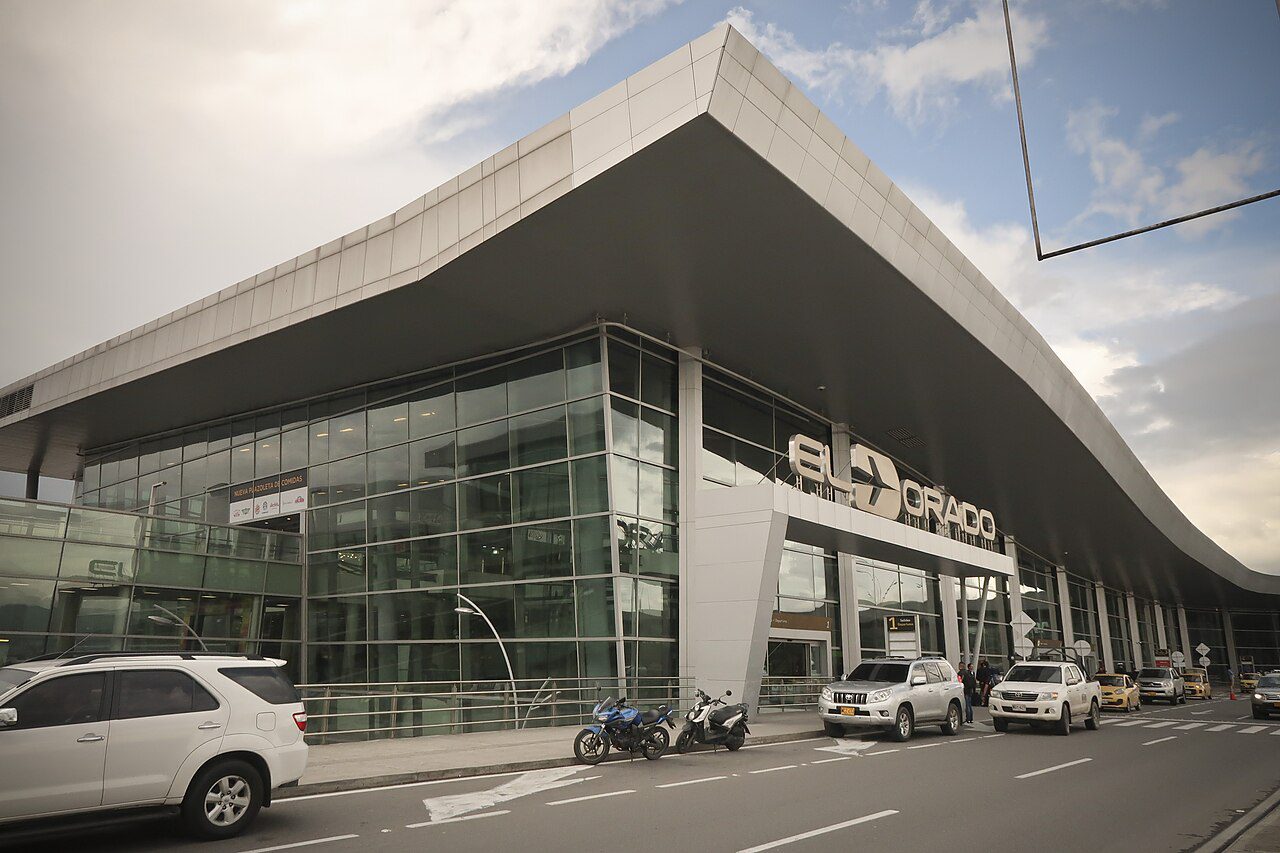
El Dorado International Airport in Bogotá continues to consolidate its position as one of Latin America’s leading aviation hubs, with passenger traffic surpassing 27 million according to the latest operational statistics published by OPAIN S.A.
Data updated to 28 February 2026 shows that the Colombian gateway handled 27,076,464 passengers alongside 421,465 flight operations, underlining the airport’s growing importance for both domestic connectivity and international travel flows across the region.
Passenger traffic exceeds 27 million at Bogotá’s main aviation gateway
Passenger traffic at El Dorado International Airport reached 27,076,464 travellers, confirming the scale of activity at Colombia’s primary international airport.
The figures highlight the strong contribution of both international and domestic markets. International passenger traffic accounted for 9,746,288 travellers, while domestic routes generated 17,330,345 passengers, illustrating the airport’s dual function as both a global gateway and the backbone of Colombia’s internal aviation network.
With nearly two-thirds of passengers travelling on domestic services, the airport plays a central role in connecting the country’s major economic and regional centres.
Domestic aviation drives the majority of passenger traffic
The predominance of domestic traffic reflects the structure of the Colombian aviation market, where air transport remains a key tool for territorial connectivity across a geographically complex country.
From Bogotá, airlines operate extensive domestic networks linking major cities such as Medellín, Cali, Cartagena and Barranquilla, as well as smaller regional destinations. This network structure positions the capital’s airport as a strategic redistribution hub, enabling efficient passenger flows across the national territory.
The strength of the domestic segment also contributes to the resilience of the airport’s overall traffic levels, balancing fluctuations that may occur in international demand.
More than 420,000 flight operations highlight the airport’s operational scale
Operational activity at the airport reflects this high level of passenger demand. Statistics indicate that the airport recorded 421,465 flight operations, including 210,399 landings and 211,066 take-offs.
Domestic operations accounted for the majority of movements, with 277,897 flights, while international services represented 143,568 operations. This distribution illustrates the operational intensity of the airport’s domestic network while confirming its strong international connectivity.
Such volumes place El Dorado International Airport among the busiest aviation platforms in Latin America, both in terms of passenger throughput and aircraft movements.
Seasonal peaks reflect strong year-end travel demand
Monthly statistics reveal clear seasonal patterns in airport activity. The busiest period of the year occurred in December, when the airport handled more than 32,000 flight operations, reflecting strong demand linked to holiday travel and family visits.
Traffic levels remain consistently high throughout the year, however, illustrating the structural importance of the airport within the country’s transport system.
Early 2026 figures confirm the continuation of this dynamic, with 2.1 million passengers recorded in January and 1.82 million in February, alongside more than 60,000 combined flight operations during the two-month period.
El Dorado consolidates Bogotá’s position as a regional aviation hub
Beyond its national role, the performance of El Dorado International Airport reinforces the position of Bogotá as a major aviation hub in Latin America.
The airport acts as a key node linking domestic Colombian routes with international services across the Americas and beyond. This dual connectivity enables airlines to efficiently channel passenger flows between regional markets while strengthening Bogotá’s strategic position in continental air transport networks.
As passenger volumes and operational activity continue to grow, the airport remains central to Colombia’s aviation ecosystem, supporting both the expansion of domestic mobility and the country’s integration into global air transport networks.