
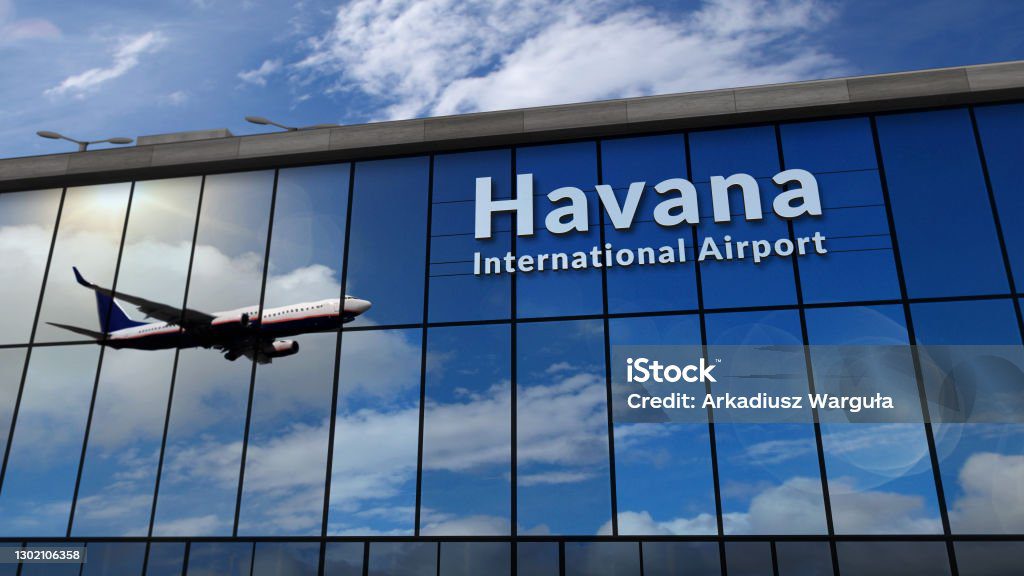
In early February 2026, several airports in Cuba, including Havana’s José Martí International Airport, were left without available aviation fuel. The situation was formalized through a NOTAM covering the period from 10 February to 11 March 2026. In practical terms, the absence of Jet-A1 makes normal commercial flight operations to the island impossible, triggering an immediate operational response from airlines serving the Caribbean.
A fuel supply disruption with immediate operational consequences
This aviation fuel shortage is part of a broader energy crisis that has been affecting Cuba for several months. The island is almost entirely dependent on imported petroleum products and is currently facing a combination of logistical, financial and geopolitical constraints that severely limit fuel supply. Aviation, which relies on uninterrupted access to Jet-A1, has become one of the most exposed sectors.
Unlike slot restrictions or airspace limitations, the lack of local fuel supply is an absolute technical constraint. Without Jet-A1 available on arrival, aircraft cannot operate standard rotations. Airlines are therefore left with only two options: suspend services or redesign operations through additional fuel uplift at departure or technical fuel stops outside Cuban territory. Both alternatives carry significant operational penalties.
Airlines forced into rapid and costly operational decisions
Airlines reacted swiftly. Air Canada announced the immediate suspension of its flights to Cuba, a decision affecting thousands of passengers during the peak winter season. To repatriate customers already on the island, the carrier operated repositioning flights without passengers on the outbound leg, a costly but unavoidable operational measure. Other Canadian airlines, including WestJet, Air Transat and Sunwing, also suspended their services to Cuba, in some cases until the end of the winter season in late March or early April. For these operators, Cuba typically represents a substantial share of winter traffic, with tens of thousands of passengers carried each month.
European carriers have taken a more cautious approach. Airlines such as Air Europa and Iberia have assessed scenarios allowing limited operations to continue, primarily through the addition of technical fuel stops outside Cuba. While this preserves some commercial presence, it results in longer flight times, higher fuel burn and materially increased operating costs.
From an operational perspective, the absence of local fuel fundamentally alters flight planning. Aircraft must uplift additional fuel at departure airports, reducing available payload for passengers and cargo. Technical stops introduce further complexity, affecting crew scheduling, slot coordination and overall schedule reliability. In a region where networks are built around tight rotations and strong seasonality, these adjustments quickly undermine operational efficiency.
A structural energy risk for Caribbean air networks
The economic impact extends well beyond cancelled flights. Airlines are absorbing higher fuel costs, additional landing and handling fees at intermediate stops, and disruptions to fleet rotations. Revenue losses from cancelled passenger and cargo services add to the pressure, particularly during a period that is traditionally critical for Caribbean operations. Industry estimates suggest that hundreds of flights are directly affected by the announced shortage, with tens of thousands of passengers impacted over the duration of the NOTAM.
Beyond the immediate disruption, the situation exposes deeper structural vulnerabilities. Cuba has limited aviation fuel storage and refining capacity, leaving its aviation sector highly dependent on consistent import flows. In a context of ongoing geopolitical tensions and supply restrictions, the resilience of aviation operations remains weak. This vulnerability is not unique to Cuba and reflects broader challenges faced by several island markets in the region.
Regional effects are already visible. Passenger flows are being diverted to alternative Caribbean destinations, including the Dominican Republic and Mexico, increasing pressure on hubs that are already heavily utilized during the winter season. For airlines, the Cuban fuel shortage has become a real-world stress test, demonstrating how a localized energy disruption can ripple across wider network structures.
Ultimately, the crisis serves as a reminder of a risk often underestimated in network planning: fuel availability cannot be taken for granted. In the short term, operators must manage the disruption and contain losses. In the medium term, the Cuban case highlights the need to fully integrate energy supply risk into network strategy, alongside infrastructure constraints, safety considerations and economic performance.