Geopolitical uncertainty, elevated fuel costs and shifting travel patterns continue to shape the operating environment for global cruise operators. Yet Carnival Corporation’s latest quarterly results point to a different story beneath those headwinds. The world’s largest cruise company reported record revenues, record adjusted earnings and historically strong booking trends, suggesting that underlying demand remains resilient despite a more challenging international environment. While the figures reflect one company’s performance rather than the entire industry, they offer a valuable snapshot of current market dynamics.
Strong commercial fundamentals continue to support demand
Carnival delivered record second-quarter revenue of $6.7 billion, alongside adjusted net income of $569 million, more than 20% higher than the same period last year. The company also recorded its twelfth consecutive quarter of record net yields, an indicator closely watched across the cruise industry as it reflects revenue performance after variable costs. Customer deposits reached an all-time high of $9 billion, while bookings for the remainder of 2026 remain ahead of last year’s pace at historically high pricing levels.
Taken together, these indicators point to more than just a strong financial quarter. They suggest that consumers continue to prioritise cruise travel despite ongoing economic and geopolitical uncertainty. Rather than relying on promotional pricing to stimulate demand, Carnival appears to be benefiting from sustained willingness among travellers to book at premium rates.
Geopolitical tensions remain a challenge, but not a market-wide disruption
One of the most noteworthy aspects of the company’s commentary is its acknowledgement of the impact of the conflict in the Middle East. According to Carnival, booking trends were affected primarily on European deployments, particularly itineraries in the Mediterranean located closest to the conflict zone.
However, management also emphasised that these disruptions remained geographically concentrated rather than affecting the broader business. The company stated that it deliberately prioritised pricing integrity over discounting, relying on previously secured occupancy levels to protect yields. More recent booking trends already suggest improving momentum, reinforcing management’s confidence that the slowdown was temporary rather than structural.
For cruise operators, the message is significant: geopolitical events may influence destination-specific demand, but they do not necessarily undermine the industry’s overall commercial resilience.
Pricing discipline is becoming an increasingly important competitive lever
Carnival’s latest update also illustrates an evolution in commercial strategy. Instead of pursuing maximum occupancy at any cost, the company highlighted its decision to preserve pricing across affected itineraries.
This reflects a broader revenue management approach increasingly visible across the cruise sector. Strong underlying demand allows operators greater flexibility to protect pricing rather than relying on last-minute discounts to fill remaining inventory. Such a strategy supports higher yields while reinforcing profitability, particularly when operating costs remain under pressure from fuel prices and inflation.
Although Carnival’s comments relate specifically to its own operations, they offer an indication of how major cruise groups may be adapting their commercial priorities in a more volatile global environment.
Longer booking windows are improving industry visibility
Another notable trend emerging from the results is the continued extension of booking windows.
Carnival reported that it is already 93% booked for 2026, with less inventory remaining than at the same point last year. At the same time, booking volumes and pricing for 2027 sailings are already running ahead of prior-year levels, while management described its booking curve as “the furthest out on record.“
For cruise companies, longer booking horizons provide much more than revenue certainty. They improve deployment planning, strengthen pricing strategies and offer greater visibility for operational decision-making. They also benefit ports and destinations, which increasingly depend on reliable long-term scheduling to optimise infrastructure, staffing and tourism planning.
Long-term investment continues despite short-term uncertainty
Perhaps the clearest indication of management’s confidence lies in Carnival’s continued investment programme.
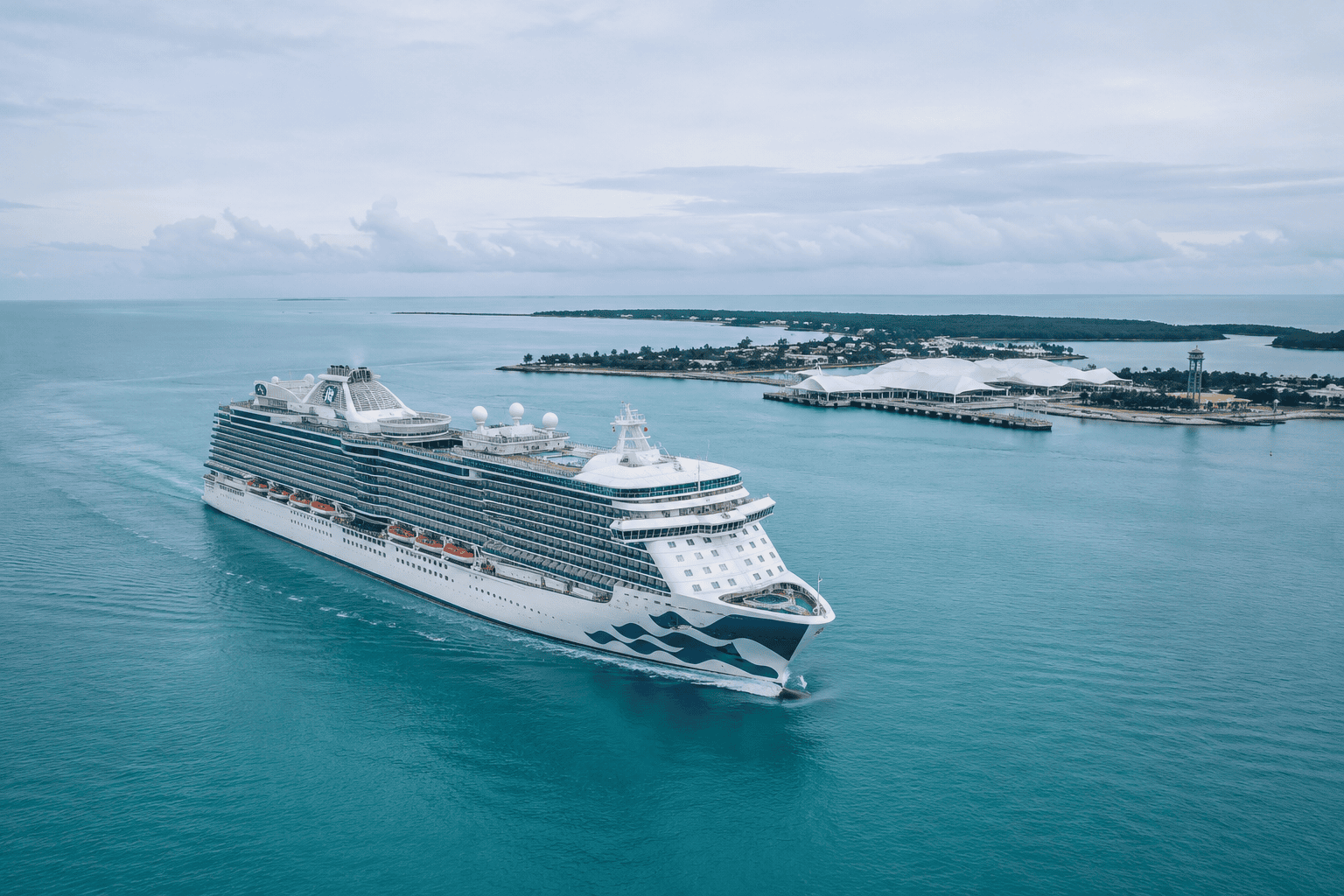
During the quarter, the company announced an order for three new LNG-powered vessels for Princess Cruises, scheduled for delivery between 2035 and 2039. It also continued expanding fleet modernisation programmes across several brands while investing further in exclusive destinations such as Celebration Key, RelaxAway at Half Moon Cay and Isla Tropicale.
These projects extend well beyond the current business cycle. Rather than adopting a defensive posture in response to geopolitical uncertainty, Carnival is continuing to invest in fleet renewal, destination development and guest experience—an approach that suggests confidence in the long-term growth trajectory of cruise tourism.
Looking beyond the quarterly results
Quarterly earnings rarely provide a complete picture of an industry. However, Carnival’s latest performance offers several useful signals for cruise executives, ports and destination stakeholders. Demand remains robust, travellers continue booking further in advance, pricing has proven resilient despite regional geopolitical disruptions, and long-term investment plans remain firmly in place.
While these trends cannot be automatically extrapolated to the entire cruise industry, they reinforce the view that the sector’s post-pandemic recovery has evolved into a period of sustained commercial strength. For maritime stakeholders across the Caribbean and the wider Americas, Carnival’s latest results suggest that the industry’s fundamentals remain considerably stronger than the current geopolitical backdrop alone might imply.