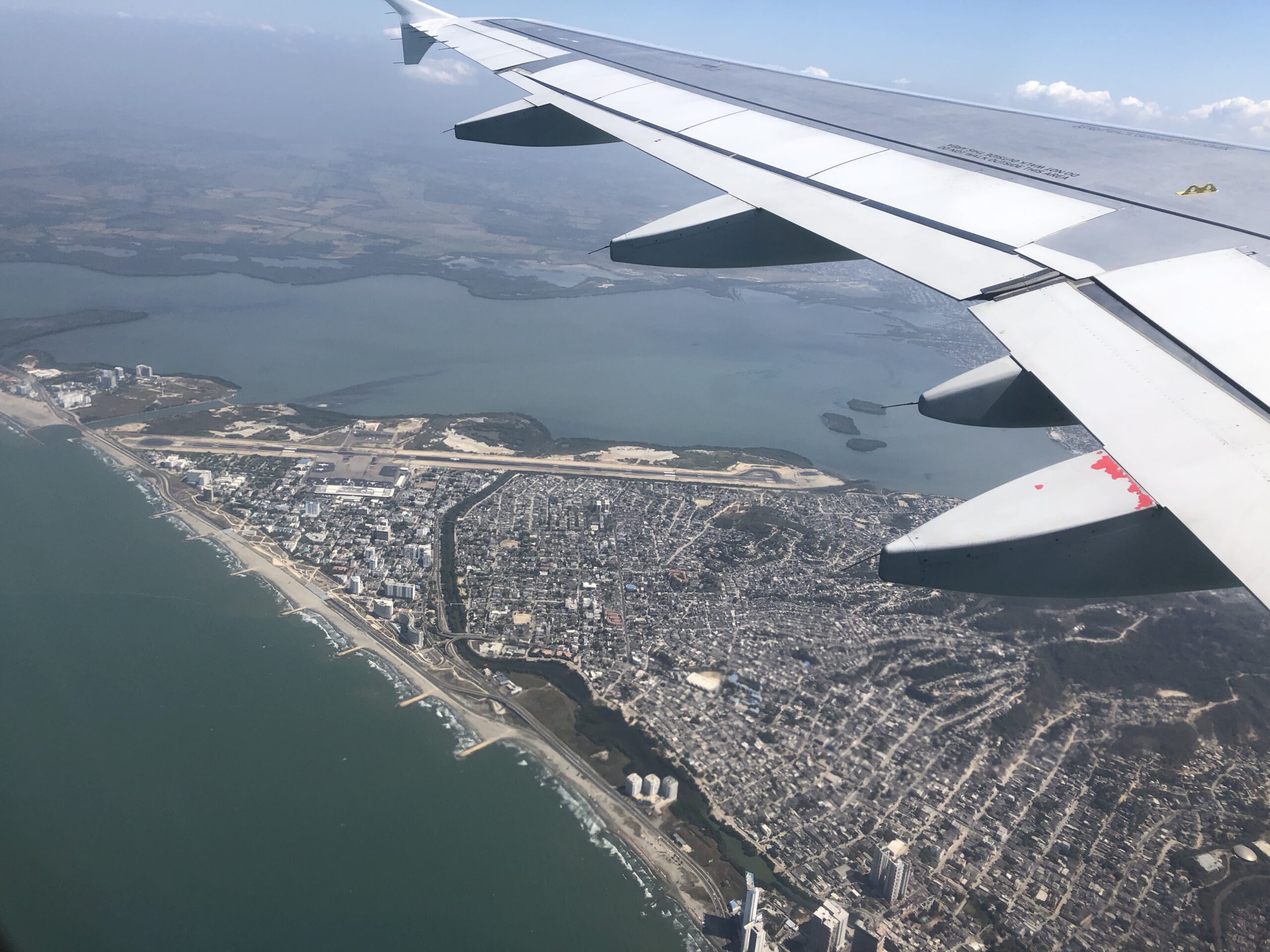
Rafael Núñez International Airport, Cartagena, has opened 2026 with solid traffic growth, confirming the continued momentum of one of Colombia’s most important tourism gateways. During the first months of the year, passenger flows increased across both domestic and international segments, reflecting sustained travel demand and strengthening the airport’s role in regional air connectivity across the Caribbean basin.
Early-year performance follows a record year for the airport, which handled more than 7.7 million passengers in 2025, highlighting Cartagena’s expanding position within Colombia’s aviation network and its growing appeal to international travelers.
Early-year traffic confirms positive growth trend
Operational data for the beginning of 2026 illustrates the scale of activity at Cartagena’s main air gateway.
In January 2026, Rafael Núñez International Airport handled 776,705 passengers, with 580,098 traveling on domestic routes and 196,607 on international services. Traffic growth was observed across both segments, with domestic passenger volumes increasing 7.8% year-on-year and international traffic rising 6.5%, resulting in an overall growth rate of 7.5% compared with January 2025.
Aircraft activity followed a similar trajectory. The airport recorded 5,471 aircraft movements during the month, including 4,086 domestic operations and 1,385 international flights, reflecting a high level of operational activity at the start of the year.
Traffic remained robust in February 2026, when the airport processed 595,195 passengers, including 428,947 domestic travelers and 166,248 international passengers. Aircraft movements reached 4,470 operations, of which 3,242 were domestic flights and 1,228 international services.
Taken together, the first two months of the year represent 1,371,900 passengers handled, with year-to-date growth estimated at 4.5% compared with the same period in 2025. International traffic continues to outperform domestic growth, increasing 7% year-on-year, while domestic passenger volumes rose 3.7%.
Tourism demand continues to drive passenger flows
Cartagena’s aviation performance remains closely tied to the city’s position as one of Colombia’s leading tourism destinations. The early weeks of the year traditionally represent one of the busiest travel periods, driven by both domestic and international tourism.
During the first 13 days of January 2026, the airport handled 335,714 passengers, a 5% increase compared with the same period in 2025. This surge coincided with the Three Kings holiday period, which is considered one of the busiest travel weekends of the year for air transport in Colombia.
The city’s cultural calendar further reinforces passenger demand during this period. Events such as the FAREX Handicrafts Fair, held from January 3 to 12, and the Cartagena Music Festival, which took place from January 4 to 12, attracted visitors from across the country and abroad. Additional cultural highlights later in the season, including the Virgen de la Candelaria Festival and the Hay Festival, also contribute to sustained visitor flows.
This combination of tourism demand and strong seasonal travel patterns continues to generate consistent traffic growth for the airport.
Strengthening Cartagena’s role in regional air connectivity
Beyond tourism flows, the latest traffic figures underscore the growing strategic role of Cartagena Airport within Colombia’s air transport system.
The airport serves as the primary gateway to Colombia’s Caribbean coast, connecting the historic port city with major domestic markets while also supporting international routes linking Cartagena with North America, Latin America and the wider Caribbean.
International passenger traffic reached 1,752,903 travelers in 2025, representing a 4.9% increase compared with the previous year. Domestic passenger traffic also expanded during the year, rising 2.8%, illustrating the airport’s dual function as both a tourism hub and a key node in the national aviation network.
Operational performance has been supported by improvements in infrastructure and regulatory recognition. During 2025, the airport received International Aerodrome certification from Colombia’s Civil Aeronautics Authority, confirming compliance with high standards of safety, operational efficiency and service quality.
According to airport management, the strong results achieved during the year-end travel season played a decisive role in pushing annual passenger volumes to record levels.
Operational outlook for 2026
With traffic volumes continuing to expand, Rafael Núñez International Airport is preparing to adapt its operations and infrastructure to accommodate sustained growth in passenger demand.
Airport authorities have indicated that operational improvements and infrastructure upgrades will remain a priority in order to maintain efficient passenger processing, ensure reliable flight operations and support the continued expansion of international connectivity.
The positive start to 2026 suggests that Cartagena’s air gateway could maintain its upward trajectory as travel demand remains strong across the Colombian Caribbean.
Industry perspective
For the aviation industry, the latest traffic data confirms the growing importance of Cartagena as a regional air connectivity hub driven by tourism and international demand. With passenger volumes continuing to rise and international traffic expanding at a faster pace than domestic travel, the airport is consolidating its position as one of Colombia’s most dynamic aviation gateways and a key entry point to the Caribbean region.