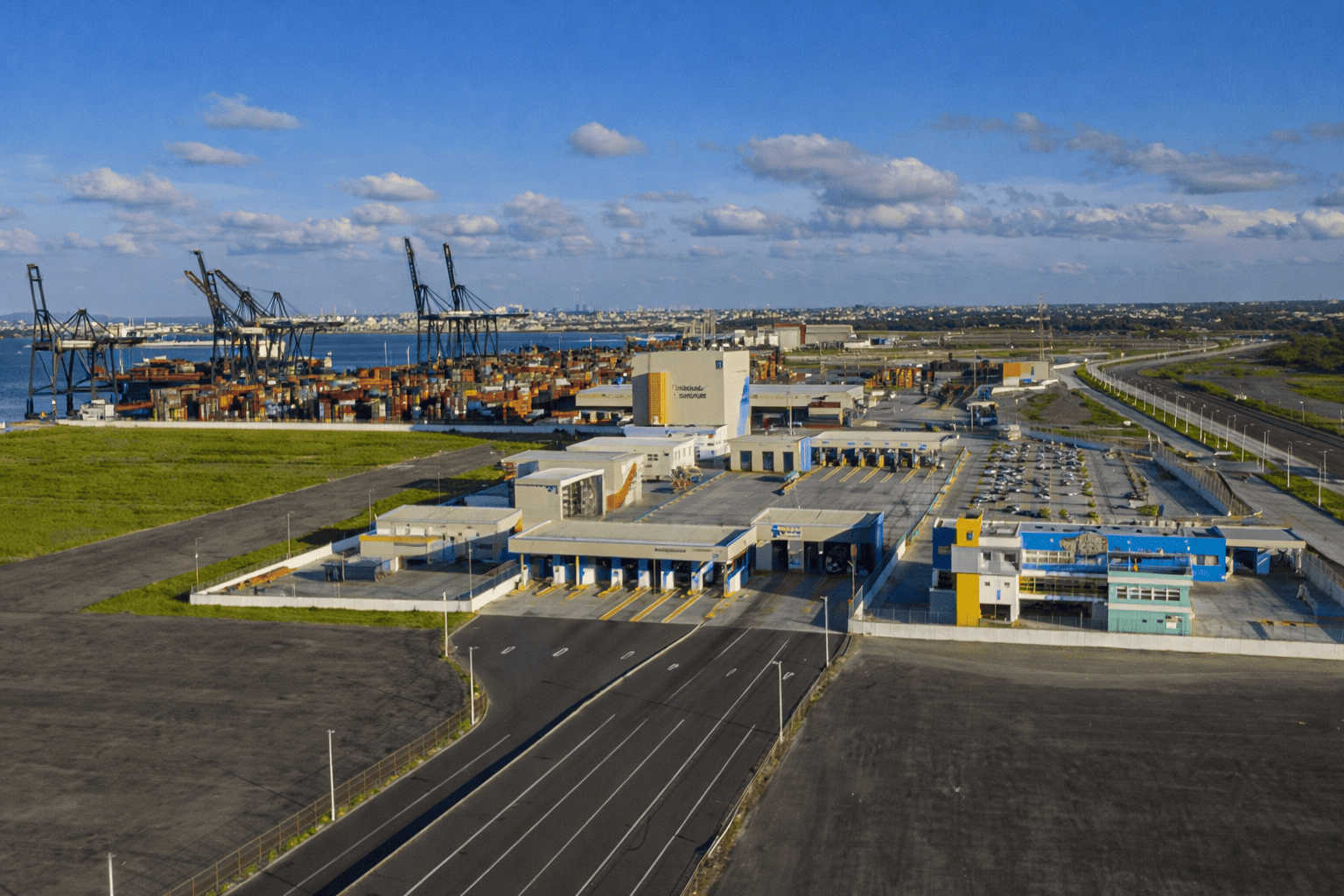
In February 2026, Hutchison Ports formally launched Phase II of the expansion of its Specialized Container Terminal (TEC) at the Port of Veracruz, following an agreement with Mexico’s port authority, ASIPONA Veracruz. The investment, reported at over USD 24 million, adds 350 linear meters of quay, expands operational space by 31 hectares and brings the terminal’s total infrastructure to approximately 1,050 meters of berth and 72.4 hectares of yard capacity, with projected throughput capability reaching 2.4 million TEU annually.
On paper, the project is a capacity upgrade. In strategic terms, it signals something broader: the reinforcement of Veracruz as a competitive Atlantic gateway at a moment when trade realignments, nearshoring dynamics and corridor diversification are reshaping maritime flows across the Americas.
A Measured Infrastructure Leap
Phase II materially alters the operational profile of the terminal. The additional quay length enables the facility to handle up to three deep-draft vessels simultaneously, reducing berth waiting times and increasing scheduling flexibility. The yard extension improves container stacking capacity and throughput resilience, a critical factor as service rotations grow denser and shipping alliances optimize port calls.
Equipment modernization is central to the upgrade. The addition of ship-to-shore cranes and 11 electric RTG cranes strengthens vertical integration between quay and yard operations, while reducing reliance on older diesel-based handling equipment. The introduction of electric RTGs aligns the terminal with gradual decarbonization objectives increasingly embedded in port concession frameworks across Latin America.
The project also includes the development of a Container Freight Station (CFS), enhanced security systems and dedicated inspection zones for regulatory authorities. These elements are operationally significant. Efficiency gains no longer stem solely from berth length; they derive from synchronized cargo handling, clearance speed and digital oversight.
Taken together, the expansion transforms the terminal from a high-volume regional asset into a platform capable of supporting larger vessels and more complex service patterns. This shift positions Veracruz not merely as a domestic logistics node, but as a competitive player within the Atlantic basin.
Veracruz in the Atlantic Competitive Landscape
The Gulf of Mexico and Caribbean maritime space is structurally competitive. Ports such as Houston, Cartagena, Kingston, Freeport and Panama each operate within distinct strategic niches—energy exports, transshipment hubs, gateway ports or integrated logistics platforms. Veracruz has historically functioned primarily as Mexico’s principal Atlantic gateway for imports and exports serving the country’s central and eastern industrial corridors.
The Phase II expansion enhances its capacity to absorb greater volumes without immediate congestion risk. While Veracruz is not positioned as a pure transshipment hub in the Caribbean sense, its enhanced berth depth and yard scale allow it to attract larger services and integrate more effectively into long-haul rotations.
As shipping lines continue rationalizing networks in response to cost discipline and geopolitical shifts, ports that combine scale, reliability and hinterland connectivity gain priority in route planning. Veracruz’s modernization increases its competitiveness vis-à-vis other Gulf and Caribbean ports competing for similar services.
It does not displace established regional hubs, but it strengthens Mexico’s bargaining position within alliance scheduling and service allocation discussions.
Trade Corridors and the Nearshoring Effect
The timing of the expansion is not incidental. Mexico has become a central beneficiary of nearshoring trends, as manufacturers relocate or expand operations to serve North American markets more efficiently. Industrial growth in automotive, electronics and consumer goods manufacturing has intensified logistics demand.
Veracruz plays a critical role in these supply chains. Its Atlantic access complements Pacific ports and provides an alternative route for transatlantic and certain Asia–US–Mexico flows. Enhanced container capacity increases flexibility for exporters and importers operating within just-in-time production systems.
The port’s inland connectivity, particularly via rail and road corridors linking Veracruz to Mexico City and industrial hubs in the Bajío region, amplifies its strategic relevance. Infrastructure upgrades at the maritime interface only realize their full value when integrated with hinterland logistics efficiency. In that sense, Phase II should be understood as one component of a broader trade facilitation architecture.
If nearshoring continues at its current pace, Veracruz’s expanded capacity may transition from optional buffer to structural necessity within Mexico’s export ecosystem.
Concession Model and Institutional Signaling
The expansion also reflects institutional continuity within Mexico’s port governance model. ASIPONA, the federal port authority framework, maintains oversight while enabling private operators such as Hutchison Ports to deploy capital and operational expertise.
In a global environment where concession stability and regulatory predictability are closely scrutinized by infrastructure investors, the project sends a signaling effect. It demonstrates that port development remains an investable domain in Mexico, supported by structured agreements and long-term planning.
While USD 24 million is modest compared to mega-terminal expansions elsewhere, the investment reinforces incremental capacity scaling rather than speculative overbuilding. That discipline aligns with the broader pattern observed in Latin American port development over the past decade, where phased expansions replace large, debt-heavy projects.
For investors monitoring maritime infrastructure across the Caribbean basin, Veracruz’s expansion indicates that Mexico intends to consolidate, not merely maintain, its Atlantic port network.
Technology, Energy and Long-Term Competitiveness
Port competitiveness increasingly extends beyond quay depth and yard space. Environmental compliance, automation and energy efficiency now influence service allocation decisions and financing costs.
The introduction of electric RTG cranes reduces local emissions and operating costs over time. Enhanced surveillance and process automation contribute to cargo traceability and security compliance, both of which are central to international trade standards.
While Veracruz is not positioning itself as a “smart port” in the fully digitalized sense seen in some Asian terminals, the Phase II elements reflect an awareness that modernization must accompany scale. ESG metrics, carbon intensity and operational transparency are no longer peripheral considerations; they influence carrier partnerships and institutional financing conditions.
The ability to combine incremental capacity growth with gradual technological integration strengthens the port’s resilience against future regulatory tightening.
Implications for the Caribbean Basin
For the wider Caribbean and Gulf region, Veracruz’s expansion contributes to a subtle recalibration of competitive balance. As Mexico strengthens its Atlantic gateway capacity, certain cargo flows may increasingly bypass smaller regional transshipment points in favor of direct or semi-direct services.
However, the relationship is not purely competitive. Enhanced Mexican throughput can generate complementary feeder demand into Caribbean markets. Redistribution of mainline calls does not eliminate secondary services; it reshapes them.
Shipping alliances will continue to optimize rotations based on cost, draft, cargo density and network balance. Veracruz’s expanded infrastructure ensures it remains embedded within those calculations.
From Expansion to Consolidation
The strategic question now shifts from construction to utilization. Capacity growth must translate into sustainable throughput increases. Global trade volatility, freight rate normalization and geopolitical shifts will influence traffic evolution over the next two years.
If nearshoring accelerates and North American demand remains stable, Veracruz is positioned to absorb additional volumes without immediate bottlenecks. If macroeconomic headwinds intensify, the phased nature of the expansion limits financial exposure.
The Phase II project does not redefine global shipping routes overnight. Its significance lies in reinforcing Mexico’s Atlantic infrastructure at a time of structural trade realignment. It reflects disciplined capacity enhancement, technological adaptation and institutional continuity.
In an era where ports compete not only on geography but on reliability and strategic foresight, Veracruz’s expansion strengthens its role as a stable, scalable gateway within the Atlantic maritime system.