
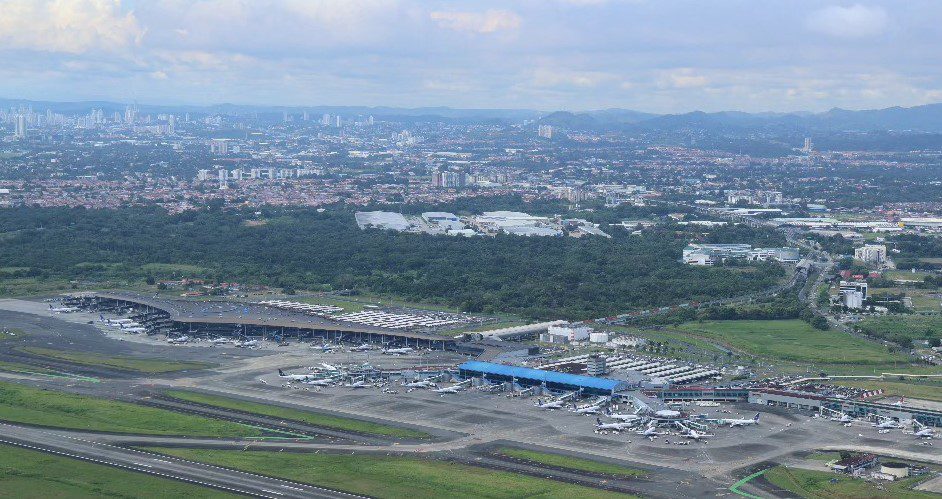
At a time when competition between airport hubs is intensifying across Latin America, Panama’s Tocumen International Airport continues to strengthen its position as a strategic node in the continent’s air transport system. Recent operational results and traffic data highlight the consolidation of a hub model built around regional connectivity, transit traffic and sustained infrastructure development.
Far from being simply a national gateway, Tocumen has evolved into a continental connector linking North America, South America, Central America and the Caribbean. The latest figures published by the airport’s administration illustrate how this model is translating into growing traffic, expanding connectivity and a long-term strategy aimed at reinforcing Panama’s role in the region’s aviation landscape.
A hub built around continental connectivity
One of the defining characteristics of Tocumen’s model is the dominant role of transit passengers. In January 2026 alone, 71% of the airport’s travelers were connecting passengers, representing more than 1.43 million people using Panama as an intermediate hub to reach destinations across the Americas and beyond.
This structure places Tocumen within the global category of airports whose efficiency relies on synchronizing waves of arrivals and departures to facilitate rapid connections. In practice, the airport functions as a redistribution platform linking multiple regional markets rather than serving primarily as a point-to-point destination.
Panama’s geographic position plays a decisive role in this configuration. Located at the crossroads of the Americas, the country provides airlines with a natural midpoint between northern and southern markets, allowing for efficient routing across the hemisphere.
Traffic growth confirms the hub dynamic
The performance indicators released by Tocumen underline the strength of this hub-based system. In 2025, the airport handled 20.98 million passengers, representing a 9% increase compared with the previous year.
The momentum has continued into 2026. In January alone, Tocumen recorded 2,021,225 passengers, marking a 15% increase compared with January 2025 and setting a new historical record for passenger traffic during that month.
Daily activity reflects the intensity of operations at the airport. During January, Tocumen handled an average of 65,210 passengers per day, with traffic peaks typically occurring on Mondays, Saturdays and Sundays.
Air traffic movements also increased, reaching 15,420 aircraft operations during the month, equivalent to a 12% rise year-on-year and an average of approximately 445 operations per day.
Network density supporting regional connectivity
Beyond traffic volumes, Tocumen’s role as a regional hub is supported by the breadth of its international network. The airport connects Panama with 95 to 97 international destinations, served by 17 passenger airlines and 28 cargo carriers.
This network enables direct links across Latin America, the Caribbean, North America and Europe, positioning Tocumen as a central node within the continent’s air transport flows.
The distribution of passenger demand illustrates the strength of intra-regional connectivity. In January 2026, the airport’s top origin-destination markets included Bogotá, Miami, San José, Medellín and Punta Cana, reflecting the importance of routes linking major economic centers across the Americas.
Such network density is essential for hub operations. The greater the number of destinations served, the more connection opportunities airlines can offer passengers, reinforcing the attractiveness of the airport as a transfer point.
Operational performance as a strategic asset
Operational reliability remains a critical component of the hub model, where tight connection windows require precise coordination between arrivals and departures.
In this regard, Tocumen has recently received international recognition for its operational performance. According to the Cirium On-Time Performance Review 2025, the airport achieved a 93.34% on-time performance rate, earning the distinction of the world’s most punctual medium-sized airport for the second consecutive year.
While punctuality is not the only factor defining the competitiveness of an airport hub, such levels of operational consistency reinforce the efficiency required to sustain complex transit operations.
As Tocumen’s general manager José Ruiz Blanco noted during the award ceremony, punctual operations reflect coordinated efforts across the entire airport ecosystem, including airlines, authorities and service providers.
Cargo and logistics as complementary pillars
Passenger traffic is not the only dimension shaping Tocumen’s strategic importance. The airport has also strengthened its position as a regional logistics platform.
In 2025, Tocumen handled 248,455 tonnes of air cargo, marking a record level for the airport. This performance highlights the growing relevance of air freight in the hub’s economic model, particularly for time-sensitive trade flows across the Americas.
The integration of passenger and cargo operations reinforces Tocumen’s role within Panama’s broader logistics ecosystem, which also includes maritime shipping through the Panama Canal and expanding regional distribution networks.
Investment and long-term strategy
To sustain this trajectory, Tocumen’s administration has outlined a series of investments aimed at maintaining operational efficiency and expanding capacity in the coming years.
Key priorities include:
- rehabilitation of runways and taxiways
- deployment of biometric and automated passenger processing systems
- continued modernization of airport infrastructure
- further development of cargo facilities
- improvements to the passenger experience.
These initiatives form part of the Tocumen Master Plan 2030–2050, which provides the strategic framework for the airport’s long-term expansion. The plan integrates objectives related to safety, operational sustainability, climate resilience and the coordination of airport development with Panama’s broader urban and logistics infrastructure.
Financial indicators also reflect the airport’s growing economic role. In 2025, Tocumen generated more than $315 million in revenue, representing an increase of roughly 7% compared with 2024. For 2026, revenues are projected to reach between $334 million and $356 million, supported by continued traffic growth.
A strategic gateway for the Americas
Taken together, these developments highlight how Tocumen has evolved beyond its role as Panama’s primary airport to become a strategic aviation gateway for the Americas.
The combination of geographic positioning, a dense international network, strong transit traffic and sustained infrastructure investment has enabled the airport to consolidate its hub model within the region’s competitive aviation landscape.
As Latin American air transport continues to expand, Tocumen’s challenge will be to maintain operational efficiency while scaling its infrastructure and services to accommodate rising demand. If current trends persist, Panama’s main airport is likely to remain a central node in the continent’s air connectivity for decades to come.