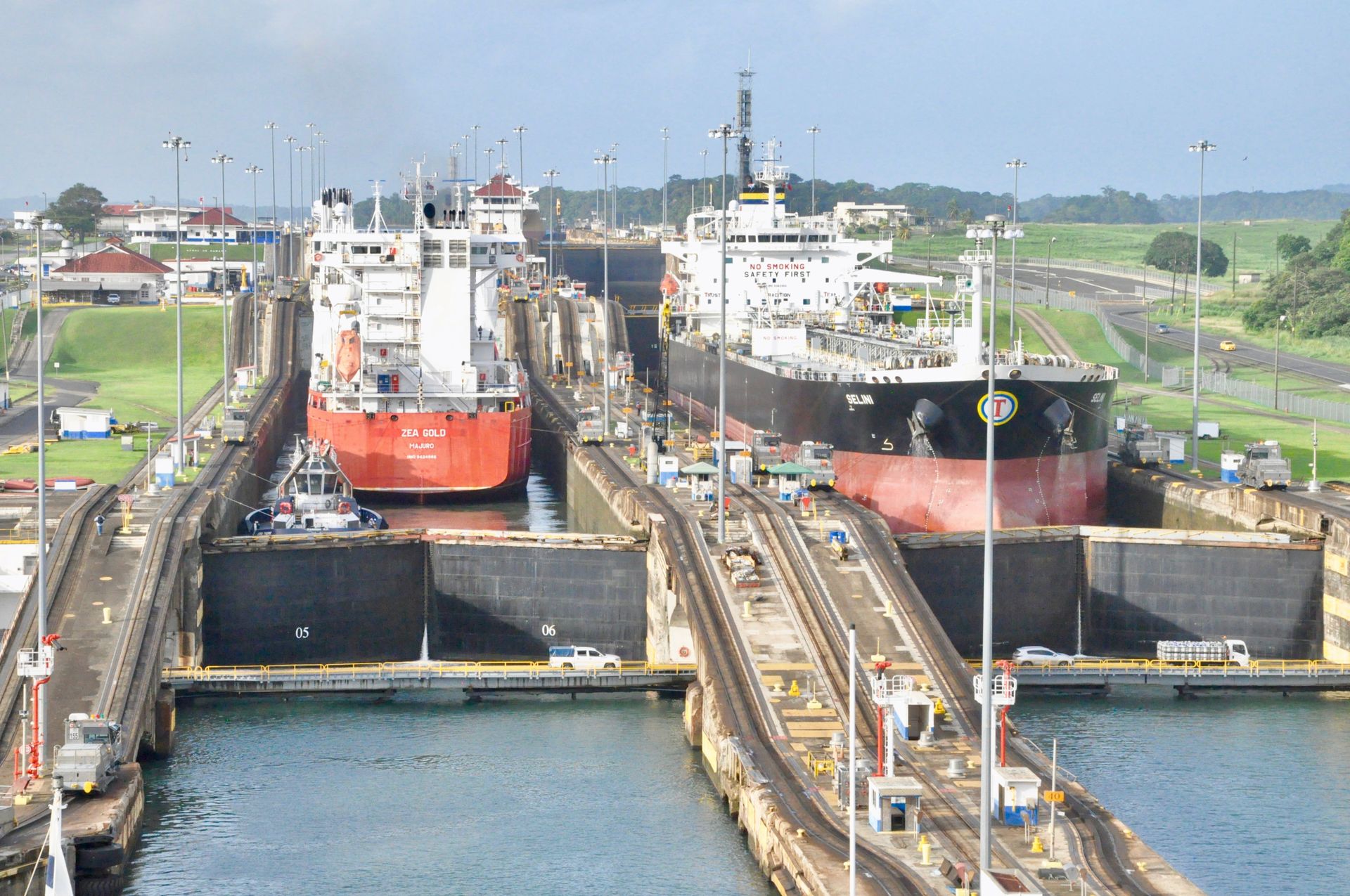
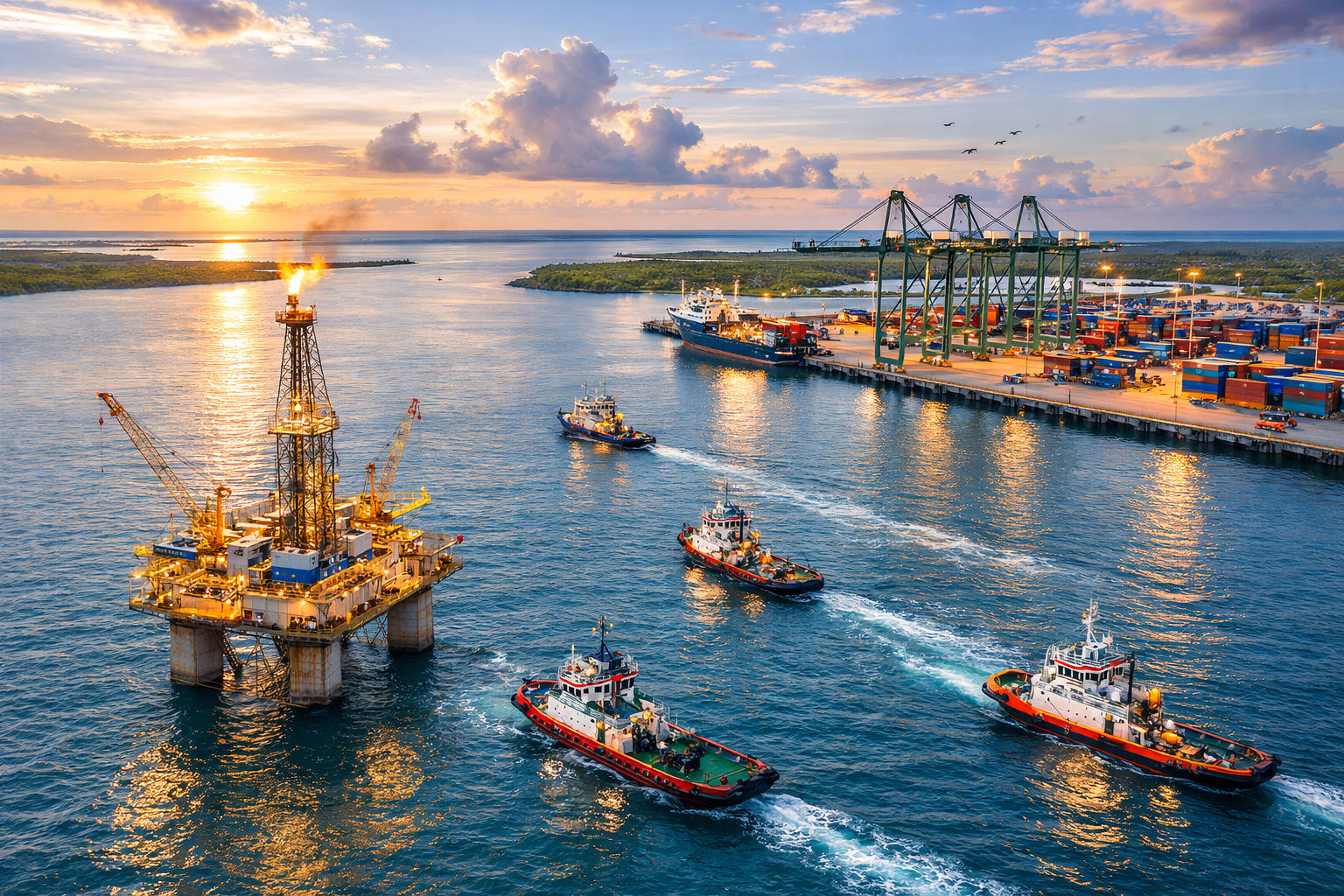
The acceleration of offshore oil development in Guyana and Suriname is no longer just an energy story. It is becoming a maritime story — and potentially a structural one for the wider Caribbean basin.
At the 55th Annual Conference of the CSA, cargo projections presented by Suriname port authorities revealed the scale of the shift underway. Guyana recorded a 77% increase in FCL volumes between 2020 and 2024. Projections point to cumulative growth of +159% between 2020 and 2028. Over the same 2020–2028 horizon, Suriname is projected to expand by +69%, with forward growth estimates of approximately 10% annually between 2025 and 2028.
These are not incremental adjustments. They reflect a structural reconfiguration of logistics demand across Northern South America.
Energy as a Logistics Multiplier
Oil development does not simply generate export volumes. It creates a logistics ecosystem. Offshore platforms require continuous supply chains for equipment, drilling components, specialized vessels, engineering services and workforce rotation. Associated infrastructure — fabrication yards, storage facilities, service bases — multiplies cargo movements.
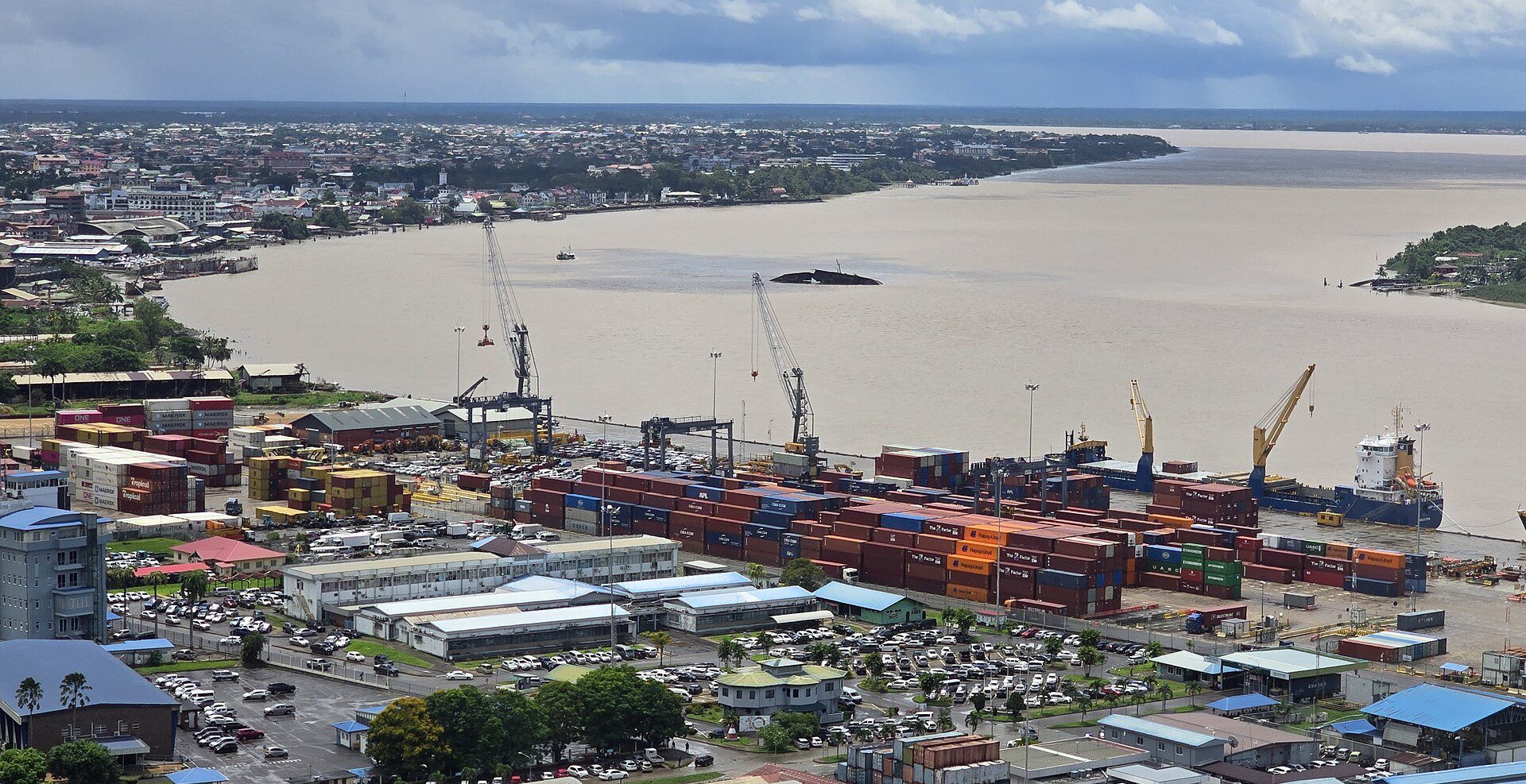
In Guyana, the offshore oil boom has already transformed port utilization patterns, increasing containerized cargo and break bulk activity linked to energy operations. Suriname is positioned to follow a similar trajectory as its offshore blocks advance toward development.
The maritime effect is cumulative. Energy projects generate upstream imports long before exports dominate the balance sheet. This creates sustained inbound cargo flows that reshape port demand profiles. Containerized shipments of specialized equipment, industrial materials and support services expand port throughput even before production peaks.
The Guyana–Suriname axis is therefore evolving into more than a production zone. It is becoming a logistics corridor.
Pressure on Infrastructure and Port Capacity
Rapid growth introduces structural pressure. Ports that were designed for moderate regional throughput now face accelerated demand curves.
Projected annual growth of approximately 10% between 2025 and 2028 implies compounded strain on berth capacity, yard space, vessel scheduling and hinterland connectivity. Even if absolute volumes remain smaller than major Latin American hubs, the rate of change is significant for small and mid-sized port systems.
Break bulk volumes are also expected to increase steadily through 2028, reflecting the heavy industrial nature of offshore energy supply chains. Unlike standard containerized trade, break bulk operations require specialized handling capacity, larger storage footprints and dedicated equipment.
This growth creates both opportunity and exposure. Ports that expand strategically, invest in dredging where necessary, improve yard management and integrate digital coordination systems can consolidate their role as primary gateways to the offshore industry. Ports that underinvest risk congestion, vessel delays and reputational erosion among carriers and energy operators.
Infrastructure planning cycles, however, often lag behind private-sector energy investment timelines. The coordination gap between public port authorities and private offshore developers will become a defining variable in corridor performance.
Regional Ripple Effects
The emergence of the Guyana–Suriname corridor does not occur in isolation. It influences the broader Caribbean maritime map.
Historically, Trinidad and Tobago functioned as a key logistics and energy hub in the southern Caribbean. As Guyana expands production and Suriname advances exploration, regional energy gravity may shift northward. Feeder networks that previously concentrated around established hubs may reorient to serve new demand nodes.
Eastern Caribbean islands, long dependent on transshipment through a limited number of regional hubs, could experience secondary effects. Increased shipping activity in Northern South America may create new routing options, but it may also intensify competition for feeder capacity.
Global carriers continuously reassess network optimization based on volume concentration and turnaround efficiency. If the Guyana–Suriname corridor sustains projected growth, routing decisions could increasingly prioritize direct or near-direct connections to these ports, reducing reliance on more distant transshipment points.
Maritime geography is rarely static. It shifts when cargo density shifts. The current projections suggest that Northern South America is entering a phase of density acceleration.
Governance and Integration as Strategic Variables
Volume growth alone does not guarantee corridor consolidation. Institutional coherence remains decisive.
As discussed in previous analyses of CSA 2025, Caribbean port systems face governance fragmentation, incomplete digital integration and uneven customs modernization. If the Guyana–Suriname corridor expands without harmonized regulatory frameworks, standardized customs processes and interoperable digital systems, efficiency gains may be diluted.
Energy-driven cargo flows amplify both strengths and weaknesses. Where governance frameworks are aligned and port community coordination is strong, growth translates into competitive advantage. Where administrative fragmentation persists, growth magnifies bottlenecks.
The corridor’s trajectory will therefore depend not only on offshore production levels, but on how effectively port authorities, customs administrations and private operators coordinate expansion.
A Structural Shift or a Cyclical Surge?
The question now facing regional decision-makers is whether the Guyana–Suriname expansion represents a temporary boom or a structural rebalancing of maritime power within the Caribbean basin.
Oil reserves under development in Guyana rank among the most significant recent discoveries globally. Suriname’s offshore potential remains substantial. Energy projects of this scale typically extend over decades rather than years.
If projected cargo growth materializes through 2028 and continues beyond, the corridor could entrench itself as a permanent logistics axis in Northern South America. That would alter feeder hierarchies, investment flows and possibly insurance and financing patterns across the region.
The maritime map of the Caribbean has historically been shaped by trade concentration in a handful of dominant hubs. The rise of the Guyana–Suriname energy corridor suggests that a new node of influence is forming.
Whether it becomes a fully integrated maritime power center will depend on infrastructure execution, governance alignment and the capacity of regional stakeholders to convert energy momentum into long-term logistical architecture.
What is clear is that the Caribbean maritime landscape is no longer static. Energy is accelerating its reconfiguration.