A refrigerated container’s journey does not begin at the quay. For bananas, avocados and other fresh produce, every kilometre between the packing facility and the vessel adds time, road exposure and pressure on the cold chain.
That is what makes Puerto Antioquia more than a conventional port-capacity story.
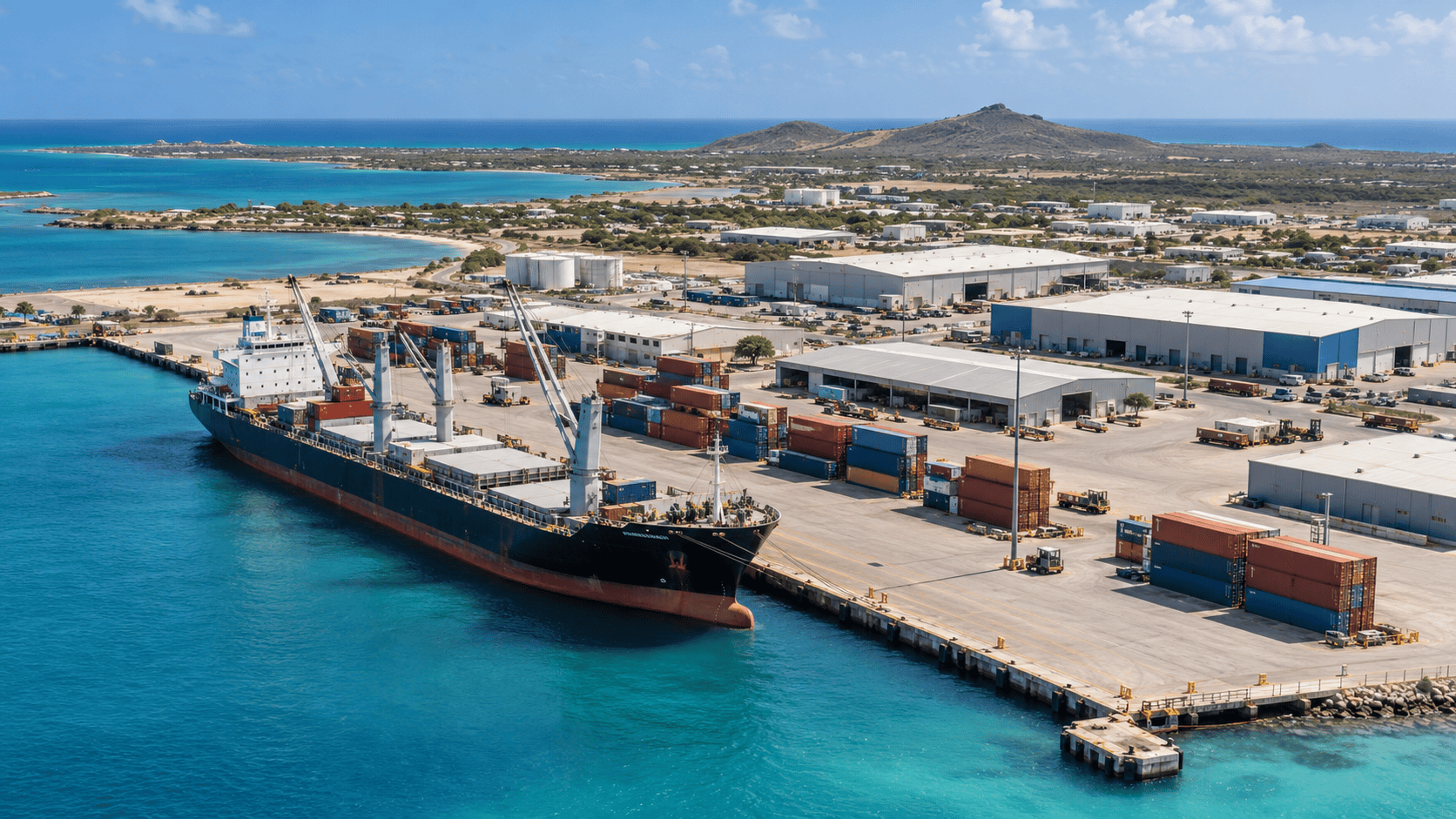
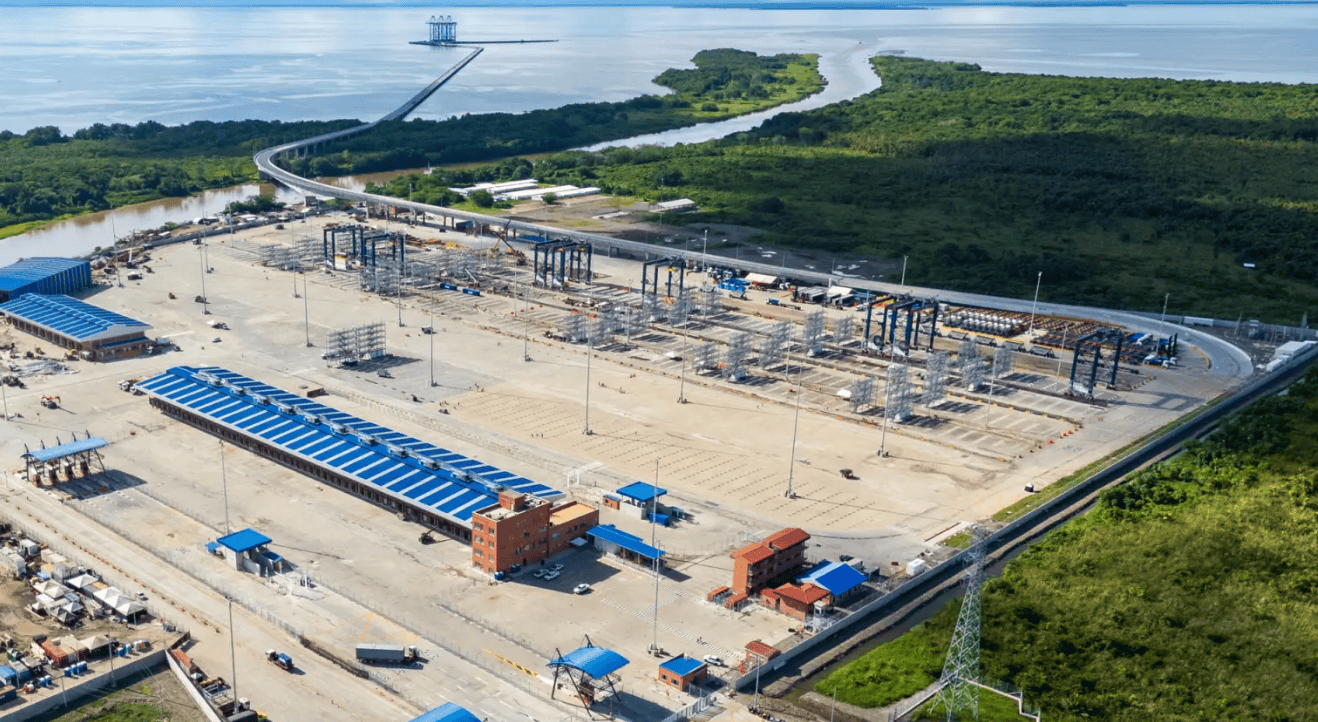
Now operational on Colombia’s Caribbean coast in the Gulf of Urabá, the terminal sits close to one of the country’s most important agricultural export regions. Its proposition is not simply to handle more containers. It is to bring a modern maritime gateway closer to the cargo.
For refrigerated exports, that could become a meaningful competitive advantage.
Urabá already had the cargo
Colombia exported close to 2.6 million tonnes of bananas in 2025, generating more than US$1.3 billion in export revenue. Urabá has long been one of the country’s principal production and export regions for the fruit.
Puerto Antioquia is therefore not creating a new agricultural trade flow.
When the project was being structured, IDB Invest described traffic from Urabá as existing and captive, with major shipping lines already serving the region despite the absence of a modern deep-water terminal.
What changes in 2026 is the interface between that cargo and the shipping network.
Historically, operations around Turbo faced infrastructure constraints and relied partly on barges to move cargo between shore facilities and vessels. Puerto Antioquia introduces direct deep-water berthing and modern container-handling infrastructure.
The opportunity is consequently less about generating new agricultural production than about improving the route existing production takes to international markets.
A terminal aligned with refrigerated cargo
Puerto Antioquia has been equipped with an announced annual container capacity of around 650,000 TEU.
But for the agricultural story, another figure matters more: 1,300 reefer plugs.
That refrigerated capacity reflects the type of cargo generated by the terminal’s hinterland. Bananas, avocados and other perishables require temperature-controlled infrastructure throughout the logistics chain, including while containers wait inside the terminal before loading.
The port also has three ship-to-shore cranes and eight electric rubber-tyred gantry cranes and is designed to accommodate vessels of up to approximately 15,000 TEU.
In February 2026, CMA CGM’s 5,900-TEU FIORDLAND became the first large containership to call at the new facility.
The significance is not simply that Puerto Antioquia can handle larger ships. It is that substantial reefer capacity, direct berthing and container infrastructure have been placed close to an established agricultural production base.
The competitive advantage may begin inland
Location is central to that proposition.
CMA CGM estimates that Puerto Antioquia is around 33% closer on average to Colombia’s main production centres than the Caribbean gateways used in its comparison. The group places the terminal approximately 300 kilometres from Medellín and 700 kilometres from Bogotá.
Puerto Antioquia itself estimates a distance reduction of around 47% from Medellín, 33% from Bogotá and as much as 36% from Colombia’s coffee-growing region.
These figures come from the port and its commercial partners rather than from an independent logistics benchmark. But the underlying principle remains important.
For refrigerated cargo, gateway selection begins well before the port gate.
A shorter inland journey can mean less trucking time, fewer hours between packing and port arrival, lower exposure to road disruption and potentially lower transport and refrigeration costs.
For exporters of time-sensitive products, those gains can matter even if they cannot be reduced to a single port-performance metric.
That means reefer competitiveness cannot be measured only in crane moves per hour, berth depth or terminal throughput.
It also depends on how efficiently the cargo reaches the terminal in the first place.
Proximity only creates value if ships follow
There is an obvious counterweight.
A port can be close to production and still offer limited value if exporters do not have enough sailing frequency, carrier choice or destination coverage.
Established gateways benefit from scale, dense liner networks and transshipment connectivity. A shorter truck journey becomes less attractive if the cargo then waits longer for a suitable vessel.
That is why Puerto Antioquia’s first months of operation matter.
The port currently lists six regular weekly service windows operated by CMA CGM, Maersk and MSC.
More importantly, some of this activity represents a genuine operational migration rather than entirely new traffic.
In February 2026, Maersk announced the structural transfer of services previously calling at Turbo to Puerto Antioquia. Its North Atlantic Express provides links toward the U.S. East Coast, while the CAX service strengthens connectivity with Northern Europe.
That shift is more significant than an inaugural call. It shows an established cargo flow moving from the region’s previous maritime interface into the new terminal.
Puerto Antioquia’s longer-term test will therefore not simply be whether it can attract containers. It will be whether it can maintain enough frequency and destination coverage to convert its inland advantage into a maritime one.
A different model of port competition
That does not mean Puerto Antioquia needs to compete head-on with Colombia’s largest container hubs.
Ports such as Cartagena operate at a different scale and provide extensive liner and transshipment connectivity.
Puerto Antioquia’s proposition is more specialised.
Its potential advantage comes from matching port infrastructure with a specific cargo ecosystem: agricultural exports produced relatively close to the terminal and requiring reliable cold-chain handling.
The project’s shareholder structure reinforces that logic. It brings together terminal interests with major agricultural exporters from the region, aligning parts of the infrastructure directly with the supply chains it is intended to serve.
CMA Terminals is also involved in the project, illustrating a broader trend in which shipping and terminal groups can influence logistics networks not only by choosing between existing ports, but by investing in infrastructure designed around particular cargo flows.
For reefer logistics, this suggests a different way of looking at port competition.
The strongest gateway for a particular product may not always be the largest port. It may be the one that removes the most friction across the journey from production site to vessel while still providing sufficient maritime connectivity.
Puerto Antioquia does not need to become Colombia’s largest container port to alter the economics of refrigerated exports from Urabá.
For perishables, the port battle may increasingly be won inland — before the container ever reaches the sea.