Nassau Cruise Port in The Bahamas handled a record 33,254 cruise passengers from six ships on June 8, 2026, illustrating the new scale of operations at one of the Caribbean’s busiest cruise gateways. As larger vessels and concentrated calls push daily volumes beyond 30,000 guests, managing passenger flows between the berths, terminal and downtown Nassau is becoming as important as accommodating the ships themselves.
Nassau reaches a new passenger threshold
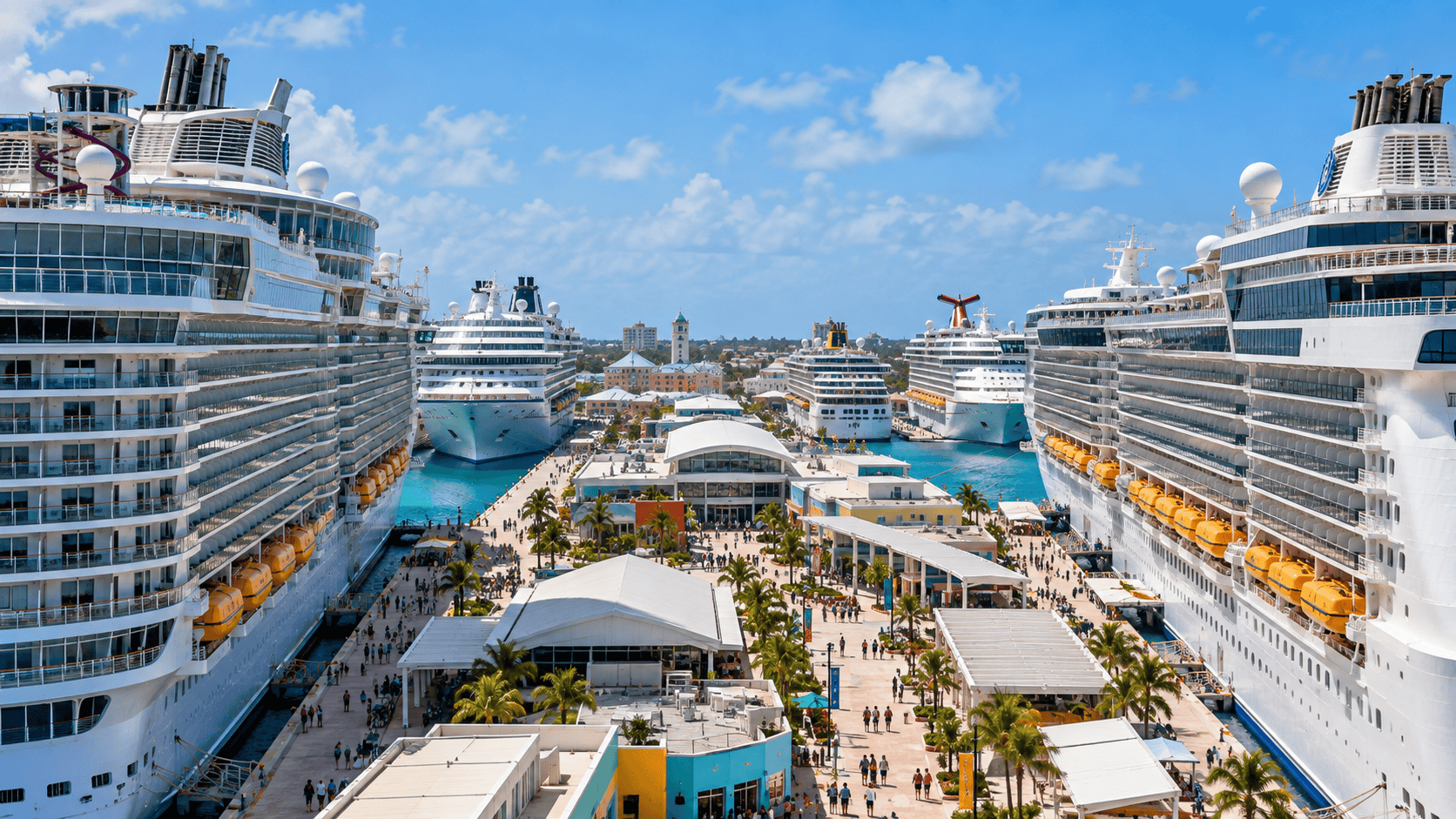
On June 8, 2026, six cruise ships called at Nassau Cruise Port on the same day: Oasis of the Seas, Allure of the Seas, Mardi Gras, Carnival Celebration, Caribbean Princess and Disney Fantasy.
Together, they brought 33,254 passengers, setting a new single-day record for the Bahamian cruise port. The figure surpassed the previous record of 30,538 passengers, established on March 11, 2025.
The milestone reflects a broader increase in traffic. Nassau Cruise Port handled 6.07 million passengers and 1,582 vessel calls in 2025, compared with 5.65 million passengers and 1,445 calls in 2024. In the first quarter of 2026, passenger traffic increased by approximately 15%, from 1.6 million to 1.8 million, while cruise calls rose by 5.5%.
The difference between passenger and call growth also illustrates a fundamental shift facing cruise ports: larger vessels are allowing substantially more guests to arrive without a proportional increase in ship calls.
Six berths built for a different scale of cruising
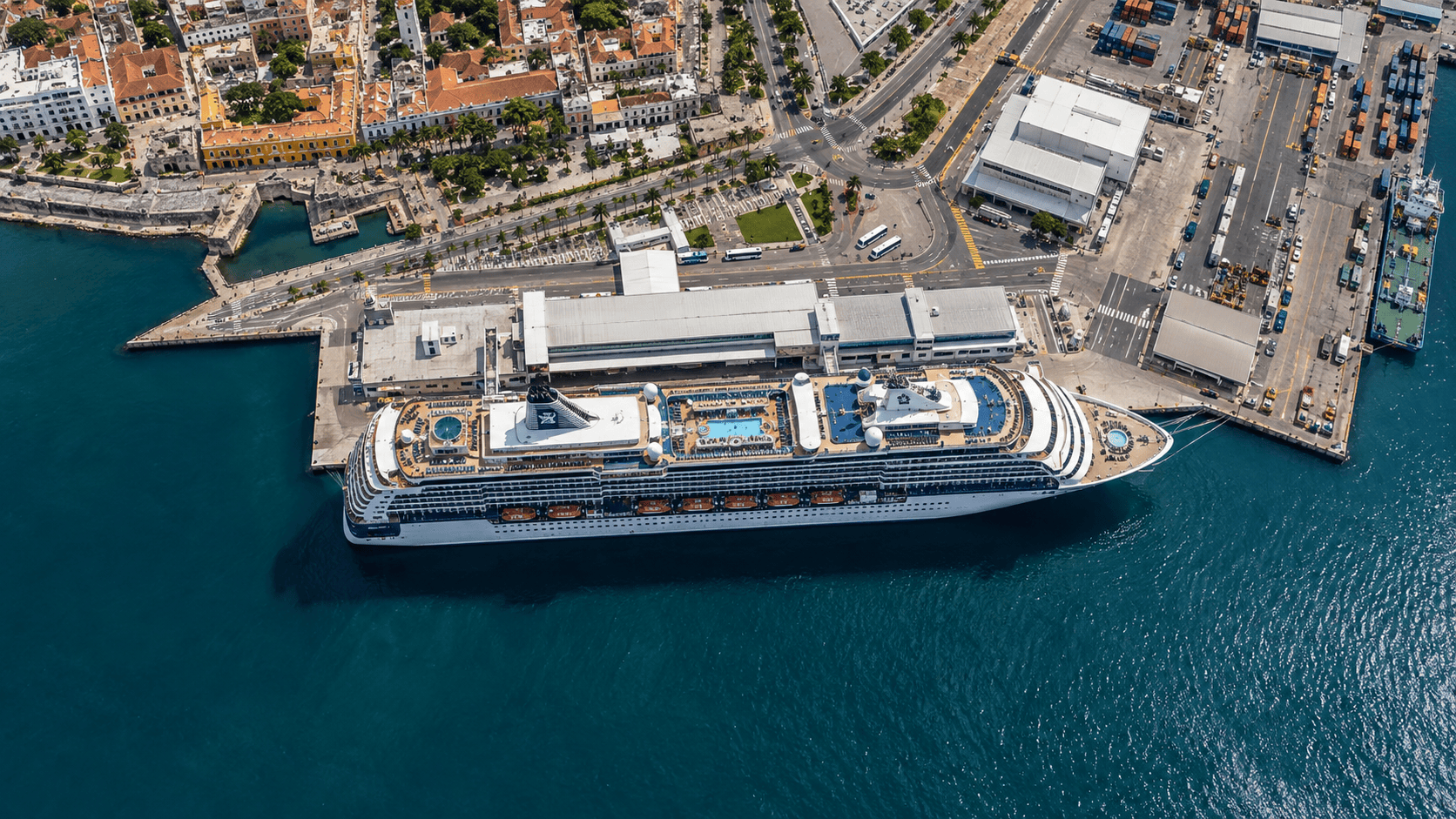
Nassau’s ability to accommodate these volumes follows a major redevelopment of Prince George Wharf, representing an investment of approximately US$300 million.
The cruise port now operates six berths and can accommodate three Oasis-class vessels simultaneously. Its infrastructure is also capable of receiving Royal Caribbean’s larger Icon-class ships.
The transformation significantly changed Nassau’s capacity. Before the redevelopment, the port was designed to process approximately 20,000 passengers per day. The expanded facility was developed to take that capacity beyond 30,000.
The June record demonstrates that this threshold is no longer theoretical.
For Nassau Cruise Port CEO and Director Mike Maura Jr., the achievement reflects “the strength of our infrastructure, operations, and partnerships” as the destination accommodates increasing cruise volumes.
But additional berthing capacity solves only part of the operational equation.
The challenge moves from the berth to the city
Once several large cruise ships are alongside simultaneously, the focus shifts from vessel handling to passenger movement.
Nassau Cruise Port sits directly alongside downtown Nassau. Thousands of passengers can therefore move within a relatively short period between ships, the terminal, taxis, excursion departures, ferries, public transportation and the commercial areas of the city.
The port’s transportation system includes a dedicated ground transportation area for taxis and tour operators, while ferry services connect passengers with destinations including Paradise Island.
On high-volume days, this interface becomes particularly important. Managing a 30,000-passenger day is not simply a question of finding enough berth space; it requires coordinating multiple transport and visitor flows within the same operating window.
The challenge for Nassau is therefore increasingly located at the intersection between cruise operations and port-city management.
Infrastructure beyond the quay
The redevelopment anticipated part of that challenge by extending well beyond maritime infrastructure.
Alongside the new and upgraded berths, Nassau Cruise Port introduced a new arrivals area, dedicated ground transportation facilities, a ferry and water excursion terminal and redesigned passenger circulation areas.
The waterfront development also incorporates more than 60 retail and food and beverage outlets, cultural spaces, public areas and a 3,000-seat amphitheatre.
Investment has continued after the main redevelopment. Following the previous passenger record in March 2025, Nassau Cruise Port announced an additional US$2 million investment aimed at improving ground transportation services and expanding ferry terminal capacity.
These investments point to an important evolution in cruise infrastructure: increasing ship capacity must increasingly be accompanied by landside capacity.
From passenger volume to destination value
For Nassau, however, processing passengers efficiently is only one part of the equation.
The port’s passenger traffic increased from 4.48 million in 2023 to 5.65 million in 2024 and 6.07 million in 2025. As those numbers rise, the commercial question becomes how much of that traffic can translate into economic activity within the port and the wider destination.
Retail, food and beverage, shore excursions, transportation and new visitor experiences are therefore becoming increasingly integrated into Nassau Cruise Port’s development strategy.
The port has continued to expand its guest offering in 2026 while reporting growth in shore excursion activity. The objective is not only to accommodate higher volumes but to encourage greater interaction between cruise passengers, the waterfront and Nassau itself.
For Caribbean cruise destinations facing larger ships and increasingly concentrated passenger arrivals, Nassau offers a useful case study. The infrastructure challenge is shifting from simply accommodating vessels to managing what happens when tens of thousands of passengers step ashore at the same time.
Source: Nassau Cruise Port
What was Nassau Cruise Port’s passenger record in 2026?
Nassau Cruise Port handled 33,254 cruise passengers on June 8, 2026, its highest single-day passenger volume on record. Six cruise ships were in port that day.
How many cruise ships can Nassau Cruise Port accommodate?
Nassau Cruise Port operates six berths. Its infrastructure can accommodate three Oasis-class cruise ships simultaneously and can also receive Icon-class vessels.
How many passengers did Nassau Cruise Port handle in 2025?
Nassau Cruise Port recorded approximately 6.07 million passengers across 1,582 cruise calls in 2025, up from 5.65 million passengers in 2024.
How does Nassau manage cruise passenger flows?
The cruise port combines dedicated ground transportation facilities, taxi and excursion operations, ferry services and pedestrian access to downtown Nassau. Its redevelopment also expanded passenger circulation, retail and waterfront facilities to support higher daily volumes.