As the aviation industry works toward net-zero carbon emissions by 2050, airlines are increasingly challenged to transform global climate commitments into operational realities. In Latin America, where sustainable aviation fuel (SAF) production remains limited and infrastructure gaps persist, that transition presents unique hurdles.
Against this backdrop, LATAM Airlines Group has outlined a climate strategy that seeks to align with the aviation sector’s international decarbonization frameworks while addressing the specific conditions of South America. The airline’s roadmap combines operational efficiency, fleet modernization, sustainable aviation fuels and carbon removal initiatives as part of its long-term objective to achieve net-zero emissions by 2050.
Aligning with ICAO and IATA roadmaps
LATAM explicitly bases its climate strategy on two major industry frameworks: the International Civil Aviation Organization’s (ICAO) Long-Term Aspirational Goal (LTAG) and the International Air Transport Association’s (IATA) Net Zero Roadmaps.
Adopted by ICAO member states in 2022, the LTAG establishes a collective ambition for international aviation to reach net-zero carbon emissions by mid-century. The framework evaluates different combinations of aircraft technologies, operational improvements and sustainable fuels to assess potential decarbonization pathways.
Similarly, IATA’s roadmaps identify the principal building blocks required for the sector’s transition, including SAF production capacity, new aircraft technologies, operational efficiencies, financing mechanisms and supportive public policies.
For LATAM, these frameworks provide a reference point, but the airline emphasizes the need to adapt global ambitions to regional realities, particularly in Latin America where the pace of SAF deployment and energy transition policies varies significantly across countries.
Operational efficiency remains the first lever
Before new technologies and alternative fuels reach large-scale deployment, operational efficiency continues to represent the most immediate source of emissions reductions.
LATAM’s Fuel Efficiency Program, launched in 2010, has become a central component of the carrier’s climate strategy. According to the company, the initiative has achieved approximately 7% efficiency gains since its creation and has prevented around 5.6 million tonnes of CO₂ emissions.
The program encompasses roughly 50 initiatives covering both ground and flight operations.
Among the measures implemented are aircraft weight reduction programs, advanced analytics for route optimization, single-engine taxi procedures, engine washing programs and aerodynamic improvements designed to reduce fuel burn across the network.
While such measures may appear incremental individually, they represent a critical foundation for emissions reductions that can be implemented immediately and at scale across existing fleets.
Fleet modernization as a bridge to lower-emission aviation
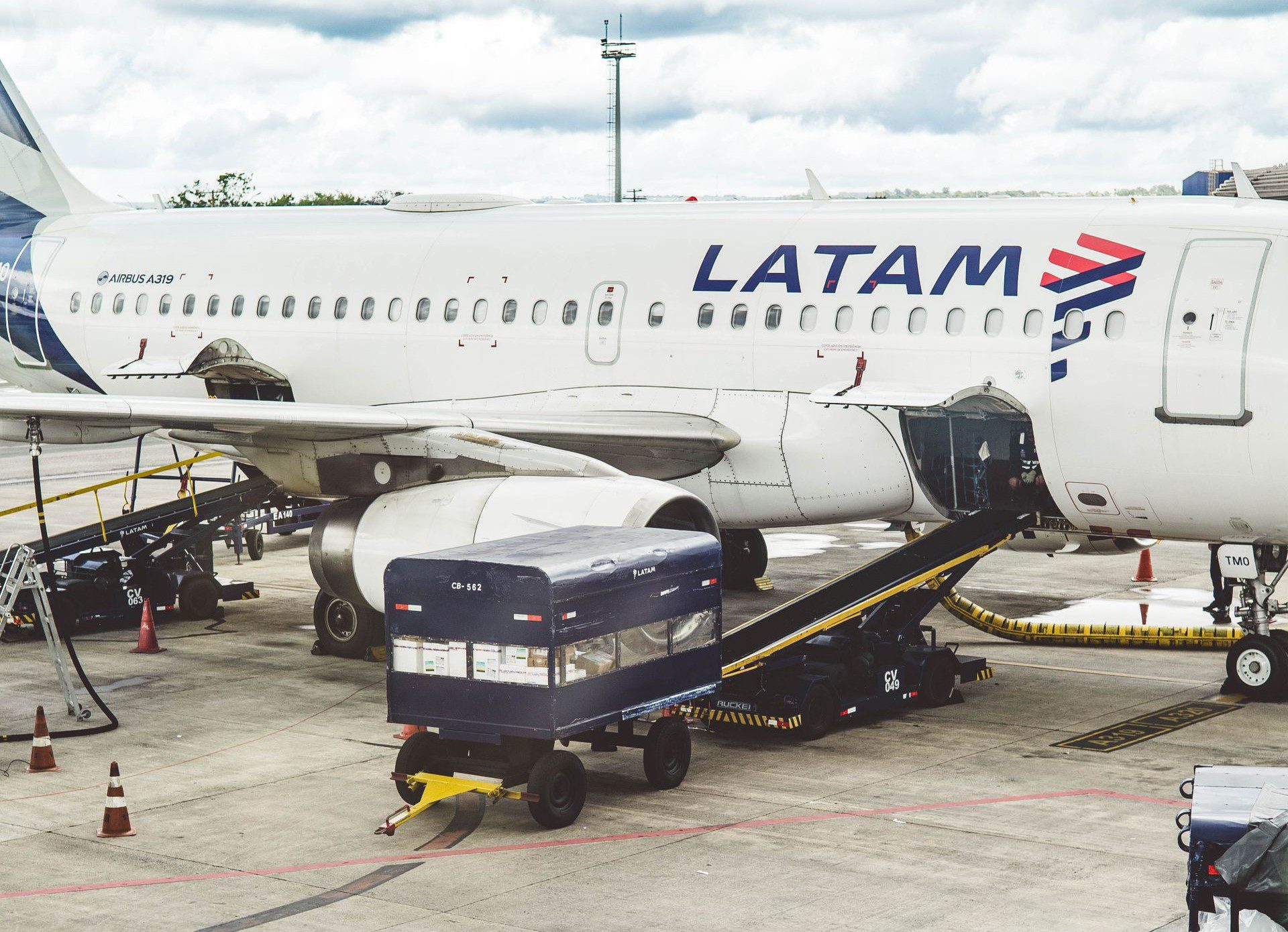
A second pillar of LATAM’s roadmap is fleet renewal.
The airline continues to expand the share of next-generation aircraft within its fleet, notably the Airbus A320neo family and Boeing 787 Dreamliner. According to aircraft manufacturers, these platforms can deliver emissions reductions of approximately 20% to 25% compared with previous-generation models.
LATAM projects that by 2030 it will operate more than 200 next-generation aircraft, representing over half of its total fleet.
The carrier has also introduced technologies such as Aeroshark, a surface film inspired by shark skin that improves aerodynamic performance and is expected to reduce emissions by approximately 1%.
Although these improvements alone will not achieve net zero, they help narrow the emissions gap while the industry waits for more transformative technologies such as hydrogen-powered aircraft or advanced propulsion systems to mature.
SAF emerges as the decisive long-term factor
Perhaps the most significant aspect of LATAM’s strategy is its emphasis on sustainable aviation fuel.
Both ICAO and IATA identify SAF as the largest contributor to aviation decarbonization over the coming decades. The IATA roadmap estimates that SAF could account for the majority of emissions reductions required for the sector to reach net zero by 2050.
Recognizing this importance, LATAM and Airbus jointly financed an independent study conducted by the MIT Center for Sustainability Science and Strategy.
The research examines decarbonization pathways in six major Latin American markets — Brazil, Chile, Colombia, Ecuador, Mexico and Peru — with a particular focus on SAF deployment scenarios and the public policy frameworks needed to support industry development.
The initiative reflects a growing recognition that aviation decarbonization in Latin America will depend not only on airline commitments, but also on the creation of regional SAF ecosystems involving governments, energy producers, airports and investors.
Without adequate production capacity, supportive regulations and competitive supply chains, SAF adoption could remain one of the largest obstacles to the region’s net-zero ambitions.
Carbon removals as a complementary measure
LATAM’s strategy also includes carbon removals and nature-based solutions to address residual emissions that are expected to remain difficult to eliminate, even in a net-zero scenario.
The airline stresses that these initiatives are intended to complement — rather than replace — direct emissions reductions.
Its approach focuses on ecosystem conservation, restoration projects and renewable energy initiatives across the region. Among the programs highlighted are the CO₂ BIO initiative in Colombia’s Orinoquía region and the company’s “1+1 Offset to Conserve” program, through which LATAM matches carbon offsets purchased by corporate customers.
The airline argues that such projects can simultaneously contribute to emissions management, biodiversity conservation and community development across Latin America.
From global ambition to regional implementation
LATAM’s climate roadmap illustrates a broader challenge facing the aviation industry: translating global net-zero commitments into practical regional action.
The airline’s four-pillar strategy closely mirrors the pathways identified by ICAO and IATA, yet its success will depend on factors extending far beyond airline operations alone. Fleet modernization and operational efficiency can deliver meaningful reductions in the near term, but the pace of SAF production, regulatory support and investment across Latin America will likely determine whether the sector can achieve its long-term decarbonization goals.
For aviation stakeholders across the region, the key question is no longer whether the transition will occur, but whether the supporting ecosystem can develop quickly enough to make net zero a realistic destination rather than a distant aspiration.