
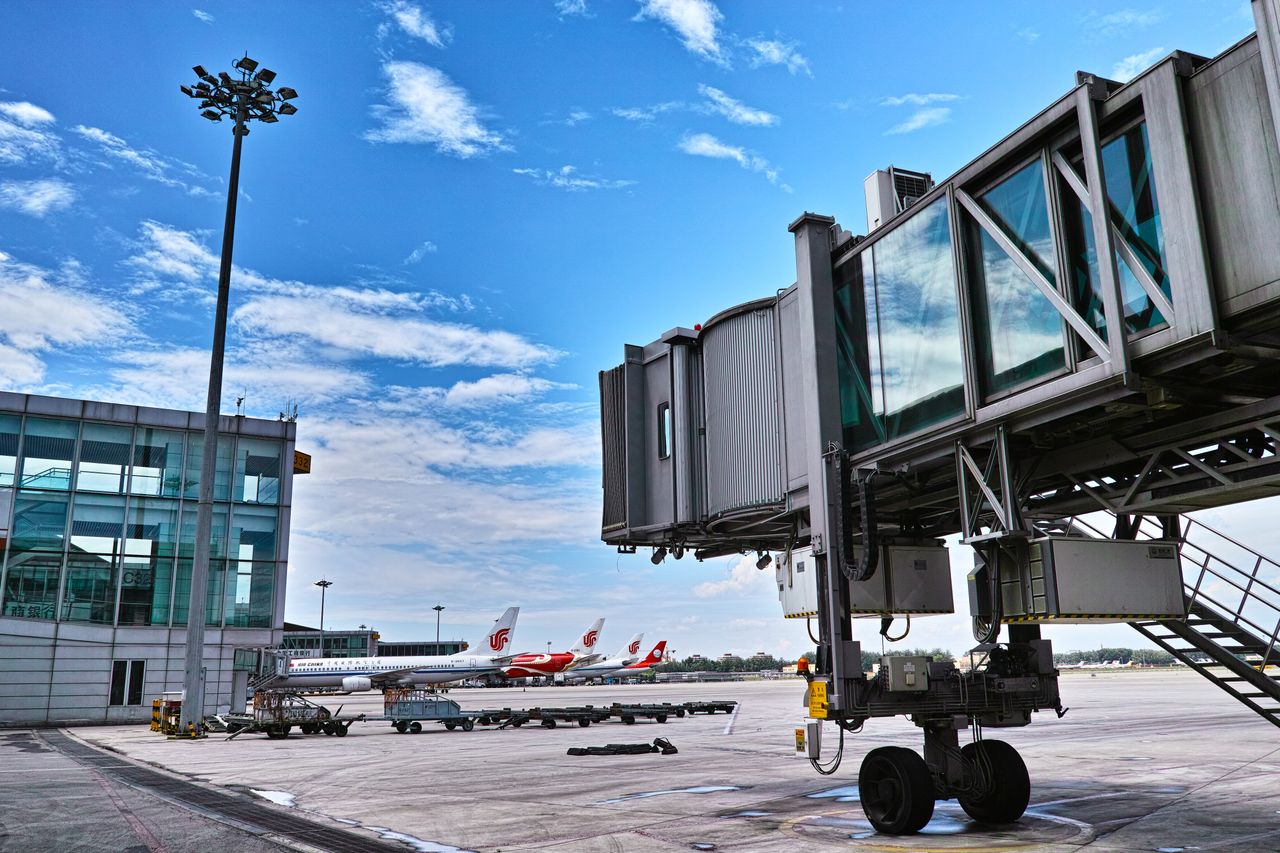
The future growth of global aviation will require far more than additional aircraft and rising passenger demand. According to the International Civil Aviation Organization’s (ICAO) Strategic Plan 2026–2050, one of the sector’s most significant long-term challenges lies in ensuring that aviation infrastructure develops at a pace capable of supporting future growth.
As global passenger traffic is projected to increase to 12.4 billion by 2050, ICAO identifies infrastructure development, resource mobilization and implementation support among the key priorities required to sustain a safe, secure, efficient and sustainable aviation system.
For many developing states, the challenge is not simply managing future demand. It is securing the resources needed to participate fully in aviation’s next phase of growth.
Infrastructure remains one of aviation’s biggest challenges
Within its Strategic Plan, ICAO identifies the provision of aviation infrastructure and systems as one of the major challenges facing international civil aviation through 2050.
The organization emphasizes the need for infrastructure capable of supporting safe, secure, accessible, efficient and sustainable aviation services. This requirement extends across airports, air navigation systems, communications infrastructure and operational support networks.
Future aviation growth will place increasing demands on these assets. Accommodating higher traffic volumes, supporting new technologies and maintaining operational resilience will require continuous modernization across the aviation ecosystem.
ICAO therefore views infrastructure development as a foundational element of future aviation growth and a prerequisite for achieving many of its long-term strategic objectives.
Financing aviation’s future is becoming a strategic challenge
The Strategic Plan makes clear that future aviation development will require substantial financial resources.
Beyond airport expansion and air navigation modernization, states will also need to invest in digital systems, environmental adaptation, operational resilience and emerging technologies. These requirements are becoming increasingly complex as aviation systems evolve and expectations around sustainability, safety and efficiency continue to rise.
For many countries, the challenge is no longer identifying infrastructure needs. It is securing the funding required to deliver projects at the pace necessary to support future growth.
ICAO therefore places increasing emphasis on resource mobilization as a critical enabler of its long-term vision. Without adequate financing mechanisms, infrastructure gaps could persist even as global aviation demand continues to expand.
Developing states face the largest infrastructure gaps
A recurring theme throughout ICAO’s Strategic Plan is the need to address disparities in aviation development between regions.
The organization highlights infrastructure gaps, resource constraints and implementation challenges that continue to affect many developing states. These issues can influence a state’s ability to modernize aviation systems, strengthen operational capabilities and implement international standards.
The challenge is particularly relevant in countries where aviation plays a critical role in connectivity, economic development and access to global markets.
ICAO also recognizes the specific challenges facing Small Island Developing States (SIDS) and other geographically isolated markets. These regions often depend heavily on aviation while facing higher infrastructure costs and more limited financing options than larger economies.
The issue reinforces ICAO’s broader concern that aviation development may progress unevenly unless implementation support and investment opportunities remain accessible to all states.
Resource mobilization becomes a strategic priority
Among the enabling factors identified by ICAO, resource mobilization occupies a prominent position.
The organization recognizes that achieving its strategic goals will require not only technical solutions but also the financial resources necessary to implement them. ICAO therefore promotes stronger cooperation among Member States, international organizations, financial institutions and industry stakeholders to support aviation development initiatives.
ICAO’s approach reflects a growing recognition that infrastructure delivery is often constrained less by technical solutions than by implementation capacity and access to funding. As aviation systems become more sophisticated and investment requirements increase, mobilizing financial resources is becoming as important as designing the infrastructure itself.
This challenge is particularly relevant for developing states seeking to modernize airports, strengthen air navigation services and deploy technologies required by future aviation systems.
The objective is ultimately to help states strengthen their implementation capabilities and overcome barriers that may limit progress.
No Country Left Behind depends on infrastructure delivery
One of ICAO’s six Strategic Goals is the commitment to ensure that no country is left behind in the development of international aviation.
The objective seeks to support Member States through implementation assistance, resource mobilization and cooperation efforts designed to reduce disparities across the global aviation system.
Infrastructure plays a central role in this vision.
Without adequate airports, air navigation systems and supporting operational capabilities, many states may struggle to fully benefit from future aviation growth regardless of market demand.
ICAO’s strategy therefore links inclusive aviation development directly to the ability of states to strengthen and modernize their infrastructure.
Aviation growth will require more than demand
One of the strongest messages emerging from ICAO’s Strategic Plan is that aviation’s future will not be determined by demand alone.
Passenger growth projections may point toward a larger aviation sector, but achieving that future will depend on the industry’s ability to finance, build and maintain the infrastructure required to support it.
Infrastructure, financing, implementation capacity and institutional readiness will all play critical roles in shaping how effectively states can participate in the sector’s continued expansion.
As aviation moves toward a future of more than ten billion annual passengers, the ability to deliver modern, resilient and accessible infrastructure may prove just as important as the growth itself.
For ICAO, ensuring that all states have the opportunity to develop that infrastructure is a prerequisite for achieving a truly connected global aviation system.