
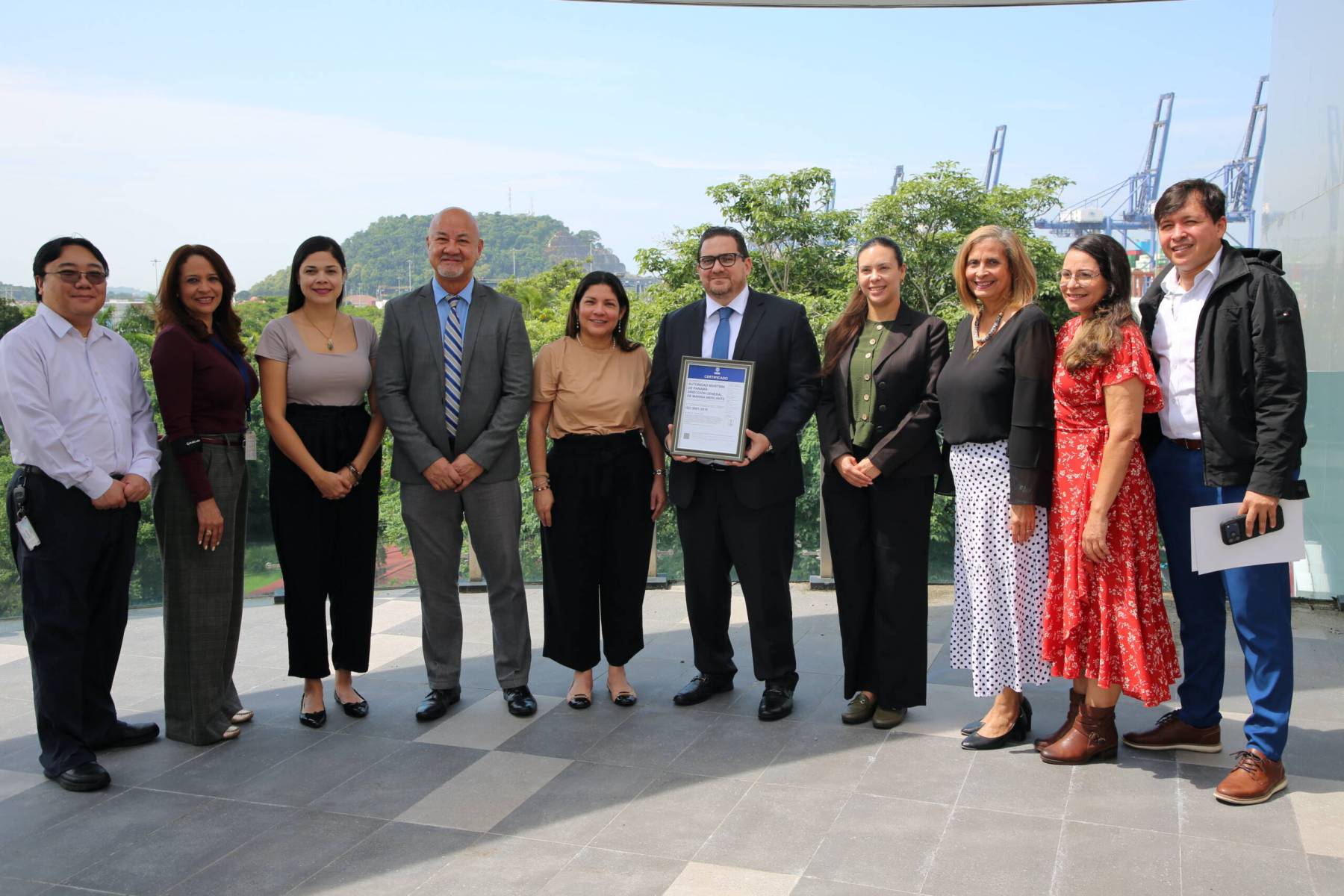
Panama’s Directorate General of Merchant Marine has renewed the ISO 9001:2015 certification of its Quality Management System as the country works to strengthen the performance, accessibility and regulatory credibility of its international ship registry.
The recertification was awarded by Bureau Veritas following an external audit, according to the Panama Maritime Authority. Announced on August 6, it confirms that the directorate continues to operate a management framework focused on process control, operational efficiency and continuous improvement.
Rather than standing alone, the certification comes amid a broader series of service reforms. Panama has expanded the operating hours of key registry departments, deployed new digital systems and returned to the Paris MoU White List. Together, these measures illustrate how administrative performance is becoming an increasingly important competitive factor among the world’s largest flag registries.
A quality framework for registry operations
ISO 9001:2015 establishes requirements for creating, maintaining, assessing and continually improving a quality management system. It covers areas such as leadership, planning, documented procedures, staff competence, performance evaluation and corrective action. The certification applies to the DGMM’s management processes; it does not certify the safety or technical condition of individual vessels registered under the Panamanian flag.
The Panama Maritime Authority links the system to several operational areas, including safety of life at sea, maritime security, pollution prevention and the continued optimisation of internal procedures.
Ramón Franco, Director General of Merchant Marine, said the achievement reflected the service culture being developed within the directorate.
“We are not simply administrators of a registry, we deliver a competitive, world-class service with leadership and excellence that exceeds the expectations of our stakeholders.”
Bureau Veritas representative José Chong also stressed that retaining the certification requires more than completing a single audit. Continued compliance depends on regular internal and external reviews, personnel training and sustained work to identify weaknesses and improve procedures.
For shipowners and operators, the practical value of such a system lies in the consistency of administrative services: how documents are processed, how technical requests are handled and whether the registry can respond reliably across different offices and time zones.
Service reforms extend beyond certification
Since July 1, 2026, the DGMM and the Directorate General of Seafarers have operated extended service hours for several procedures. These include consular services, provisional radio licences, flag State inspections, technical certificates and authorisations issued through SEGUMAR, as well as the evaluation of seafarer documentation.
The authority also maintains SEGUMAR technical offices and regional documentation offices across the Americas, Europe and Asia, reflecting the need to support a fleet operating continuously across international markets.
Digitalisation forms another part of the modernisation programme. Panama launched the first phase of its Electronic Vessel Registry, known as REN, in May 2025. The platform was designed to consolidate more than 16 previously separate systems and allow users to submit and track procedures remotely.
Its planned functions include qualified electronic signatures, online payments and digital document management. The wider strategy also includes E-Segumar and E-Certificates for technical authorisations and certification. These systems are intended to reduce physical documentation and improve the traceability of registry procedures, although the August 2026 announcement does not specify whether every platform formed part of the latest ISO audit.
Compliance progress in a competitive flag market
The recertification also follows Panama’s return to the Paris MoU White List. The current list, valid from July 1, 2026, to July 6, 2027, is based on inspections and vessel detentions recorded during the three-year period from 2023 to 2025.
Panama ranks 36th among the 40 flags on the White List, with 5,731 inspections and 338 detentions. Its inclusion represents an improvement in flag performance, although its position near the lower end of the list shows that maintaining stronger compliance results will remain an important test.
The registry is also operating in a more competitive commercial environment. UNCTAD’s published overview, using values as of January 1, 2025, placed Liberia first with 447 million deadweight tonnes, followed by Panama with 350 million and the Marshall Islands with 318 million. Panama therefore remains one of the world’s largest registries, but it is no longer the largest when fleets are ranked by deadweight tonnage.
Against that background, quality management, digital access and regulatory performance are not simply administrative matters. They influence the experience of shipowners and can affect a flag’s ability to retain existing fleets and attract new registrations.
The renewed ISO certification gives the DGMM an internationally recognised framework for managing those processes. Its longer-term value, however, will depend on whether the reforms produce measurable gains in processing times, service consistency and the compliance performance of the Panamanian-flagged fleet.