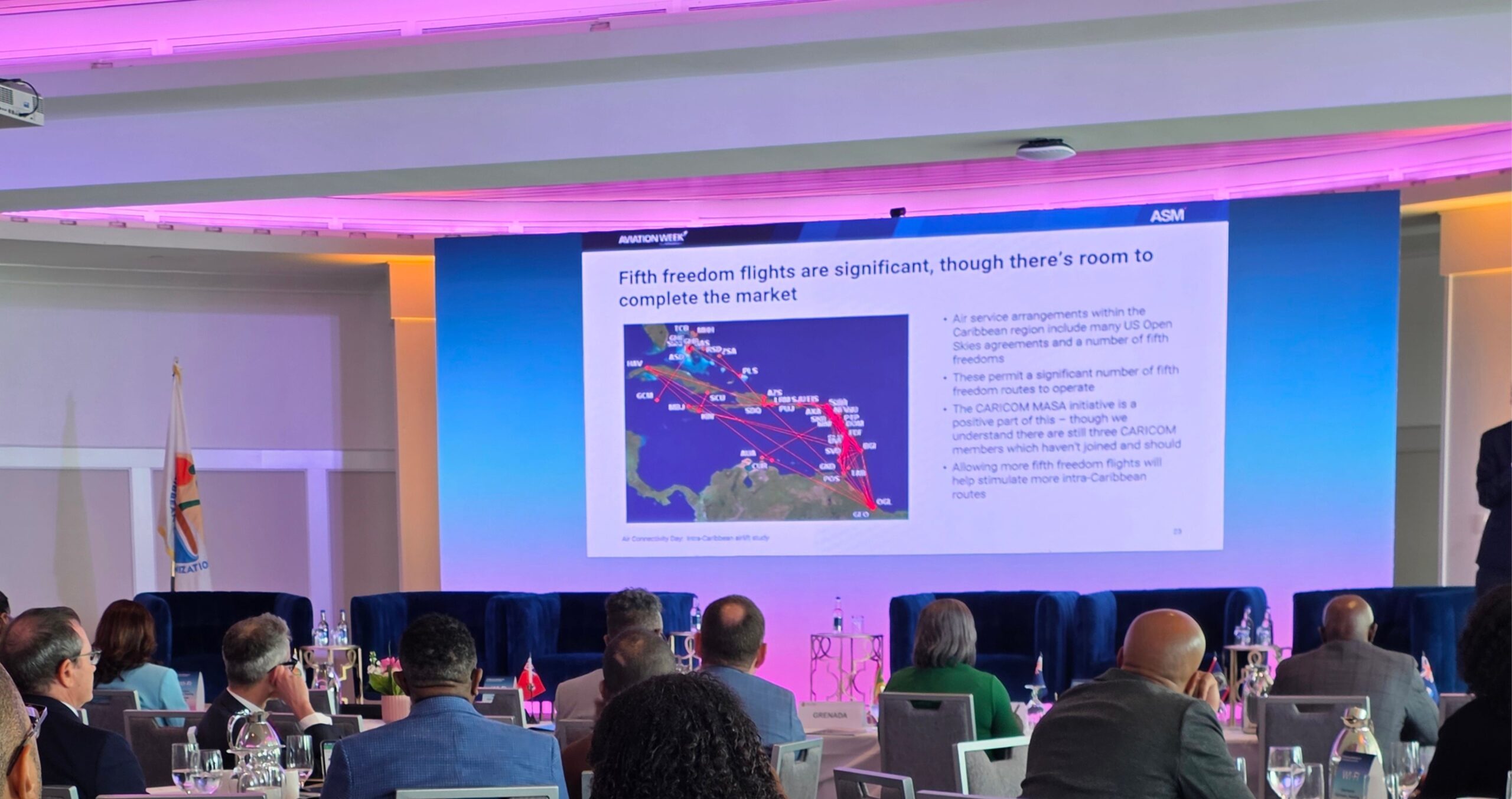
At the CTO Air Connectivity Summit, the airport infrastructure discussion moved beyond terminals and runways. It became a conversation about capital discipline, governance stability and risk allocation in small island economies.
In the Caribbean, airports are not transport assets. They are economic infrastructure.
“Airports Are the Backbone of National Prosperity”
Steve Nackan, representing AECON, framed the issue clearly:
“Airports, ports, water systems, energy networks, digital infrastructure are not abstract assets. They’re the backbone of national prosperity.”
In tourism-dependent economies where over 90% of visitors arrive by air, infrastructure quality directly influences:
- airline confidence
- premium positioning
- hotel performance
- investment flows
But building “world-class” infrastructure in small markets creates a fundamental tension.
The Oversizing Risk
During the ministerial panel, Hon. Dr. Ernest Hilaire, Minister for Tourism of Saint Lucia, articulated the dilemma:
“Do not oversize. It’s very easy for us to want to oversize in our effort to be more competitive than the next destination.”
At the same time, he acknowledged the political and reputational pressure to modernize facilities when passenger experience falls short.
The financing mechanism is often departure taxes or airport service charges.
And that is where friction begins.
Airlines resist cost increases.
Governments need repayment streams.
Passengers expect global standards.
Infrastructure strategy becomes a risk allocation question.
Bermuda’s PPP Model: 100% Private Financing
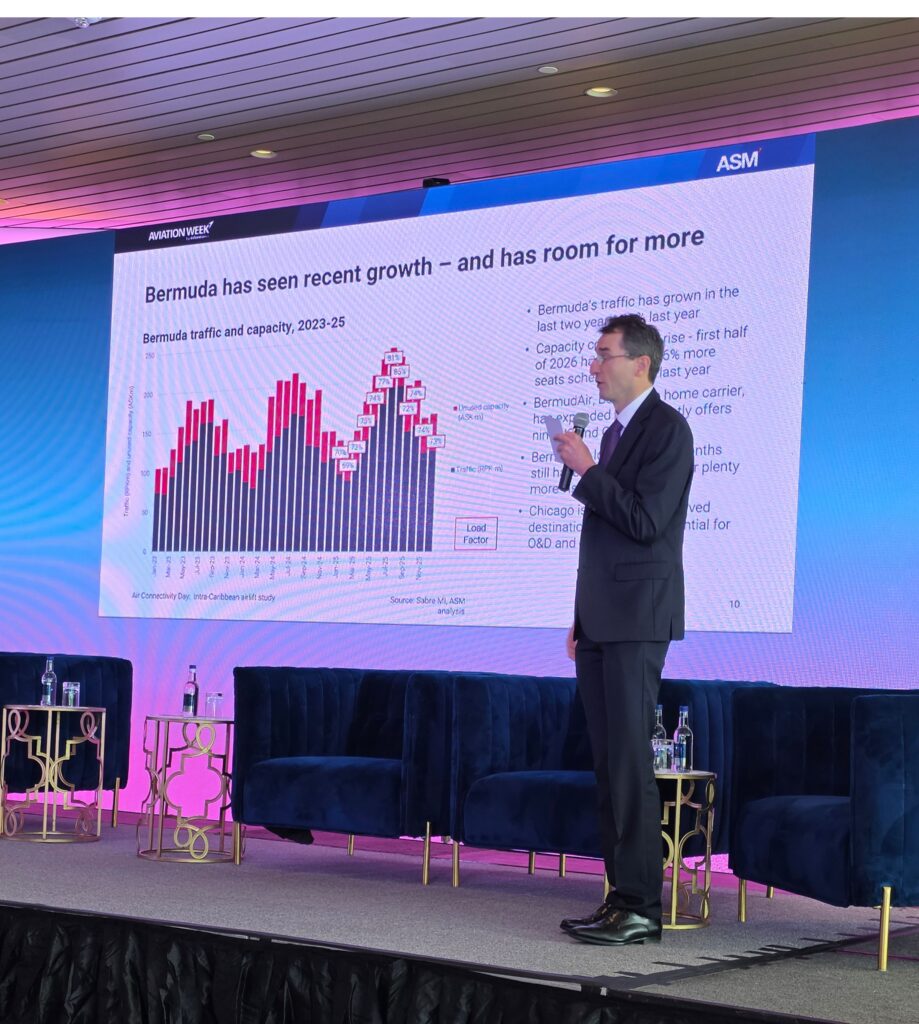
Bermuda’s airport redevelopment provides a case study in structured risk-sharing.
As AECON explained:
“A public-private partnership with an overarching government-to-government framework… to address specific risks and resilience requirements to underpin the 100% private financing of the capital program.”
This model shifts upfront capital exposure away from public balance sheets, but it demands:
- long-term traffic confidence
- governance continuity
- political stability
- credible forecasting
PPP models reduce immediate fiscal pressure, but they do not eliminate risk. They reallocate it.
Governance Continuity: A Structural Weakness
Dr. Rafael Echevarne, Director General of ACI-LAC, raised a governance issue that often goes unspoken.
He stressed the importance of professional airport management teams that “endure the political cycle,” warning against frequent turnover in leadership following elections.
Infrastructure financing operates on 20–30 year horizons.
Political cycles operate on 4–5 year timelines.
When leadership resets repeatedly, capital markets price instability.
In aviation, credibility is currency.
Funding Without Destroying Competitiveness
Hon. Collin James, CEO of the Antigua and Barbuda Tourism Authority, pointed toward diversification:
Airports must not rely exclusively on ticket taxation.
Commercial revenue streams — retail, concessions, franchise partnerships — can reduce pressure on aeronautical fees.
However, scale remains a structural constraint in small island economies.
A 3–4 million passenger airport cannot replicate the commercial density of a Dubai or Singapore.
The model must be right-sized.
Airport Infrastructure and Demand Alignment
Kurt Menard of the V.V.I. Airport Authority emphasized the importance of alignment:
Airport master plans must be in tune with national development plans.
Otherwise:
- seats outpace rooms
- rooms outpace seats
- capital becomes stranded
This is not a theoretical planning issue.
It is capital efficiency.
Fragmentation and the Regulatory Layer
Dr. Echevarne also highlighted structural and regulatory fragmentation in the Caribbean and suggested greater harmonization to facilitate airline operations.
Fragmentation increases transaction costs.
Transaction costs reduce route viability.
Connectivity depends not only on aircraft economics but on policy coherence.
Airports as Brand Gateways
Closing remarks reinforced a strategic point:
“Airports are brand gateways and critical to visitor perception.”
But brand image alone cannot justify capital intensity.
Infrastructure must be:
- financially structured
- governance-stable
- demand-aligned
- cost-disciplined
The Real Transition
The infrastructure dialogue at this summit suggests a structural shift:
- From politically driven expansion
- To capital-aware development
- From tax-funded oversizing
- To risk-structured financing
- From fragmented management
- To professional governance continuity
In small island economies, infrastructure decisions are not symbolic.
They are existential.
And the next phase of Caribbean air connectivity will be determined less by ambition — and more by discipline.