The Caribbean depends heavily on maritime transport, yet the region has not always had the technical capacity or coordinated representation required to influence the international rules shaping shipping’s energy transition. That gap is now being addressed through the UWI-Caribbean Shipping Lanes Project (UWI-CSL), an initiative examined in Issue 57 of Caribbean Maritime, the official journal of the Caribbean Shipping Association. The project is building technical expertise, supporting national delegations and helping Caribbean states develop a more coordinated position in negotiations at the International Maritime Organization.
A maritime-dependent region with limited negotiating capacity
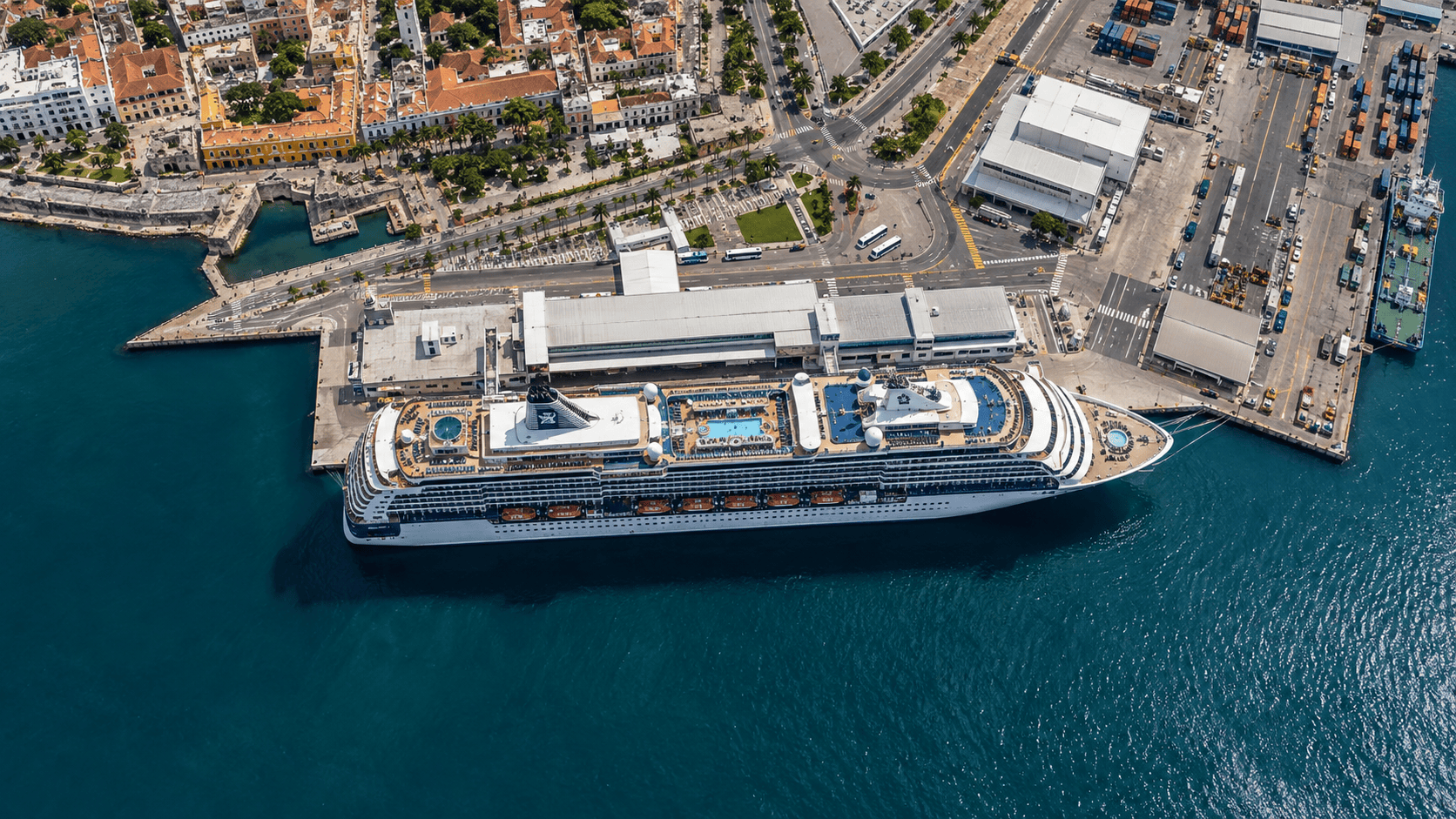
For Caribbean economies, shipping is not simply one transport mode among many. The magazine notes that between 80% and 90% of the food consumed across the region is imported, with most of it arriving by sea. At the same time, the Caribbean accounts for around 43% of global cruise traffic, reinforcing the economic importance of maritime activity across both freight and tourism.
This dependence makes international shipping regulation particularly significant for the region. Measures affecting vessel emissions, marine fuels and operating costs can have direct implications for small island economies whose supply chains rely on regular and affordable maritime connectivity.
Yet when the IMO adopted its revised greenhouse gas strategy in 2023, Caribbean participation in the negotiations remained limited. According to the UWI-CSL feature, the principal obstacle was not a lack of interest, but insufficient technical capacity across disciplines including climate science, economics and legal policy.
That distinction is important. Effective participation in IMO negotiations requires more than attendance. Governments need technical analysis, economic modelling, legal interpretation and prepared negotiating positions if they are to assess how global measures could affect national and regional interests.
From an immediate response to a regional platform
The initiative that later became UWI-CSL emerged from this capacity gap. The Belize Port Authority, the United Nations Foundation and University College London initially joined forces to help restore the region’s presence in international maritime discussions.
The movement subsequently expanded as Jamaica, Grenada, Barbados, Trinidad and Tobago and other Caribbean states became involved. In August 2024, the initiative was formalised as the UWI-Caribbean Shipping Lanes Project and placed within the Sir Shridath Ramphal Centre at the University of the West Indies.
What began as a response to a specific negotiating weakness has since developed into a broader regional platform for maritime decarbonization. Its role is not limited to explaining IMO measures after they are adopted. It seeks to improve the region’s ability to engage while policies are still being designed.
Building capacity through four strategic pillars
UWI-CSL is organised around four areas of work:
- Substantive Technical and Advisory Work
- Outreach and Stakeholder Engagement
- IMO Delegation Training and Support
- Communications and Knowledge Management
Together, these pillars combine research, policy advice, training and regional coordination.
The technical component is particularly important because decarbonization measures can produce different effects across maritime markets. Caribbean states need to evaluate not only environmental outcomes, but also potential consequences for shipping costs, trade flows, port activity and connectivity.
Delegation support addresses another practical challenge. Smaller administrations may not have large teams dedicated exclusively to IMO negotiations. Briefing materials, negotiation guides and targeted training can therefore improve their ability to interpret proposals and participate more consistently.
Turning coordination into practical outputs
The project has already moved beyond institutional preparation. According to the magazine, UWI-CSL has supported Caribbean states through consultations involving more than ten countries, convened regional meetings and delivered high-level briefing notes, negotiation guides, workshops and webinars. It has also produced economic impact assessments and other technical reports intended to support evidence-based decision-making.
The initiative also provides support during negotiations and organises regional debriefings afterwards. This creates a continuous process linking preparation, participation and follow-up, rather than treating each IMO meeting as an isolated event.
The most significant result identified in the feature is the delivery of what it describes as the first joint Caribbean submission to the IMO, filed as Document ISWG-GHG 17/2/18. The submission provided a consolidated shipping profile of Caribbean states, giving the region a shared evidence base within the IMO process.
For a region made up largely of small island developing states, that collective approach can be strategically important. Individual countries may have limited technical and diplomatic resources, but coordinated analysis allows them to identify common concerns and present them with greater consistency.
Connecting global rules with regional economic realities
UWI-CSL frames shipping decarbonization as both an environmental and economic issue.
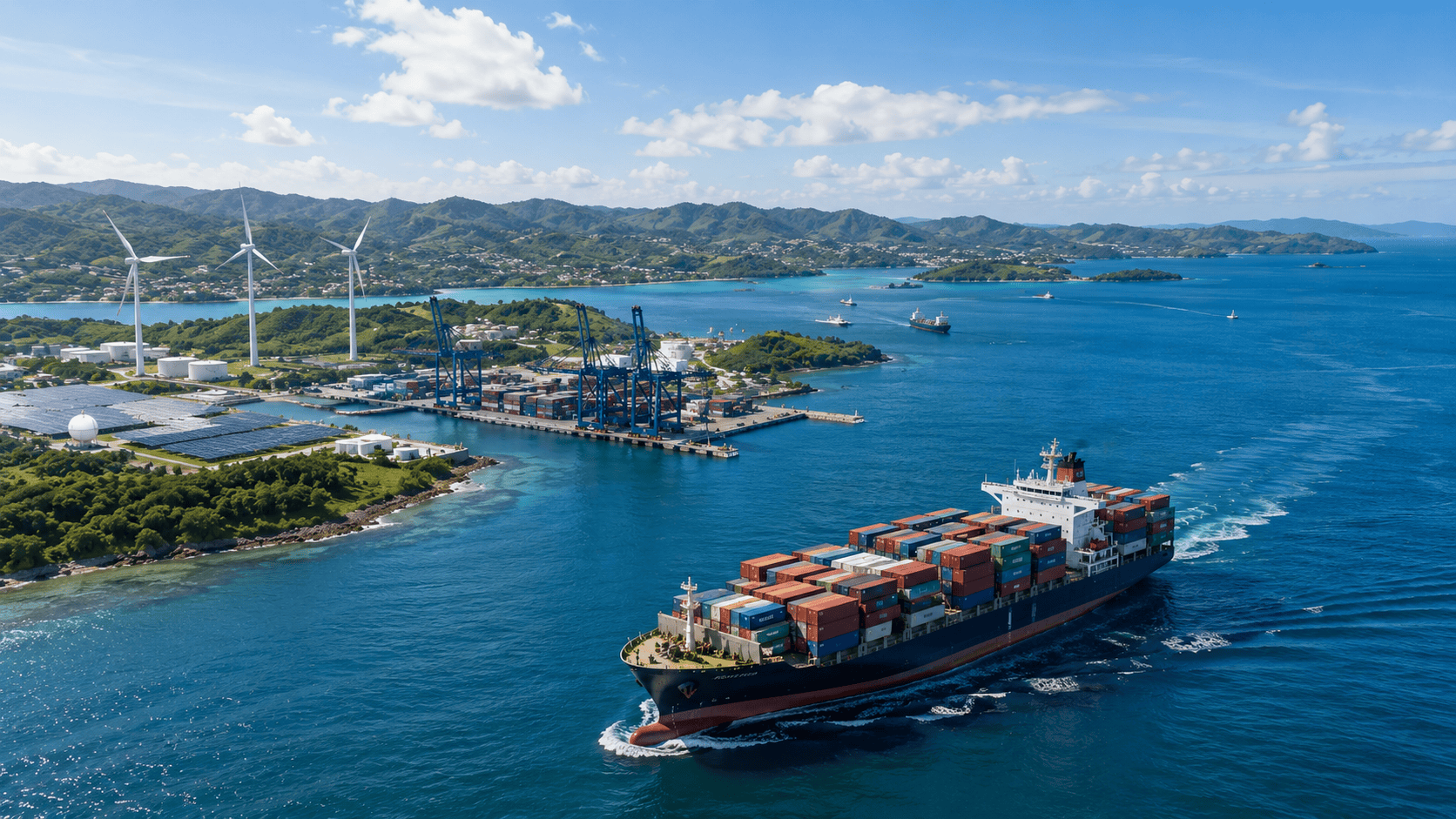
The transition to lower-emission shipping will require new fuels, technologies and infrastructure. The magazine points to the Caribbean’s solar, wind and geothermal potential as resources that could support a future role in green fuel production. However, it presents this as an opportunity that will depend on cooperation among governments, regional institutions and the private sector rather than as an established industry.
This cautious distinction matters. Renewable resources alone do not create a marine fuel market. Production capacity, port infrastructure, financing, safety standards, demand from shipping lines and regulatory certainty would all be needed.
The immediate value of UWI-CSL therefore lies less in predicting that the Caribbean will become a major green fuel hub and more in helping regional governments understand the choices ahead. Stronger technical capacity can improve their ability to assess international proposals, identify investment needs and argue for transition pathways that reflect the circumstances of trade-dependent island economies.
From participation to influence
The UWI-Caribbean Shipping Lanes Project reflects a broader shift in regional maritime engagement. The objective is no longer simply to increase the number of Caribbean representatives present at international meetings. It is to equip those representatives with the data, analysis and coordination required to shape the discussion.
Webinars, the Lighthouse Brief newsletter, further support for IMO meetings and new international partnerships are intended to sustain that momentum.
For the Caribbean, the strategic question is not whether shipping will decarbonize, but how the transition will affect connectivity, trade costs and economic resilience. By building a shared technical platform, UWI-CSL is helping the region move from fragmented participation toward a more evidence-based maritime voice—one better prepared to engage with the rules that will define the next phase of global shipping.