Avianca’s new weekly freighter service to Miami adds 65 tonnes of air cargo capacity as Guyana accelerates its aviation and logistics strategy.
Air cargo emerges as strategic infrastructure in Guyana’s economic expansion
Air cargo is becoming an increasingly strategic component of Guyana’s economic transformation. As the country experiences rapid growth across multiple sectors, aviation logistics is evolving from a supporting function into a critical enabler of trade, exports and regional integration.
According to an announcement published by the Ministry of Public Utilities and Aviation, the country is now expanding its international freight capacity with the launch of a new dedicated cargo service linking Guyana directly to Miami. The initiative reflects a broader government strategy aimed at aligning aviation infrastructure with the country’s rapidly growing economic activity.
A new dedicated cargo link between Guyana and Miami
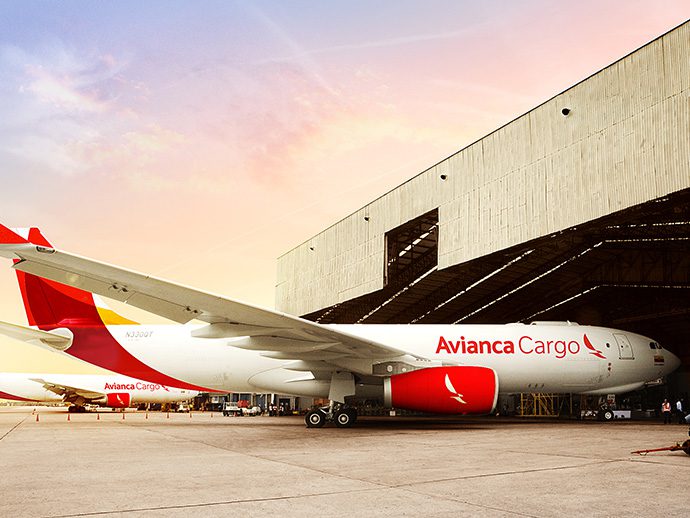
The new service will be operated by Avianca and is scheduled to begin operations on 2 March 2026. The route will connect Guyana with Miami through a weekly cargo flight using an Airbus A330-243F.
Each rotation will provide 65 tonnes of dedicated cargo capacity, creating a direct and reliable freight corridor between the Guyanese market and one of the most important logistics hubs in the Americas.
According to Deodat Indar, the introduction of this new service represents a milestone in the country’s efforts to modernise its aviation and logistics infrastructure. The additional cargo capacity is intended to support both businesses and individual shippers, enabling more efficient transport of commercial goods, agricultural exports and personal shipments.
Freight volumes reflect Guyana’s rapid economic transformation
The launch of this service comes at a time when Guyana’s aviation sector is undergoing significant expansion. Government figures indicate that international cargo volumes have nearly doubled since 2020, highlighting the scale of the country’s economic acceleration and the growing importance of logistics connectivity.
This surge in freight activity reflects rising demand from several sectors, including agriculture, trade and industrial supply chains. As the economy expands and production capacity increases, aviation cargo has become an essential component of Guyana’s external trade infrastructure.
Miami strengthens its role as a strategic trade gateway
The selection of Miami as the destination for this new cargo service underscores the city’s role as a major logistics gateway for the Americas. Miami International Airport functions as one of the region’s principal freight hubs, linking North America, Latin America and the Caribbean through extensive cargo networks.
For Guyanese exporters, direct connectivity to this hub significantly improves access to international markets. The new route allows goods produced in Guyana to reach global distribution networks more rapidly, reinforcing supply chains and improving export efficiency.
Aviation connectivity supports the “Food Basket of the Caribbean” strategy
The expansion of air cargo capacity also aligns with Guyana’s broader agricultural ambitions. The government has repeatedly emphasised its objective of positioning the country as the “food basket of the Caribbean,” increasing agricultural production and strengthening regional food security.
Reliable air logistics play a key role in this strategy. Direct cargo links allow agricultural producers and manufacturers to ship products quickly to international markets, particularly for goods requiring rapid transportation. Improved air connectivity therefore becomes an important tool in supporting both agricultural development and export competitiveness.
Cheddi Jagan International Airport strengthens its logistics role
The initiative also reinforces the strategic positioning of Cheddi Jagan International Airport as a growing logistics gateway in northern South America and the Caribbean basin.
By attracting international carriers and expanding freight capacity, the government aims to transform the airport into a central node for trade and logistics flows. The development of new cargo routes is seen as a key step in building a more robust aviation ecosystem capable of supporting Guyana’s evolving economic profile.
A logistics network gradually taking shape
As Guyana’s economy continues to expand, aviation cargo is emerging as a vital component of its infrastructure strategy. The launch of Avianca’s new freighter service illustrates how air connectivity is increasingly viewed not only as a transport service but as a critical pillar of trade and economic development.
With freight volumes rising and export ambitions growing, the strengthening of international logistics links suggests that Guyana is positioning itself to play a more prominent role in regional and global supply chains.