Royal Caribbean Group, Carnival Cruise Line and Norwegian Cruise Line are expanding their exclusive cruise destinations through new infrastructure, attractions and integrated guest experiences. Developments across the Bahamas and Mexico show how cruise companies are extending their role beyond ship operations, while local ownership arrangements and environmental approvals increasingly shape the development of these projects.
The expansion reflects a broader change in how cruise companies organise the experience ashore. Rather than relying exclusively on established ports and independent excursion providers, cruise operators are investing in destinations where they can exercise greater control over facilities, passenger services and commercial activities.
Royal Caribbean expands its destination portfolio
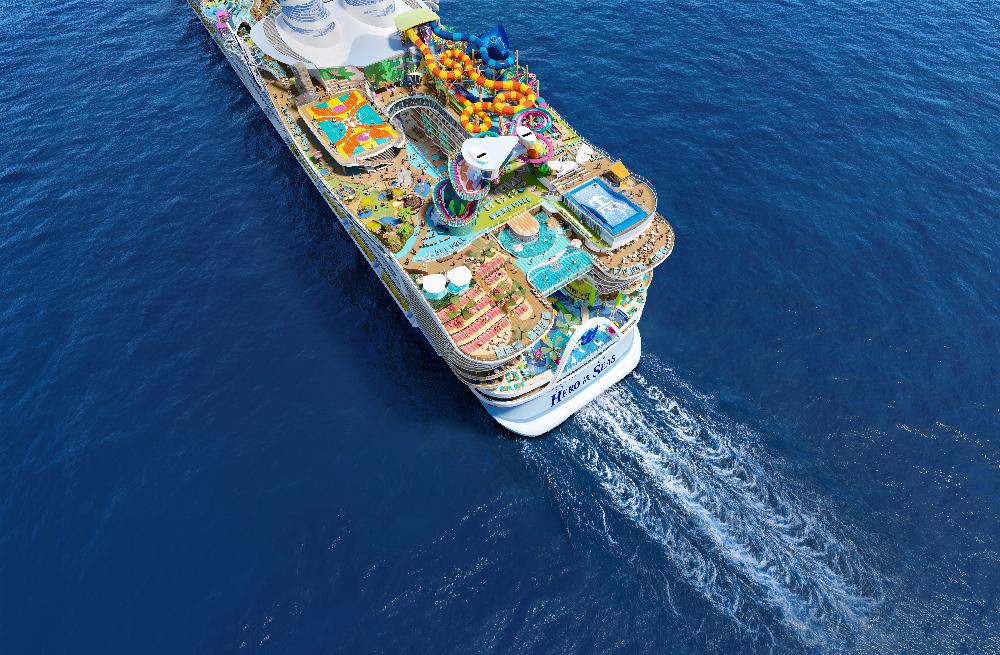
At Seatrade Cruise Global 2026, Jason Liberty, Chairman and CEO of Royal Caribbean Group, presented private destinations as a tool for managing cruise growth and its effects on host communities. According to FCCA’s Travel & Cruise Magazine, Liberty outlined plans to expand Royal Caribbean’s portfolio from three to eight destinations, combining private ports and beach-club concepts.
Royal Caribbean Group confirmed the target in its financial results published on July 28, 2026. The company aims to expand its global portfolio from three to eight exclusive destinations by 2028 through its Perfect Day and Royal Beach Club collections. The objective remains forward-looking, particularly as some developments face regulatory uncertainty.
Royal Caribbean’s strategy does not rely on a single format. Perfect Day at CocoCay, in the Bahamas, is an established private-island destination, while Royal Beach Club Paradise Island, in Nassau, operates as an all-inclusive beach experience accessible through purchased day passes. The Nassau facility welcomed its first guests on December 23, 2025.
The distinction matters commercially. A private island can provide a complete cruise stop, while a beach club creates an additional experience within an existing destination. Both models allow Royal Caribbean to organise more of the passenger journey around facilities and services developed specifically for its guests.
Carnival and Norwegian develop the business ashore
Celebration Key, Carnival Cruise Line’s exclusive destination on Grand Bahama, illustrates the scale these investments can reach once operational.
Carnival Cruise Line reported that Celebration Key welcomed 2.4 million visitors during its first year, between July 19, 2025, and July 19, 2026. The destination combines beaches, pools, dining, retail and other visitor facilities within a development designed around Carnival’s cruise operations.
Carnival Cruise Line also reported that Celebration Key supports approximately 1,000 permanent local jobs and that more than 80% of its food and retail operators are locally owned. The figures demonstrate the scale of employment and business participation claimed by Carnival, although the company has not provided a detailed breakdown of the destination’s financial returns to local operators.
Norwegian Cruise Line is pursuing a related approach at Great Stirrup Cay, its private island in the Bahamas.
In September 2026, Norwegian Cruise Line presented Great Tides Waterpark, a nearly six-acre attraction featuring waterslides, a river experience and additional food outlets. The company scheduled its public opening for September 4, during a call by Norwegian Luna, following an official preview attended by government representatives, media and industry partners.
Norwegian Cruise Line began selling day passes for Great Tides Waterpark in May 2026. Passengers can also reserve private cabanas, with admission included in certain packages. The development adds a separately commercialised attraction to the existing private-island experience.
Together, Celebration Key and Great Stirrup Cay demonstrate how exclusive destinations can operate as substantial tourism businesses rather than simply places where cruise ships stop. The model combines infrastructure, passenger management and commercial products within a destination closely linked to the cruise company’s itinerary and distribution systems.
Local participation becomes a defining question
Greater operational control raises an important question for host economies: how are local businesses and communities included in the destination’s development and operation?
Royal Beach Club Paradise Island provides one possible model. Developed in Nassau through a public-private partnership, the project provides for Royal Caribbean to hold 51% ownership, with the remaining 49% allocated to Bahamian interests, including the government and investors. The arrangement is intended to create an ownership opportunity beyond employment and commercial contracts.
The ownership structure nevertheless requires a qualification. In June 2026, Philip Simon, President of Royal Caribbean Bahamas, told The Tribune that the public share offering for Bahamian investors had been deferred towards the end of 2026. Simon said potential investors needed operating results on which to assess the business. The planned ownership opportunity should therefore not be confused with a completed public offering.
Celebration Key offers a different perspective through Carnival’s reported employment and locally owned retail and food operations. The two Bahamian developments show that local participation can take several forms, including ownership, employment and commercial partnerships. The available figures do not establish that these arrangements produce equivalent financial benefits.
The evidence also does not demonstrate that exclusive destinations systematically reduce revenues at traditional Caribbean ports. Establishing such an effect would require comparable information on passenger expenditure, supplier contracts, employment and the distribution of tourism income across different destination models.
For port authorities and tourism stakeholders, the relevant issue is therefore not simply whether an exclusive destination attracts more passengers. Ownership structures, access for local operators and the organisation of commercial activities help determine how the investment connects with the surrounding economy.
Perfect Day Mexico exposes the limits of expansion
Royal Caribbean’s proposed Perfect Day Mexico development in Mahahual, Quintana Roo, illustrates another condition shaping the exclusive-destination model: regulatory approval.
On May 21, 2026, Mexico’s Ministry of Environment and Natural Resources (SEMARNAT) announced the conclusion of the environmental assessment procedure for the original Perfect Day Mexico project. Royal Caribbean had withdrawn its principal application on May 19, following the authority’s objections to the proposed development.
SEMARNAT identified concerns involving mangrove vegetation, reef ecosystems, wastewater, hydrological impacts and insufficient mitigation measures. The authority also found that the proposed waterpark, beach club and private cruise-pier developments needed to be assessed together because of their combined environmental effects.
The original proposal did not receive environmental approval. Nevertheless, Royal Caribbean continued discussing the development with Mexican authorities and community representatives after the decision. In August 2026, Jason Liberty acknowledged that those discussions would affect the previously planned timetable. Reports published in September indicated that the company was examining modifications to its proposal.
Perfect Day Mexico therefore remains an investment ambition rather than an authorised development with a confirmed opening date.
The experience in Mahahual highlights a structural constraint for cruise-controlled destinations. Financial capacity and commercial demand may support expansion plans, but projects also depend on environmental assessments, public authorities and agreements with their host territories.
Exclusive destinations are becoming an increasingly important component of cruise companies’ business models. The next question is how operators and host economies structure ownership, commercial participation and environmental safeguards as that model expands.
Sources: FCCA – Travel & Cruise Magazine, Q2 2026 ; Royal Caribbean Group – Q2 2026 Results ; Carnival Cruise Line – Celebration Key, First Anniversary ; Norwegian Cruise Line – Great Tides Waterpark
What is an exclusive cruise destination?
An exclusive cruise destination is a facility developed or operated primarily for a cruise company’s guests. The model can include private islands, dedicated beach clubs and purpose-built port facilities.
Why is Royal Caribbean expanding its exclusive destinations?
Royal Caribbean Group aims to increase its global portfolio from three to eight destinations by 2028. CEO Jason Liberty has identified passenger-flow management as one objective, alongside the company’s broader strategy of integrating cruise and shoreside experiences.
How can host communities benefit from private cruise destinations?
Employment, local supplier contracts, retail operations and ownership participation are potential channels. Carnival reports approximately 1,000 permanent local jobs at Celebration Key, while Royal Beach Club Paradise Island provides for Bahamian equity participation.
What is the status of Perfect Day Mexico?
The original Perfect Day Mexico project in Mahahual did not receive environmental approval in May 2026. Royal Caribbean has continued discussions about possible changes, but the project’s opening timetable is no longer confirmed.