In an aviation environment shaped by geopolitical instability, airspace disruptions and operational shortages, growth has become harder to sustain—especially for small island economies where air connectivity is not optional, but existential.
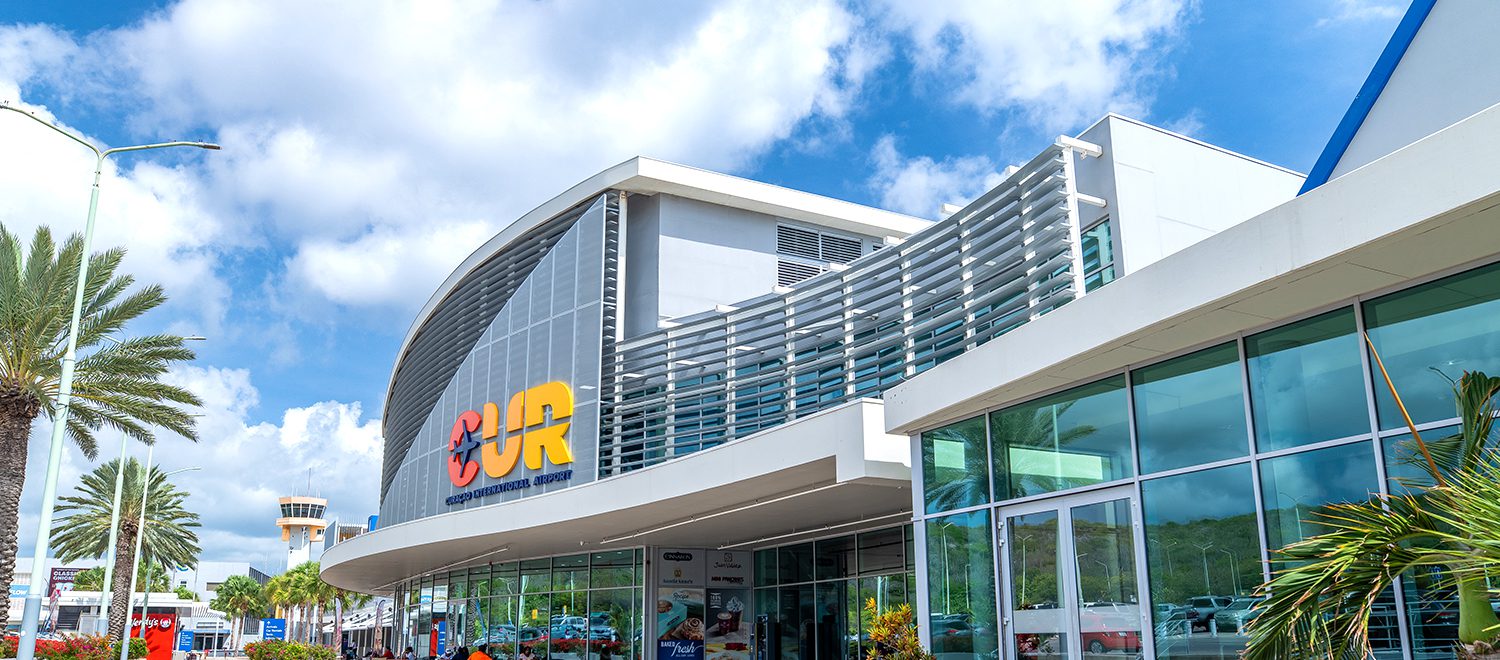
Against this backdrop, Curaçao International Airport delivered a record performance in 2025, handling 2.46 million passengers, up 17% year-on-year. At first glance, the figures point to a strong rebound. But beyond the headline growth, Curaçao offers something more instructive: a structured, resilient model of airport development—one that remains, however, shaped by inherent constraints.
A record year… but not the full story
Traffic growth at Curaçao reflects a solid recovery across both inbound and outbound flows. The airport processed 894,000 international departing passengers and over 1.07 million arrivals, both increasing by around 9–10% compared to 2024. Seat capacity expanded even faster, up 22%, while maintaining a relatively high load factor of 81%.
These indicators suggest more than a temporary rebound. They point to a system that has managed to align capacity with demand, while maintaining operational efficiency in a volatile environment.
Yet, growth alone does not explain the airport’s performance. In fact, Curaçao’s trajectory appears less driven by volume than by the way that volume is structured.
Diversification as a buffer against volatility
One of the most distinctive features of Curaçao’s model lies in its traffic composition. Unlike many island destinations that rely heavily on a single source market, Curaçao distributes its demand across multiple regions: Europe accounts for 33% of traffic, followed by the United States (22%), South America (20%) and the Caribbean (17%).
This diversification plays a critical role in mitigating risk. When one market slows, others can compensate. It also allows the airport to adapt more flexibly to external shocks, whether economic or geopolitical.
However, this balance is not without limits. Europe—primarily the Netherlands—remains the largest segment, suggesting that structural exposure has not been entirely eliminated. For an island economy, diversification reduces vulnerability, but does not remove it.
Airline partnerships as a strategic asset
If traffic distribution provides stability, Curaçao International Airport relationships with airlines appear to be the real engine behind its performance.
The airport’s network—comprising 22 airline partners and 24 gateways—has not expanded aggressively, but rather selectively. New routes, such as LATAM’s Lima–Curaçao service or American Airlines’ Chicago connection, reflect a targeted approach to network development, focused on strengthening connectivity without overextending capacity.
More importantly, airline partners consistently highlight the nature of their collaboration with the airport. One described it as:
“a continuous partnership approach, one based on trust, transparency, and a shared interest in sustainable growth”
Another emphasized Curaçao’s role as: “a valuable and dependable destination within our network”
These statements point to a shift in how airport-airline relationships are structured. Rather than acting as infrastructure providers alone, airports like Curaçao position themselves as long-term partners in route development and market growth.
Building a network, not just adding routes
Curaçao’s route strategy further reinforces this approach. The addition of services to Lima, Medellín, St. Maarten and Chicago reflects a deliberate effort to connect the island to multiple economic and geographic corridors.
This is not a hub strategy in the traditional sense. Transfer and transit passengers represent around 14% of total traffic—significant, but not dominant. Instead, Curaçao operates as a hybrid gateway, combining point-to-point tourism flows with regional connectivity.
Such a model offers flexibility, but also requires careful calibration. With seat capacity increasing faster than passenger growth, maintaining high load factors will depend on the airport’s ability to sustain demand across all its markets.
Governance as a hidden driver of performance
Beyond traffic and network strategy, Curaçao’s performance is also rooted in governance.
The airport operates within a coordinated ecosystem involving Curaçao Airport Partners, Curaçao Airport Holding, the government, and tourism stakeholders. This alignment allows aviation strategy to be directly integrated with broader economic objectives, particularly in tourism.
The recognition received at the Routes Americas Awards 2026—where Curaçao was named best airport under 5 million passengers—reflects this collective approach. Notably, airports are nominated by airlines themselves, underscoring the importance of collaboration in achieving sustainable growth.

As one airline judge noted:
“This airport saw a particularly impressive year despite challenges. It is clear that they work incredibly closely with airline partners and local stakeholders to ensure sustainable growth.”
A resilient model… within structural limits
Curaçao International Airport’s 2025 performance illustrates what a resilient airport model can look like in a small island context: diversified demand, strong airline partnerships, targeted network expansion and coordinated governance.
At the same time, the model remains shaped by structural constraints. Exposure to external markets, dependence on airline strategies and the inherent volatility of tourism-driven economies continue to define the operating environment.
In this sense, Curaçao does not represent a perfect model—but rather a refined one. Its experience suggests that resilience in island aviation is not achieved through scale, but through balance: between markets, partners and strategic priorities.
For other island economies facing similar challenges, the lesson is clear. Growth may fluctuate, but structure—if carefully built—can endure.