The cruise industry is no longer what it used to be. What was once a relatively simple tourism segment has evolved into a complex, globalized system—one that now reshapes how Caribbean destinations compete, invest, and position themselves.
Speaking in the FCCA Leadership Series, Micky Arison offers a rare, long-view perspective on this transformation. “It’s much more complicated today than when I started,” he explains, reflecting on decades of structural change across the sector.
This shift goes far beyond scale. It signals a fundamental redefinition of the cruise model itself.
From simple operations to a global, data-driven system
The cruise industry’s early years were defined by operational simplicity. Limited onboard offerings, straightforward logistics, and relatively contained networks made it possible to understand—and manage—the business end-to-end.
Today, that model has disappeared.
Cruise operators now manage vast, globally distributed fleets, complex itineraries, and increasingly data-driven decision-making systems. Real-time coordination across vessels, destinations, and customer touchpoints has become the norm. The industry has effectively transitioned into a multi-layered ecosystem where operational excellence depends as much on data and coordination as on physical infrastructure.
Yet, as complexity has increased, so too have expectations.
Floating cities: a new benchmark for experience
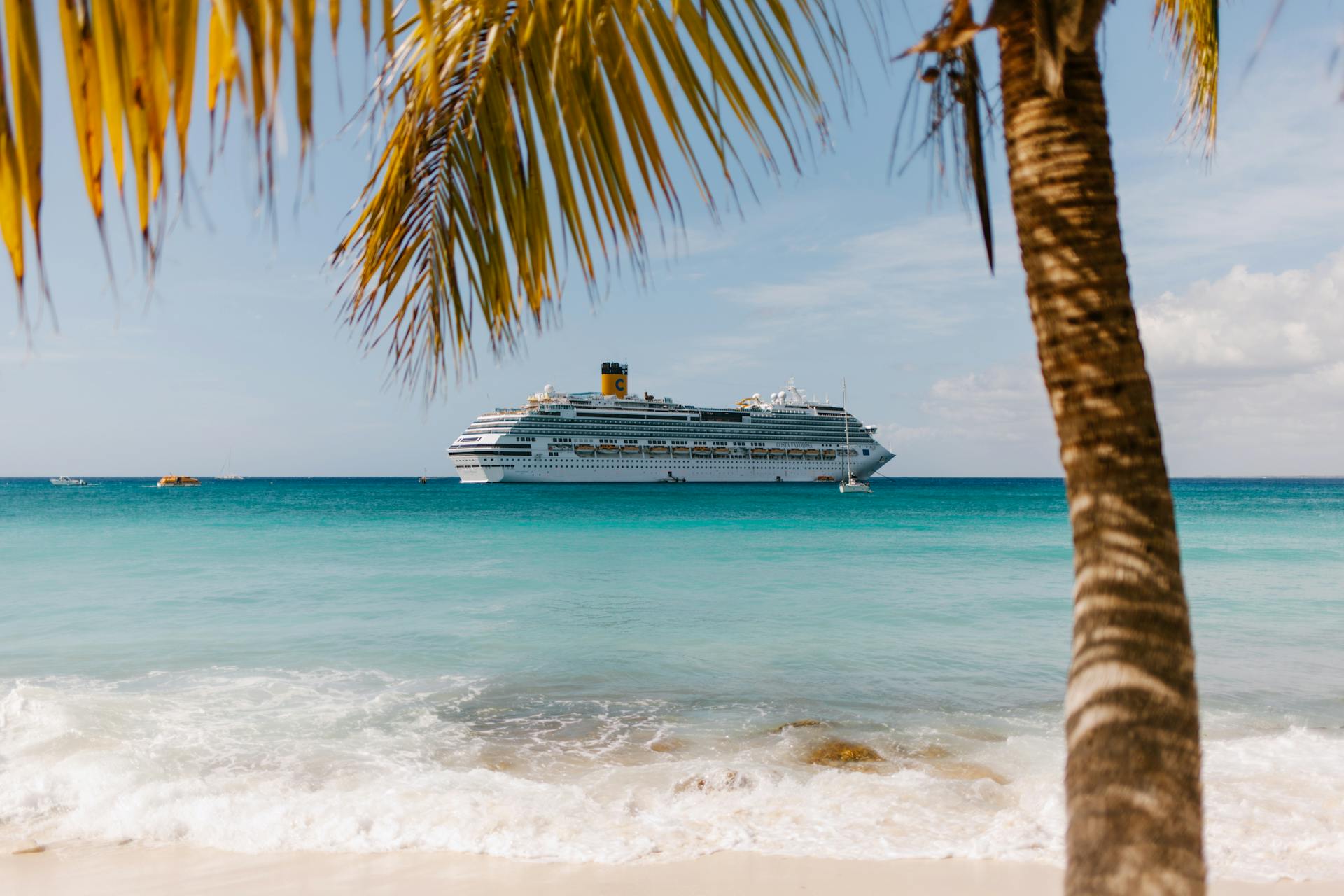
Perhaps the most visible transformation lies in the onboard product itself. Modern cruise ships are no longer vessels in the traditional sense—they are fully integrated environments.
Arison describes them as offering “almost every type of experience you can imagine,” from high-end gastronomy to large-scale entertainment productions. The comparison with earlier decades is stark: where once a limited set of dining and entertainment options sufficed, today’s ships operate as “floating cities,” delivering a level of variety and service comparable to—or exceeding—land-based destinations.
This evolution has quietly shifted the balance of power in the tourism experience.
The cruise no longer serves merely as transport to a destination. It is, in itself, a primary destination.
A new competitive pressure on Caribbean destinations
This transformation carries direct consequences for Caribbean and Latin American destinations.
As onboard standards rise, so too does the baseline expectation of travelers. Destinations are no longer evaluated in isolation—they are compared, implicitly and continuously, to the experience delivered at sea.
In practical terms, this creates a new form of competitive pressure.
Ports, cities, and tourism ecosystems must now align with a product that has become:
- more sophisticated
- more diversified
- more service-intensive
The implication is clear: infrastructure alone is no longer sufficient. Competitiveness increasingly depends on the ability to deliver a seamless, high-quality experience that complements what passengers have already experienced onboard.
In this context, the traditional model—where the destination is the highlight and the ship a supporting element—has inverted. The journey begins on the vessel, and the destination must now match that standard.
Coordination as a form of infrastructure
Faced with this growing complexity, coordination between stakeholders becomes critical.
For Arison, the foundation of this coordination is straightforward: communication. “If we talk, we can work together,” he says, emphasizing the importance of continuous dialogue between cruise operators, destinations, and industry bodies.
This may appear self-evident, yet in practice it represents one of the most underdeveloped components of the cruise ecosystem.
Ports invest in terminals. Governments invest in tourism development. Cruise lines invest in ships and services. But without structured, ongoing communication between these actors, misalignments persist—whether in capacity planning, passenger flow management, or experience design.
In this sense, communication functions as an invisible infrastructure—less visible than terminals or ships, but equally essential to performance.
A stable model beneath increasing complexity
Despite these profound transformations, one aspect of the cruise industry has remained remarkably consistent.
“If you deliver a great product at a reasonable price, it works,” Arison notes. The core equation—customer satisfaction combined with accessible pricing—continues to underpin the business model.
What has changed is not the principle, but the level of complexity required to deliver on it.
Delivering a “great product” today involves orchestrating a global system of ships, destinations, services, and data. Maintaining “reasonable pricing” requires scale, efficiency, and continuous optimization. The simplicity of the model now rests on an increasingly sophisticated operational backbone.
Redefining competitiveness in the Caribbean
The implications for Caribbean destinations are structural.
Cruise tourism can no longer be approached as a volume-driven activity alone. It has become a quality-driven, system-dependent industry where success depends on alignment across multiple dimensions:
- onboard experience
- destination readiness
- infrastructure capacity
- stakeholder coordination
The challenge, therefore, is evolving.
Attracting cruise calls is no longer the primary objective. The real question is whether destinations can keep pace with an industry that is continuously raising its own standards.
In a market defined by “floating cities,” competitiveness is no longer anchored solely on land—it is shaped at sea.
Watch full episode here