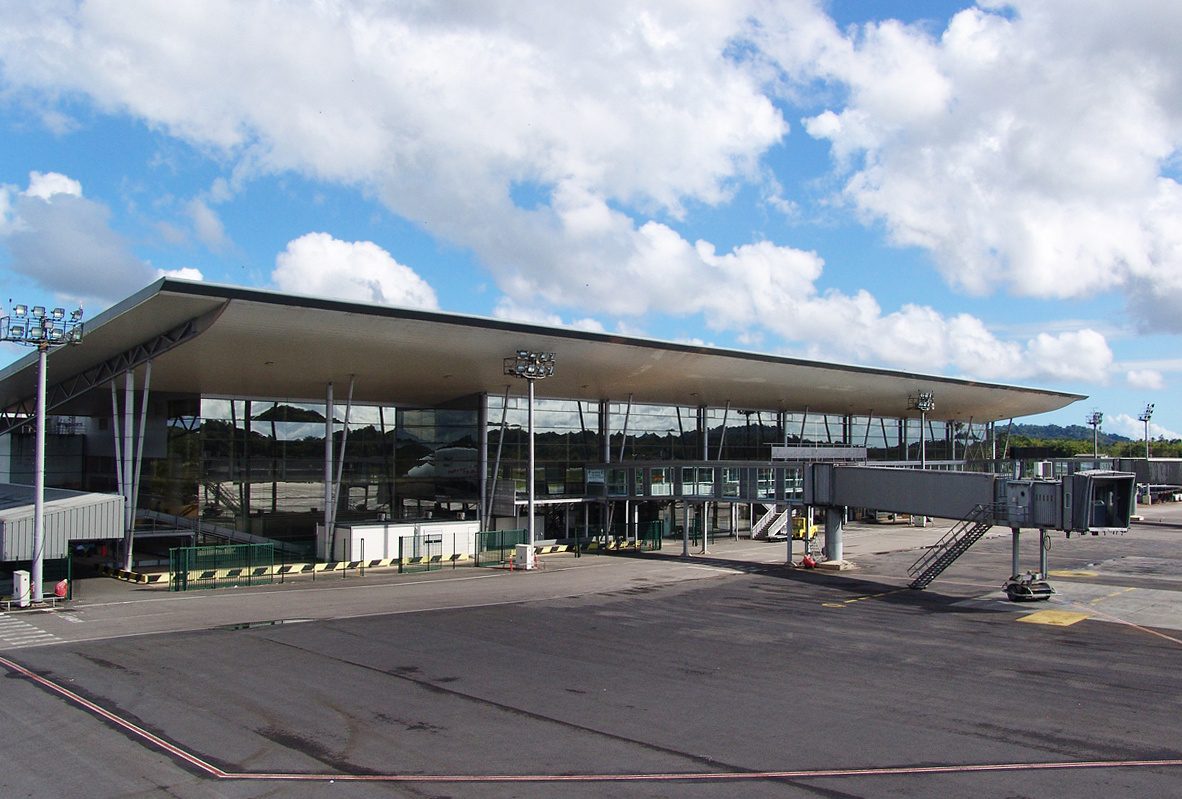
In French Guiana, air transport is not merely a mobility option—it is a structural component of territorial connectivity. Located on the northern edge of the Amazon basin and geographically isolated from mainland France, the territory relies heavily on aviation to ensure passenger mobility, economic exchanges and logistical links with both Europe and neighbouring South American countries. At the centre of this system stands Cayenne – Félix Éboué International Airport, the main aviation gateway to the territory.
As traffic gradually stabilizes after the shock of the COVID-19 pandemic, the airport is now entering a new phase of development. The preparation of the Economic Regulation Contract (CRE) covering the period 2027-2031 between the French State and the Société Concessionnaire de l’Aéroport de Cayenne Félix Éboué (SCAC) outlines the strategic framework that will guide the platform’s economic performance, infrastructure investment and service quality over the next five years.
Beyond its regulatory nature, the contract effectively serves as a roadmap for the modernization of the territory’s primary air infrastructure.
A new governance framework following the airport concession
The preparation of the CRE follows the signing of a new concession agreement between the French State and SCAC on 23 September 2025, with the concession entering into force on 1 October 2025. The regulation contract complements this concession by defining the economic trajectory of the airport for the period 2027-2031, including tariff evolution, investment commitments, operational performance and environmental objectives.
Economic regulation contracts are a standard governance instrument within the French airport system. They aim to create a balanced framework between airport operators, airlines and public authorities by linking tariff evolution to infrastructure investments, operational efficiency and service quality indicators.
For Cayenne Airport, the contract also introduces a financial benchmark through a target Weighted Average Cost of Capital (WACC) of 6.24%, reflecting the expected return on capital invested in regulated airport activities.
This mechanism is designed to ensure that infrastructure modernization remains financially sustainable while maintaining predictable airport charges for airlines.
A traffic recovery still shaped by structural dependencies
Like many airports across the Caribbean and overseas territories, Cayenne’s traffic dynamics were significantly affected by the pandemic. While passenger volumes have gradually recovered since 2022, the platform had not fully returned to its pre-crisis levels as of 2024.
Traffic reached 89% of its 2019 level in 2024, rising to approximately 96% in 2025.
Historically, the airport has experienced moderate but stable growth. Between 2010 and 2025, passenger traffic increased at an average annual rate of 1.8%, with stronger expansion between 2010 and 2016 before stabilizing and later contracting during the pandemic period.
Cayenne’s traffic structure remains heavily concentrated around a limited number of routes. Flights connecting French Guiana to mainland France represent the largest share of passenger flows, accounting for approximately 64% of total traffic. Connections with the French Caribbean represent roughly 23%, while domestic flights within French Guiana account for less than 10%, a segment weakened by the collapse of the regional carrier Air Guyane.
International connections currently represent only a marginal share of traffic, reflecting the airport’s historical orientation toward domestic and metropolitan routes.
A growth trajectory that requires infrastructure adaptation
Despite the still incomplete post-pandemic recovery, traffic projections suggest a stronger growth phase in the coming years. The airport operator forecasts an average annual traffic growth rate of 4.5% between 2027 and 2031, which would bring passenger numbers to approximately 710,000 by the end of the decade.
Such growth is expected to be driven not only by continued demand for flights to mainland France but also by the gradual development of regional air links.
Potential future routes toward Brazil, Suriname and Guyana could expand the airport’s regional connectivity and reduce its current reliance on metropolitan traffic.
However, accommodating this traffic growth will require significant upgrades to airport infrastructure, particularly in the passenger terminal where several operational processes are already approaching capacity limits during peak hours.
A €70 million investment programme to modernize the platform
To support this development phase, the regulation contract includes a major investment programme aimed at upgrading both operational infrastructure and passenger facilities.
Initial investment commitments amount to approximately €70.6 million between 2027 and 2031, targeting several critical components of the airport platform.
One of the central projects focuses on improving the passenger terminal. The programme includes a reconfiguration of the passenger flow within the terminal building, the creation of additional surface areas and the reorganization of security and boarding processes. These modifications aim to bring the terminal closer to IATA “Optimum” service standards, addressing current bottlenecks in public halls, security checkpoints and boarding areas.
Beyond the terminal itself, several airside infrastructure upgrades are planned. These include the reconstruction of aircraft parking stands P1 and P2, the electrification of contact stands and the modernization of the general aviation area. Runway and taxiway maintenance programmes are also planned to ensure long-term operational reliability.
Security infrastructure will also be reinforced. The airport’s rescue and firefighting services (SSLIA) currently face operational constraints due to access limitations across the airfield. A new dedicated access route to the runway will therefore be created to ensure compliance with European safety response standards requiring emergency intervention within three minutes.
Additional investments will address the modernization of technical installations, perimeter security and electrical systems across the platform.
Enhancing passenger experience and airport services
Another dimension of the modernization programme concerns the overall passenger experience.
The redevelopment of the terminal will enable the introduction of expanded commercial areas, including a new 300-square-meter duty-free retail space, as well as improved passenger circulation between security control, immigration and boarding areas.
Additional facilities are also planned outside the terminal building. A new structure dedicated to car rental agencies will accommodate the eleven operators currently present at the airport, while a separate office building will house administrative functions previously located inside the terminal. These relocations are intended to free space within the terminal and improve the efficiency of passenger processing.
Together, these changes aim to adapt the airport to a gradual increase in international and regional passenger flows while improving service quality standards.
A strategic infrastructure for the development of French Guiana
Beyond aviation operations, Cayenne Airport plays a broader role within the economic ecosystem of French Guiana. As the territory’s primary air gateway, the platform supports passenger mobility, tourism, logistics and government services while also serving the operational needs of the Guiana Space Centre (Centre Spatial Guyanais), one of Europe’s most important space launch facilities.
The modernization programme outlined in the upcoming regulation contract therefore reflects more than a simple infrastructure upgrade. It represents a strategic effort to align the airport’s operational capacity with the long-term economic development of the territory.
As air transport remains a critical component of connectivity across remote and island regions, the next development phase of Cayenne – Félix Éboué International Airport could play a key role in strengthening the territory’s links with both Europe and its South American neighbours.
Through the CRE 2027-2031 framework, the airport is positioning itself to support this evolving regional aviation landscape while maintaining its central role in the transport system of French Guiana.