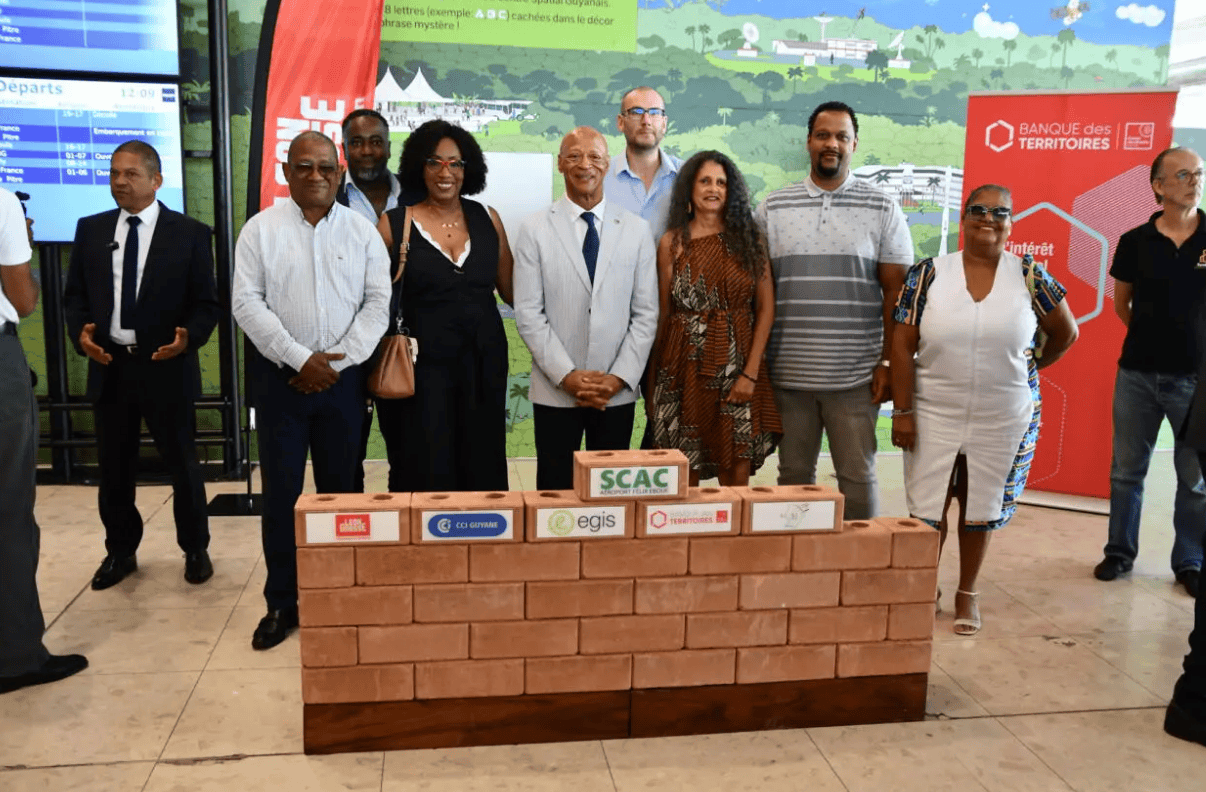
Cayenne International Airport has launched a €85 million modernisation programme as passenger traffic moves closer to the limits of the facility’s existing capacity.
The first stone was laid on 8 July 2026, officially starting a 42-month construction programme that will extend the terminal, reorganise passenger flows and upgrade several operational areas. The work is expected to proceed without interrupting commercial air traffic at French Guiana’s main airport.
The project comes at a critical point for the platform. Cayenne handled close to 550,000 passengers in 2025, while airport leadership says the facility was originally designed for approximately 600,000 passengers per year.
This would place current traffic at more than 90% of the airport’s estimated design capacity, leaving limited room to accommodate sustained growth without changes to the terminal and its supporting infrastructure.
Capacity pressure moves the project forward
The modernisation programme is intended to prevent the airport’s existing capacity constraints from becoming an obstacle to French Guiana’s mobility and economic development.
As the territory’s principal air gateway, Cayenne Félix Éboué International Airport plays a central role in maintaining territorial continuity with mainland France while also supporting connections with the Caribbean, South America and other international markets.
Jean-Luk Le West, president of the Société Concessionnaire de l’Aéroport de Cayenne, or SCAC, said the airport had already moved close to the limits for which it was initially designed.
“The airport was designed for 600,000 passengers, and today we have reached 549,000,” he said during the launch of the project.
The figures communicated by the project partners vary slightly, with written statements reporting approximately 540,000 passengers in 2025. Taken together, however, they point to the same operational challenge: the airport has only a narrow margin before reaching its current passenger ceiling.
The investment is therefore not limited to renovating an ageing building. It is intended to remove an emerging capacity constraint before it restricts the ability of airlines to increase frequencies, develop services or respond to future growth in demand.
Airport officials have expressed the ambition of welcoming more aircraft and passengers from 2027 or 2028. This should be viewed as an operational objective rather than the completion date of the entire programme, as the announced 42-month construction period would extend into early 2030.
Some improvements could therefore be introduced progressively while the broader transformation remains underway.
A phased transformation under live operations
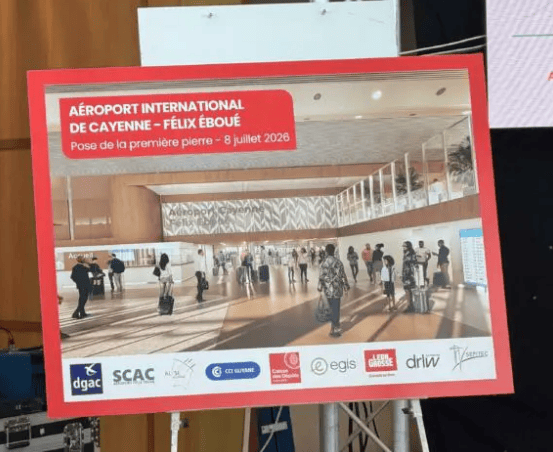
The terminal building will be extended by more than 1,000 square metres, but the programme places as much emphasis on the organisation of passenger flows as it does on additional floor space.
The first phase is expected to include the construction of a new administrative building, providing airport employees with modern working areas and updated technological facilities.
Work will then move into the central terminal, where departure and arrival circuits will be redesigned. The stated objective is to reduce congestion, accelerate passenger processing and improve safety throughout the airport journey.
“The aim is to completely redesign the passenger journey and make it faster, smoother and safer,” Le West said.
For an airport approaching its design capacity, better passenger processing can be as important as physical expansion. Reorganising check-in, security, boarding and arrival flows may allow the terminal to handle existing traffic more efficiently while improving the experience delivered to travellers.
The wider programme also includes the renovation of aircraft parking areas, the construction of an aviation hangar and new facilities for administrative services and car rental companies.
Commercial spaces will also be redesigned, with plans to give greater visibility to products and expertise from French Guiana. This creates an opportunity for the airport to strengthen its non-aeronautical offering while giving the terminal a more distinctive local identity.
Carrying out the work without suspending airport operations will nevertheless be one of the project’s most complex aspects. Construction phases will have to be coordinated with airline schedules, passenger circulation, security requirements and ground-handling activities over more than three years.
Connectivity ambitions meet an energy transition target
The project is being led by SCAC with the support of the Collectivité Territoriale de Guyane, the majority shareholder of Alyse Guyane. The modernisation forms part of the commitments associated with the airport concession awarded to SCAC in October 2025.
Alongside the operational improvements, the platform has announced a target of reaching 90% decarbonised energy.
The objective is particularly significant for an airport operating in an Amazonian territory where infrastructure development is closely linked to environmental and energy considerations.
However, the project partners have not yet provided details on the technologies, implementation schedule or baseline that will be used to measure progress toward the 90% target. It remains unclear how much of the transition will come from renewable electricity generation, energy efficiency, storage or other low-carbon solutions.
The programme is also expected to mobilise local contractors, subcontractors and skills. Institutional partners have presented the investment as an opportunity to support employment, training and economic activity in French Guiana, although no quantified local-content or job-creation targets have been published.
The €85 million investment should give Cayenne additional operational flexibility and a terminal better suited to current passenger volumes. Its longer-term impact, however, will depend on whether those improvements translate into increased processing capacity, stronger airline demand and more extensive regional and international air links.
photo credit : Collectivité Territoriale de Guyane