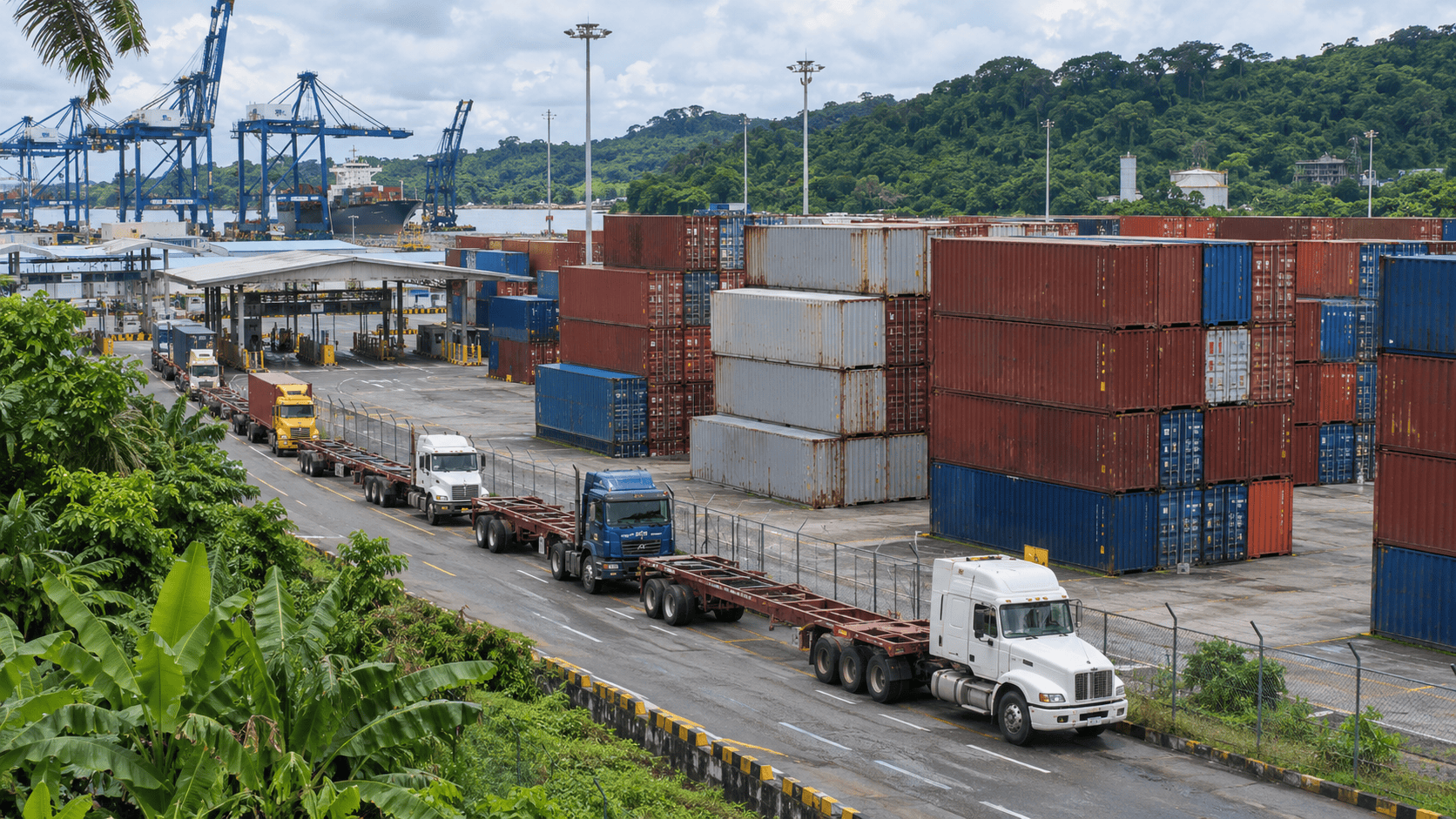
Colombia’s Transport Ministry has reported an accumulation of 110,000 empty containers across Buenaventura, renewing concerns over congestion and access to the country’s main Pacific port district. The November 11 announcement comes nine months after authorities introduced mandatory measures to improve container returns and depot operations, highlighting the continuing need for coordination between shipping lines, terminal operators and road transport providers.
Empty Containers Put Buenaventura’s Logistics Network Under Pressure
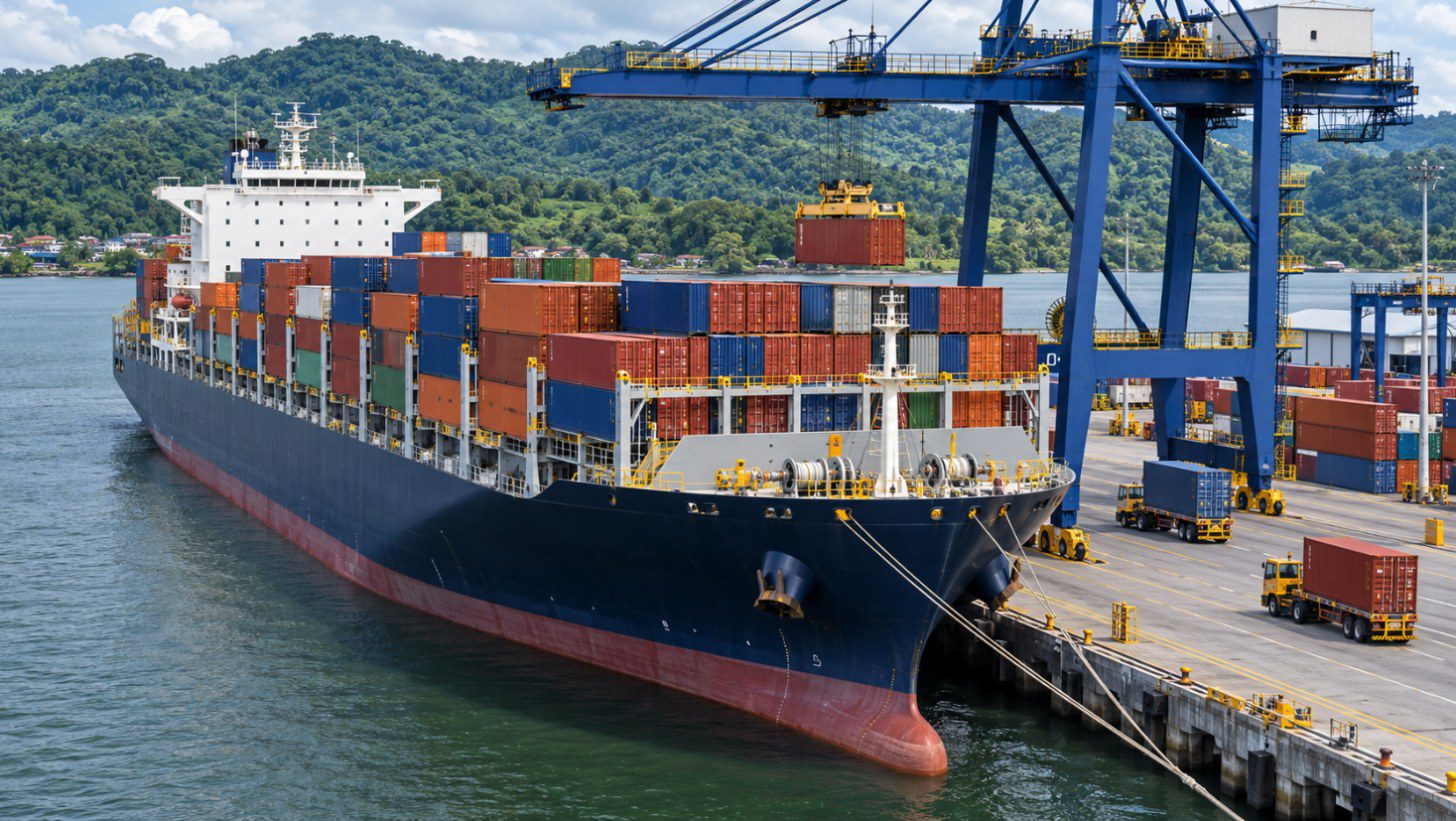
Colombia’s Transport Minister Elsa Noguera has called for coordinated action to address the accumulation of 110,000 empty containers across the Buenaventura district. The figure, announced by the Ministry of Transport on November 11, 2026, reflects a logistics problem extending beyond the maritime terminals to the wider network of container depots, transport operators and port access roads.
According to Noguera, only one container leaves Buenaventura for every four entering the district. The minister presented this imbalance as a major contributor to the accumulation of empty equipment, which is affecting vehicle circulation and complicating access to port facilities.
The ministry has not published a detailed inventory showing how the reported 110,000 containers are distributed between terminals, external depots and other locations. Nor does its announcement specify the measurement period underlying the four-to-one ratio. Both figures therefore remain official estimates or statements whose precise operational scope has not been independently established.
Buenaventura’s importance to Colombia’s international trade makes the issue particularly significant. The Transport Ministry states that 42% of the country’s international trade cargo moves through the district, placing considerable importance on the coordination of maritime operations and inland transport.
Over two days, Noguera met with national and local authorities, port operators, business representatives, cargo owners and transport companies to identify measures for accelerating the evacuation of empty containers. The discussions also addressed access restrictions and the organization of logistics activities.
The minister’s visit included an inspection of operations around Buenaventura’s inner bay, including Sociedad Portuaria de Buenaventura, Aguadulce and Muelle 13. The latter facility was described by the ministry as preparing to enter operation, rather than already handling commercial traffic.
No quantified evacuation target or completion deadline was announced following the November meetings. The immediate objective remains to coordinate the different participants whose activities determine how quickly empty containers can move through the district.
Returning an Empty Container Depends on More Than Port Capacity
An empty container does not necessarily leave the logistics system when its imported cargo has been delivered. Before the equipment can be reused or repositioned, it must be returned to an authorized location, accepted into a depot or terminal and made available for another transport operation.
In Buenaventura, this sequence involves shipping lines, container depots, trucking companies and port terminals. Each controls a different part of the process, from assigning return locations and managing storage availability to arranging road movements and subsequent maritime evacuation.
When a designated depot cannot receive additional containers, transport operators may face difficulties completing returns. Trucks can remain occupied with empty equipment, while restricted receiving capacity and appointment availability may complicate subsequent movements. The resulting pressure can extend to roads serving the port district even when vessel-handling operations continue.
Container accumulation also raises questions about repositioning. Shipping lines must determine whether empty equipment can be reused for exports or transported elsewhere to meet demand. These decisions depend on available vessel capacity, equipment requirements and the distribution of cargo flows across the shipping network.
The Colombian authorities have identified container reception, storage and evacuation as interconnected concerns. Their earlier interventions specifically targeted depot operations and the coordination of returns, indicating that the problem cannot be addressed solely by increasing the physical capacity of maritime terminals.
For road transport providers, the availability of receiving facilities is particularly important. A container may be ready for return while the depot designated to accept it lacks a suitable appointment or sufficient operational capacity. Such situations can create additional vehicle movements and delays without increasing the volume of cargo handled.
The ministry has not provided a breakdown attributing the November accumulation to individual shipping lines, terminals or depot operators. Responsibility for the reported backlog therefore cannot be assigned to any one category of operator on the basis of the latest announcement alone.
February’s Regulatory Measures Already Targeted Shipping Lines and Depots
The November intervention follows a series of mandatory measures introduced by Colombian transport authorities in February 2026. On February 7, the Ministry of Transport and the Superintendencia de Transporte announced an emergency operational plan intended to improve empty container returns and reduce congestion in Buenaventura.
The framework required empty container depots covered by the instructions to maintain continuous operations, including receiving, loading, unloading, delivering and inspecting equipment. It also called for immediate evacuation plans addressing containers stored outside port terminals.
Operators were instructed to prepare verifiable action plans based on existing occupancy levels, progressive reduction targets and supporting evidence. Daily reporting of empty container movements was introduced to strengthen regulatory monitoring, while shipping line representatives and depot operators were required to provide information demonstrating compliance.
The February regulatory package also addressed the responsibilities of shipping lines and the conditions surrounding container returns. Its provisions included evacuation arrangements and measures concerning charges where transporters were unable to return equipment for reasons beyond their control.
These requirements were accompanied by operational adjustments at individual facilities. By February 15, the ministry reported that occupancy at installations handling empty containers had reached 68% of contracted capacity, equivalent to 39% of the total installed capacity registered in the Buenaventura port area.
The ministry also announced an operation expected to evacuate more than 5,500 empty containers from Aguadulce during the relevant week. At TCBUEN, appointment arrangements were adjusted to provide a wider window for truck movements, while changes to container pooling were intended to support equipment rotation.
Those February figures provide evidence of measures implemented and improvements reported at the time. They cannot, however, be directly compared with the 110,000-container accumulation announced in November. The earlier indicators describe facility occupancy and planned evacuation operations, whereas the latest figure concerns an accumulated number of containers across the district.
The November announcement consequently does not establish that the February measures failed. It demonstrates that empty container management remains a sufficiently significant operational concern to require renewed government intervention, but the available information does not provide a consistent statistical series for assessing how the situation evolved over the intervening months.
Road Access Projects Address Only Part of the Bottleneck
Alongside its discussions on container evacuation, Colombia is advancing road infrastructure works intended to improve access to Buenaventura’s port facilities. On November 10, the Transport Ministry announced that construction activities were underway across all 21 functional sections of the Buga–Loboguerrero–Buenaventura corridor.
The project includes the Vía Alterna Interna, a road connection intended to improve freight access to the port terminals. Approximately 10 kilometres are covered by the intervention, including 6.5 kilometres of new second carriageway.
Work has also begun on a 10-hectare truck staging area at El Jordán, designed to accommodate approximately 350 heavy goods vehicles. The facility is intended to allow drivers to wait for their assigned terminal access slots away from urban roads, potentially improving the organization of freight traffic.
Another component involves rehabilitating 15 kilometres of the Vía Simón Bolívar, which carries national road traffic through Buenaventura. The government has set February 2028 as the target for completing the wider road program, with an estimated reduction of approximately 40 minutes in journeys to and from the port once the improvements are in place.
These investments address an important part of Buenaventura’s logistics constraints, but road capacity and empty container evacuation remain separate operational challenges. Better access can facilitate truck circulation without necessarily increasing the availability of depot space or ensuring that shipping lines reposition empty equipment more rapidly.
Additional measures announced on November 11 include a planned agreement with the National Police’s Traffic and Transport Directorate to strengthen control along the corridor. The ministry also scheduled the reactivation of the Invías #767 road information service for November 29, allowing users to consult road conditions and report emergencies.
The immediate response to Buenaventura’s container accumulation will therefore depend on operational coordination rather than infrastructure construction alone. Depot reception capacity, container return arrangements, maritime evacuation and road access must function together if the reported backlog is to be reduced.
For Colombia’s port and logistics sector, the next development to monitor will be whether the November discussions produce measurable evacuation targets and updated occupancy data. Those indicators would help determine how effectively the existing regulatory framework and the latest coordination efforts are addressing Buenaventura’s empty container problem.
FAQ
How many empty containers are reportedly accumulated in Buenaventura?
Colombia’s Ministry of Transport reported approximately 110,000 empty containers across the Buenaventura district on November 11, 2026. The figure covers the wider district and has not been broken down by terminal or external depot.
Why are empty containers contributing to congestion in Buenaventura?
Empty containers must be returned to authorized facilities before being reused or repositioned. Limited depot reception capacity, transport scheduling and delays in maritime evacuation can restrict equipment movements and increase pressure on roads serving the port district.
What measures did Colombia introduce in February 2026?
Colombian transport authorities introduced mandatory measures covering continuous depot operations, container evacuation plans, daily movement reporting and operational coordination. The measures also addressed shipping line responsibilities and certain charges associated with delayed container returns.
Did the February measures fail to resolve Buenaventura’s congestion?
The November 2026 announcement confirms that empty container management remains a significant concern, but it does not establish that the earlier measures failed. The February and November figures use different indicators and cannot be directly compared to measure changes in container accumulation.
What is Colombia doing to improve access to Buenaventura’s ports?
Colombia is advancing the Buga–Buenaventura road corridor, including the Vía Alterna Interna and a truck staging area designed for approximately 350 vehicles. The wider program is scheduled for completion in February 2028, while authorities are also working on operational coordination and road traffic management.