
The British Virgin Islands (BVI) are entering a new chapter in their tourism development strategy. After years of rebuilding following Hurricanes Irma and Maria and the COVID-19 pandemic, the Territory is now focusing on a different challenge: building the infrastructure and capacity required to sustain the next phase of tourism growth.
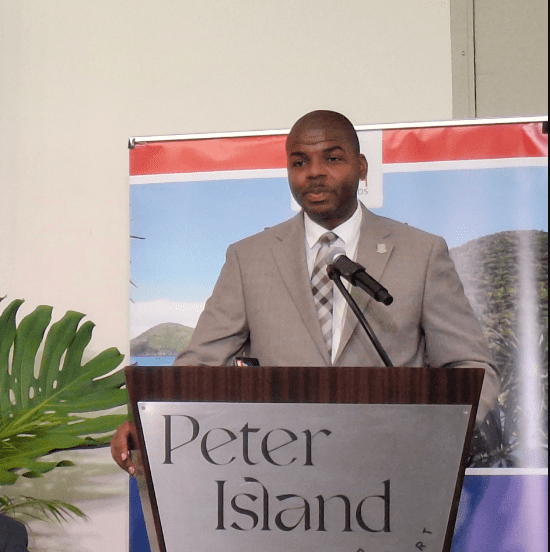
That message emerged clearly during the Virgin Islands Tourism Summit 2026, held on 10-11 June at Peter Island Resort under the theme “Shaping the Future of Tourism in The Virgin Islands: Partnership, Investment & Direction.”
Speaking at the opening of the summit, Premier and Minister of Finance and Tourism Dr. Natalio D. Wheatley described tourism as the sector with the greatest growth potential for the Territory and outlined a roadmap centred on accommodation, connectivity, visitor management and product diversification.
From recovery to growth
The BVI’s tourism industry has regained momentum in recent years. According to the Government, the Territory welcomed more than 300,000 overnight visitors in each of the past two years, while overnight arrivals increased by approximately 6% during the first quarter of 2026 compared with the same period last year.
For Premier Wheatley, these figures indicate that the recovery phase is largely behind the Territory.
However, he argued that sustaining this momentum will require significant investments in capacity.
“The challenge before us is to build more hotels,” the Premier said.
The statement reflects a broader reality faced by many island destinations: demand may be recovering, but growth ultimately depends on the ability to accommodate additional visitors and provide the supporting infrastructure they require.
Expanding accommodation and infrastructure
Several tourism developments are expected to support the Territory’s next growth phase.
The Government is preparing to issue a Request for Proposals (RFP) for the redevelopment of Prospect Reef on Tortola, with the objective of attracting a high-quality hotel investment. Additional developments were also highlighted at West End, Leverick Bay, Bitter End, Oil Nut Bay and Long Bay.
For the BVI, expanding hotel capacity has become a strategic priority, particularly as overnight visitors generally generate broader economic benefits through longer stays and higher spending across accommodation, dining, retail and activities.
The discussion also extended beyond hotels to encompass infrastructure more broadly.
During his remarks, Premier Wheatley acknowledged the challenges associated with post-disaster reconstruction and ongoing infrastructure works, while also recognising that bureaucratic processes can hinder implementation.
“Things move way too slowly in government,” he said, calling for greater efficiency and closer cooperation between public authorities and industry stakeholders.
Air access as a growth enabler
Air connectivity emerged as another critical pillar of the Territory’s growth strategy.
Premier Wheatley highlighted the strong performance of American Airlines’ direct service from Miami, describing the route as an important driver of overnight tourism demand. He noted, however, that operational limitations linked to the current runway configuration constrain the Territory’s ability to further expand air access.
The ongoing runway extension project at Terrance B. Lettsome International Airport was therefore presented as a key enabler of future growth.
The Government sees enhanced airport infrastructure as essential to increasing market accessibility and supporting higher visitor volumes.
The relationship between accommodation and connectivity was a recurring theme throughout the summit discussions. More hotel capacity will require additional air access, while improved connectivity will be necessary to maximise the return on future tourism investments.
Balancing growth and diversification
While overnight tourism remains a priority, the Government made clear that it does not intend to pursue growth at the expense of the cruise sector.
Premier Wheatley emphasised the need to maintain balance between both segments, noting that cruise tourism continues to support numerous livelihoods throughout the Territory, from transportation providers and restaurants to vendors and small businesses.
At the same time, the Government is seeking to better distribute visitor activity across the islands by developing additional attractions, including Brandywine Bay.
The BVI is also looking beyond its traditional strengths in sailing and luxury tourism.
The Premier identified cultural and heritage tourism, entertainment tourism and sports tourism as areas capable of generating new visitor demand and reducing seasonality.
“We have a wonderful sailing industry. We have a wonderful luxury industry. We have an excellent product here in The Virgin Islands, but we can create more opportunities,” he said.
A new phase for the British Virgin Islands
The Virgin Islands Tourism Summit 2026 ultimately revealed a destination that is moving from resilience and recovery towards strategic capacity-building.
For the British Virgin Islands, the next phase of tourism development is no longer primarily about rebuilding demand. Instead, it is about ensuring that hotel inventory, airport infrastructure, visitor management and product diversification evolve fast enough to support the Territory’s ambitions.
As many Caribbean destinations confront similar constraints linked to infrastructure, accessibility and carrying capacity, the BVI’s approach may offer an instructive example of how small island destinations can prepare for their next stage of sustainable tourism growth.