
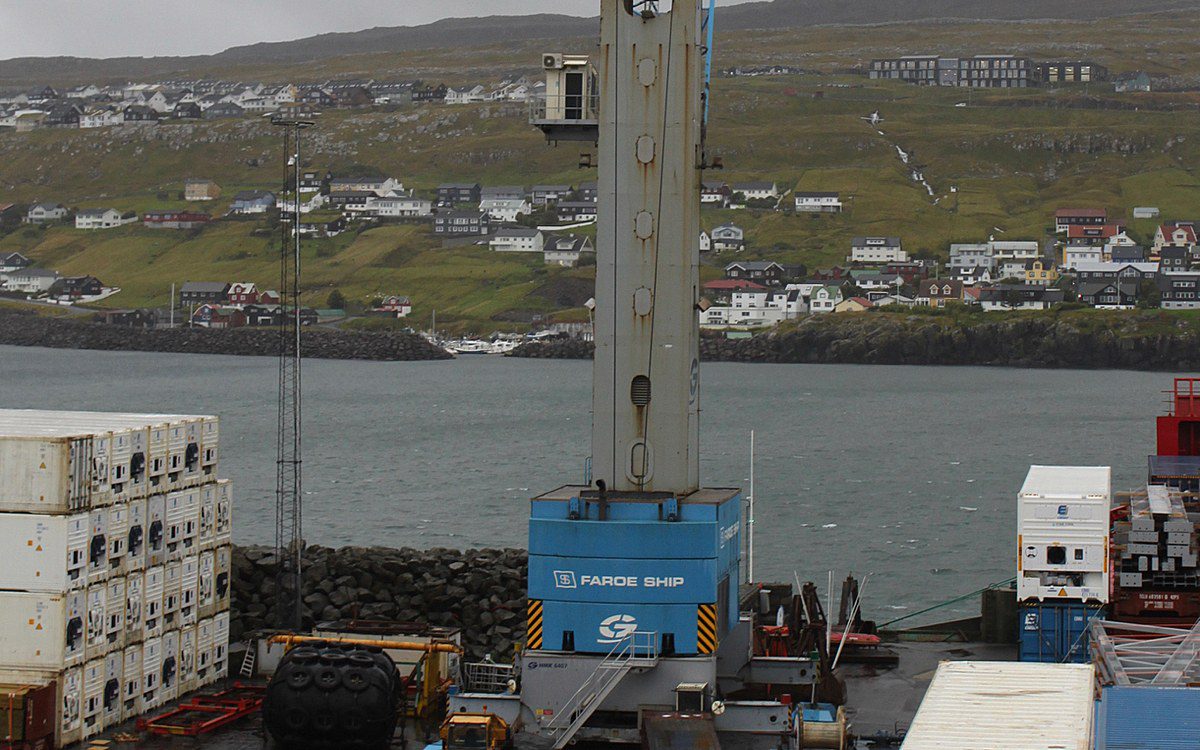
A crane designed for smaller ports is heading to Bermuda. Stevedoring Services Limited (SSL) has ordered a Konecranes Gottwald ESP.4 mobile harbor crane, the first order for this model outside Europe, Konecranes announced on November 10, 2026. Delivery is expected in the third quarter of 2027.
40 more tonnes on the quay
The new crane can lift up to 100 tonnes, 40 tonnes more than SSL’s existing HMK 170 E crane, delivered in 2011. It offers a maximum working radius of 42 meters and hoisting speeds of up to 120 meters per minute.
SSL plans to use it mainly to speed up container handling. The crane will also give the company extra lifting capacity for general cargo and project cargo, the heavy or oversized pieces that do not fit in a container.
Randy Rochester, CEO of SSL, said the new crane “combines the speed and lifting capacity we need to maintain productivity”, in a compact format.
The smallest of the Generation 6 range
Konecranes launched the ESP.4 in February 2026 as the smallest model of its Generation 6 mobile harbor cranes, a range that runs from the ESP.4 to the ESP.10. The manufacturer aims it at smaller seaside and river ports handling containers, bulk and general or project cargo. The crane can be mounted on a rubber-tyred chassis, on a rail-mounted portal or on a barge, and can run on electric power, from the grid and batteries, or on diesel generators.
“The aim now is to build on this order by bringing the ESP.4 to other port operators around the world,” said Alan Garcia, Vice President Regional Sales Americas at Konecranes Port Solutions.
PMAC: a sign of port modernization
The Port Management Association of the Caribbean (PMAC) relayed the news to its members. It sees the investment as part of the continued efforts by ports in the region to modernize their operations, strengthen cargo-handling capacity and improve operational efficiency, and congratulated SSL on the order.
Read also: 3 Steps and 4 Actions: The Blue Ocean Shift Method Applied to Caribbean Ports
Sources: Konecranes (press release of November 10, 2026, ESP.4 launch, February 20, 2026), PMAC.