Puerto Panul is seeking to increase its annual grain transfer capacity from 3.2 million to 5 million tonnes through changes to its terminal at the Port of San Antonio, Chile. The Valparaíso environmental commission approved the project on November 10, 2026, according to maritime news outlet MundoMarítimo; the final environmental resolution has not been reviewed for this article.
What Puerto Panul’s Grain Project Includes
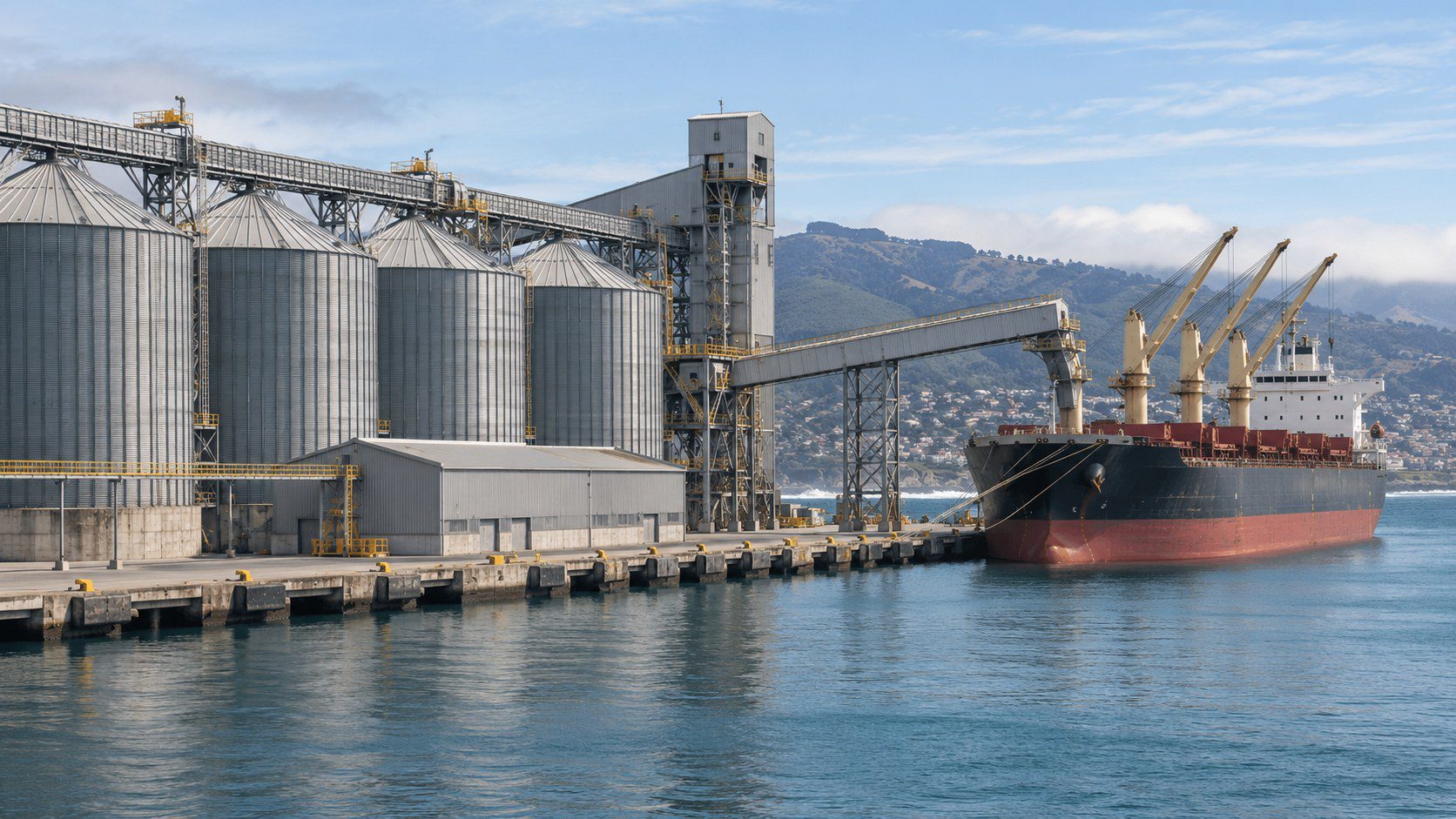
Puerto Panul S.A.’s project combines new storage and land-side infrastructure with a change in how existing cargo-handling equipment is used. The terminal specialises in agricultural bulk cargo, including imported grains, at San Antonio’s northern port area.
According to Chile’s Environmental Assessment Service (SEA), the project would add ten silos for temporary grain storage, a new loading line for trains and trucks, and a weighbridge. It also provides for the simultaneous use of the terminal’s existing FAM and ARDELT cranes.
The combined transfer capacity of the two cranes would reach 1,100 tonnes per hour, according to the SEA’s description. The project also aims to increase the use of rail transport for grain and reduce the role of trucks in the terminal’s land-side operations.
The SEA estimated that the proposed changes could increase annual grain transfers from 3.2 million to 5 million tonnes. That represents a potential increase of 1.8 million tonnes per year, or 56.25%, based on the figures in the environmental assessment document. The higher figure is an estimate associated with the project, not a volume already handled by the terminal.
Key Figures
| Indicator | Project figure |
|---|---|
| Annual grain transfer used as the project reference | 3.2 million tonnes |
| Estimated annual grain transfer after modifications | 5 million tonnes |
| Estimated increase in annual transfer | 1.8 million tonnes |
| Combined transfer capacity of existing cranes | 1,100 tonnes per hour |
| Additional grain silos planned | 10 |
| Current concession expiry | December 31, 2029 |
Environmental Review and Community Participation
Puerto Panul S.A. submitted the environmental impact declaration for the project on July 18, 2025. The SEA admitted it for assessment on July 25, 2025. Later that year, the service opened a public participation process after receiving requests from residents and community organisations.
The Valparaíso Environmental Evaluation Commission listed the project for environmental qualification at its November 10, 2026 meeting. MundoMarítimo subsequently reported that the commission had approved the initiative. The final environmental qualification resolution was not available for review when this article was prepared, so the precise terms and any conditions attached to the decision have not been independently confirmed.
The SEA’s 2025 participation document identified potential environmental effects associated with construction and operation. These included noise, vibration and emissions from activities such as excavation, vehicle movements and equipment operation. The document also considered operational effects associated with simultaneous crane use and changes in train and truck traffic.
For the terminal and neighbouring communities, the assessment brings together cargo-handling objectives and the environmental effects of activity in the port area. The public participation process provided a channel for residents and organisations to submit observations during the assessment.
Environmental Review and the Port Concession Are Separate
The environmental process does not by itself establish how the terminal will be operated after Puerto Panul’s current concession ends. According to the state-owned port company Puerto San Antonio, the existing concession expires on December 31, 2029.
An environmental decision and a port concession address different aspects of a project. The environmental process assesses the proposed changes and their effects, while the concession establishes the operator’s rights and obligations for the port facility. A reported environmental approval should therefore not be treated as an automatic extension of Puerto Panul S.A.’s operating concession.
The framework for operations after the current concession expires remains a separate question. The sources reviewed do not establish that Puerto Panul’s concession has been extended to 2040, or that all grain-handling activity at San Antonio will necessarily end in 2029.
For cargo owners and logistics operators, the project sets out a potential change in how grain could be stored and transferred through the terminal. Its estimated capacity depends on the proposed modifications, while the final environmental conditions and the future concession framework remain important documents for understanding how the project can proceed.
Source : Servicio de Evaluación Ambiental — Transferencia de carga Fraccionada Puerto Panul
FAQ
What changes are planned at Puerto Panul?
The project includes ten additional grain silos, a new loading line for trains and trucks, a weighbridge and simultaneous operation of two existing cranes.
How much grain could Puerto Panul transfer annually under the project?
The SEA’s project description estimates annual grain transfers could rise from 3.2 million to 5 million tonnes after the proposed modifications.
What happened at the environmental commission’s November 2026 meeting?
The project was listed for review on November 10, 2026. MundoMarítimo reported that the commission approved it, but the final environmental resolution was not reviewed for this article.
When does Puerto Panul’s current concession expire?
According to Puerto San Antonio, the current concession expires on December 31, 2029.
Does environmental approval extend Puerto Panul’s concession?
No automatic extension is established by the environmental process. The environmental decision and the port concession are separate matters.