The second half of the year is shaping up to be one of the most demanding periods for supply chains across Latin America and the Caribbean. What was once viewed as a relatively predictable seasonal increase in cargo volumes is increasingly becoming a convergence of demand peaks, weather-related disruptions and mounting pressure on logistics networks.
According to Maersk’s June 2026 Latin America Market Update, companies operating in the region are entering a period characterised by compressed timelines, shifting demand patterns and reduced margins for error. For logistics operators, ports and cargo owners alike, the challenge is no longer simply managing higher volumes. It is maintaining operational resilience in an environment that has become significantly more complex and less predictable.
Demand peaks are becoming increasingly compressed
Several demand cycles are converging during the second half of the year.
As companies prepare for Black Friday and year-end consumption, inventory build-ups tend to begin earlier, particularly along Asia-Latin America trade corridors. The continued expansion of e-commerce is reinforcing this trend by concentrating demand into shorter periods and requiring faster inventory positioning.
At the same time, many importers are accelerating shipments ahead of the Chinese New Year. Since manufacturing activity in Asia slows significantly during the holiday period, businesses often bring forward orders to avoid potential supply disruptions.
Together, these developments are compressing logistics activity into narrower windows. Supply chains must now absorb higher cargo volumes over shorter periods while maintaining delivery reliability and inventory availability.
The implications extend well beyond ocean transportation. Warehousing capacity, inland transportation networks and last-mile distribution operations all come under greater pressure as shipment schedules become increasingly synchronised.
Weather-related disruptions are adding another layer of uncertainty
The region’s seasonal weather patterns further complicate the outlook.
Between August and October, hurricane activity typically reaches its peak in the Caribbean and the Gulf of Mexico. Such events can disrupt regional connectivity, alter vessel schedules and lead to temporary route adjustments across interconnected trade corridors.
Elsewhere in Latin America, heavy rainfall may affect road conditions and hinder cargo movements to and from major gateways. In southern portions of the continent, strong winds, fog, swell and occasional low water levels can also affect port operations and vessel manoeuvres.
While these phenomena are seasonal and generally anticipated, their intensity and timing remain difficult to predict.
For logistics planners, weather is increasingly becoming a structural source of operational uncertainty rather than an occasional disruption. This evolving risk profile requires greater flexibility and continuous monitoring throughout the peak season.
Infrastructure constraints continue to shape regional performance
Despite the more challenging outlook, port operations across much of Latin America remain relatively stable.
Maersk reports normal operating conditions across several key gateways in Central America, the Caribbean and both coasts of South America. Most ports continue to operate within expected service windows, with delays generally remaining limited and cargo flows moving steadily.
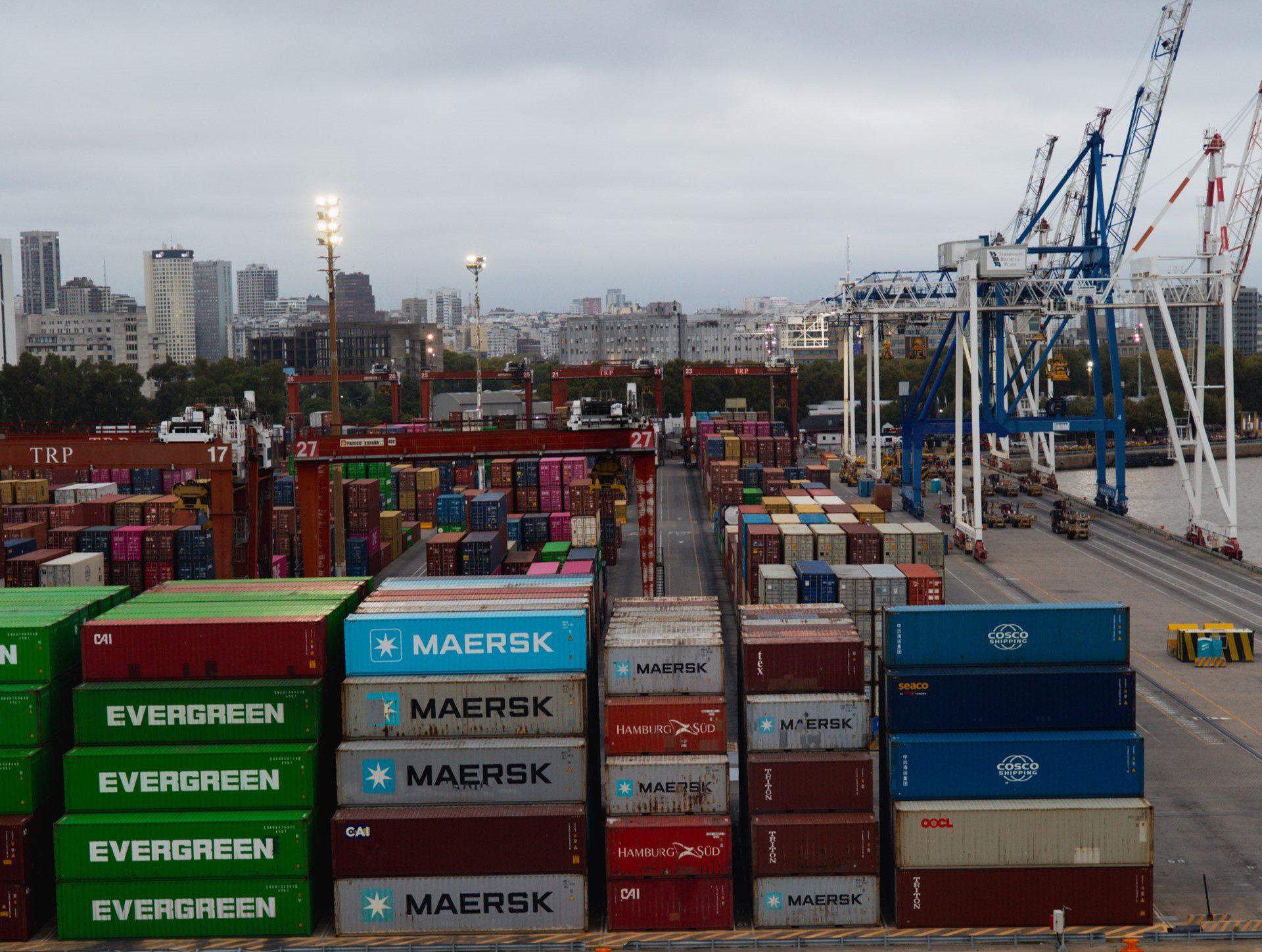
However, localised congestion pressures persist in some corridors, particularly where seasonal cargo surges coincide with high vessel activity. Certain terminals are also experiencing yard pressure associated with increased cargo volumes.
These situations do not currently point to widespread network disruption. They do, however, illustrate how quickly operational conditions can tighten when multiple sources of pressure emerge simultaneously.
For the region’s logistics ecosystem, resilience increasingly depends not only on infrastructure capacity itself but also on the ability of operators to anticipate and manage volatility.
Integrated logistics is emerging as a strategic differentiator
The growing complexity of peak season operations is reinforcing the importance of end-to-end supply chain visibility.
According to Maersk, companies are placing increasing emphasis on integrated logistics models that connect ocean freight, inland transportation, warehousing and distribution activities. The objective is to improve coordination across origin, transit and destination while enabling faster responses to changing conditions.
Multimodal capabilities are becoming particularly valuable in Latin America, where supply chains often combine international sourcing with infrastructure limitations and varying operational conditions across markets.
Greater visibility into demand patterns can support earlier planning decisions, while improved synchronisation between sourcing, inventory positioning and distribution may help reduce operational friction during periods of elevated demand.
As supply chains become increasingly exposed to volatility, the ability to connect different transport modes and rapidly adapt execution plans is emerging as a competitive advantage rather than simply an operational preference.
A new operating reality for Latin American supply chains
The second half of 2026 illustrates how profoundly logistics dynamics are evolving across Latin America and the Caribbean.
Rather than a single seasonal peak, companies are now navigating the convergence of multiple demand cycles, climate-related risks and infrastructure constraints, all unfolding within increasingly compressed timelines.
For ports, shipping lines, logistics providers and cargo owners, the coming months will serve as another test of supply chain resilience. Success will depend less on managing isolated disruptions and more on maintaining visibility, coordination and agility across increasingly interconnected logistics networks.
In this environment, the organisations best positioned to perform consistently may be those capable of anticipating change before operational pressures reach their peak.