As global shipping networks continue to navigate fuel volatility, congestion and mounting geopolitical disruptions, Colombia has quietly opened an infrastructure that could reshape logistics patterns in the country’s north and potentially alter cargo flows across parts of South America.
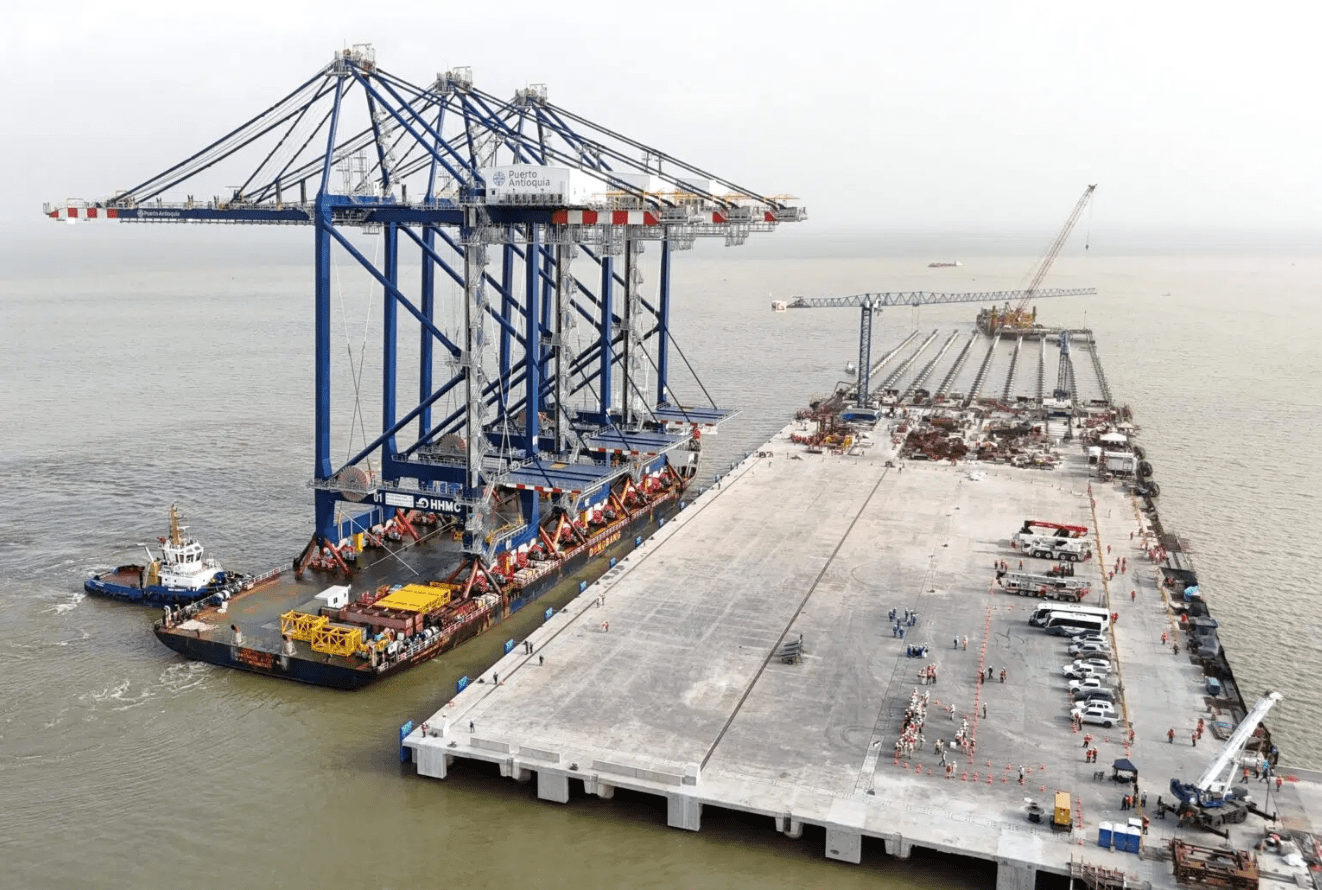
Located in the Gulf of Urabá, the new Port of Antioquia has officially begun operations with infrastructure designed to handle up to 7 million tonnes of cargo annually, including approximately 650,000 TEUs, as well as bulk grains, general cargo and vehicles.
What makes the project particularly significant is not only its capacity, but also its geography.
According to Bertling’s April 2026 Ocean Freight Market Report, the port reduces the land distance to Medellín by around 350 kilometres compared with established Caribbean gateways such as Cartagena and Barranquilla. For shippers, that shorter corridor could translate into lower trucking costs, reduced transit times and improved supply chain predictability at a time when operational resilience has become a strategic priority.
The facility comprises five berths and dedicated infrastructure for dry and refrigerated containers, bulk cargo, vehicles and general cargo. Its 16.5-metre draft also enables the accommodation of larger vessels, positioning the terminal to support a broad range of maritime activities and future traffic growth.
The interest already shown by major shipping companies may be an early indication of the port’s potential. Bertling notes that global operators, including Maersk and CMA CGM, have either begun or announced plans to transition part of their operations to the new terminal.
The timing is noteworthy. The global freight market in 2026 is not being driven by booming trade demand. Instead, shipping networks are contending with higher fuel costs, emergency surcharges and persistent schedule disruptions. Container schedule reliability fell to 59% in February, while average delays for late vessels reached 5.49 days, according to the report.
Against this backdrop, infrastructure capable of delivering efficiency gains has become increasingly valuable. The search for shorter inland routes, alternative gateways and more resilient logistics networks is influencing decisions throughout the shipping industry.
For Colombia, the Port of Antioquia could introduce a new competitive dynamic among the country’s Caribbean gateways. While Cartagena and Barranquilla remain major maritime nodes, the operational advantages offered by Antioquia may gradually attract cargo flows serving Medellín and other inland markets, particularly in containerised, refrigerated and automotive segments.
The implications may ultimately extend beyond Colombia. Across South America, shipping lines and cargo owners are reassessing network configurations amid continuing global uncertainty. The emergence of new gateways capable of reducing costs and improving reliability could accelerate a broader diversification of port options and contribute to a gradual reshaping of the region’s logistics geography.
Whether Antioquia becomes a major regional gateway remains to be seen. However, its launch illustrates how, in today’s disrupted shipping environment, strategic location and logistics efficiency are increasingly becoming decisive competitive advantages.